
“We’re definitely a rock band. I love that we’re a rock band.”
– Nigel Sibanda
Written by Hlengiwe Mkwayi
There’s a point in every band’s life where the past begins to feel like rehearsal for the present that is more certain. For Club Valley, that moment is now. With Jason Williams on the drums, Blessing Tshifularo leading bass, and Nigel Sibanda on vocals and guitar, what began in bedrooms and borrowed spaces, has slowly sharpened into a sound that is characterised by lush, atmospheric soundscapes and endearing live performances.
In this conversation, Club Valley reflects on the long road to clarity, the language of Rock as choice, and why, after years of hurdles and shuffles, it finally feels like they are at their point of glory.
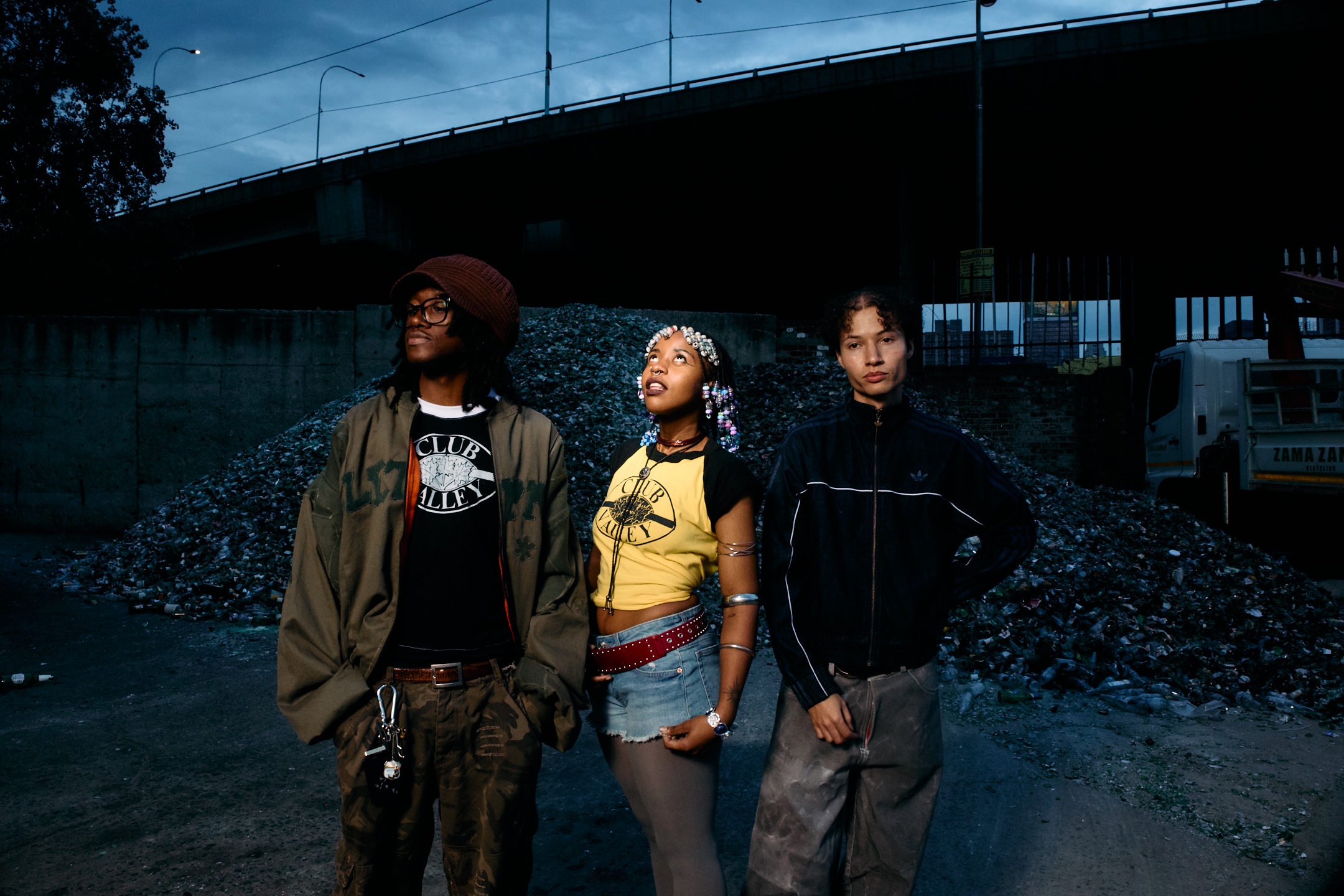
Can you take me back to the inception of Club Valley; where it started, how it came together, and where your first performance took place?
Jason: Club Valley existed in a different form before I joined in 2020. At the time, it was more like a collective as there were four members. During 2020, things became quite stripped back. It was mainly me, Nigel, and Timmy (who was playing bass). We were rehearsing in my space, and working within really limited conditions. By the end of that year, our fourth member had left, and it became just the three of us. That period was very formative because we were figuring out our sound, writing songs from scratch, and rehearsing in random spaces, including a shed in Roodepoort.
Those early recordings were released under Lofty Haze. Then in 2021, Timmy moved to Australia, and it left just me and Nigel. We became a two-piece, almost by default, but it felt natural. We had a show toward the end of that year for someone’s birthday, and it confirmed that nothing was missing. The music still made sense in that format.
In 2022, we moved to Cape Town. That was a defining moment. We were essentially starting from nothing, without jobs or any real safety net, just the music. For about six months, we pushed through that uncertainty, building something out of very little. Looking back, it paid off. We reached a point where we could move more freely and with a sense of support behind us.
During that time, we recorded Life As You Know It, and then followed it with The Sun Behind the Curtain. The latter was developed through 2023 and into 2024, and released in 2024.
Nigel: I think everything Jason mentioned speaks to the technical inception of the band, but for me, what feels more important is who we are now. Not to disregard the history but in a way, it feels like those first four years were us just running around trying to figure out the recipe, you know? And only recently does it feel like we’ve actually got it.
With Blessing joining the group, something clicked. The dynamic feels complete in a way it hadn’t before. So while the band’s history stretches back to 2020, it almost feels like our real beginning is much more recent, maybe six or seven months ago, when the three of us came together in its current form.
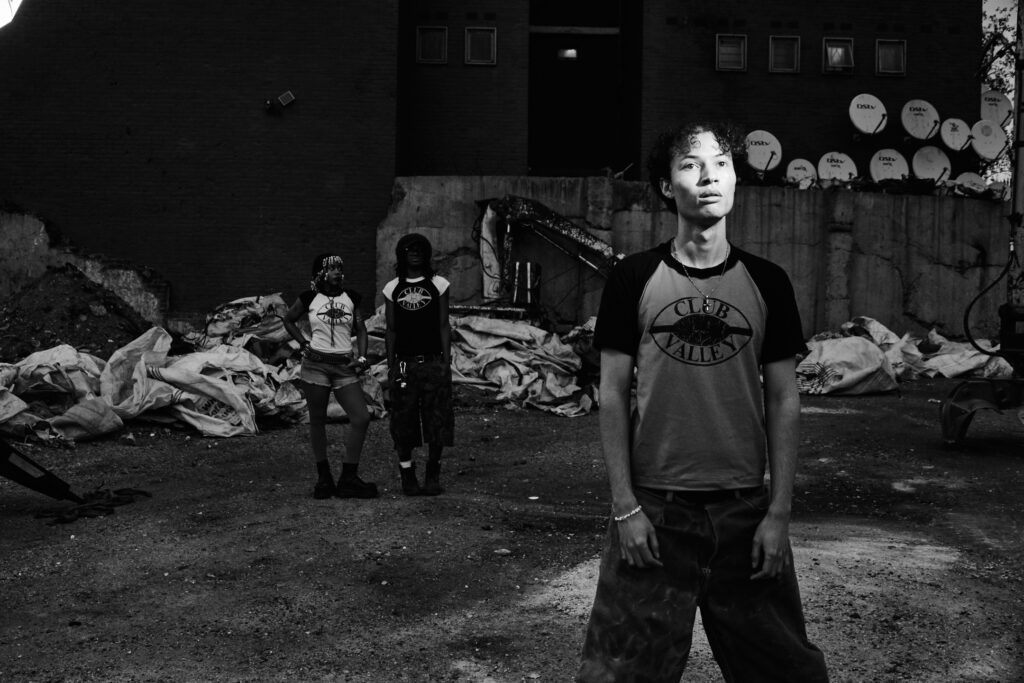
How do you describe the new era that you’re in right now?
Jason: I’d describe it as putting down the weight of the world we’d been carrying, taking a deep breath, and finally arriving at a place where everything feels easy and calm.
Nigel: There’s something about this iteration of the band that really embraces the present moment. It feels current, like we’re fully in tune with where we are and what we’re making right now.
Blessing: From my side, joining the band when I did, around late July 2025 or early August, it’s honestly been one of the best musical experiences of my life. What makes it different is that it feels like I’m part of something that’s truly mine, something I have a real stake in. I’ve been given the space to express myself fully. I have a say, I have input but more importantly, we all do. There’s a shared authorship in the music that makes it feel like the most authentic work I’ve been part of so far.
Sonically and aesthetically, it feels new, but there’s also a subtle sense of nostalgia to it. I’d place it somewhere around a ’90s to early 2000s sensibility, but with a fresh, contemporary spin that’s distinctly ours. It feels honest. I really value the space we’ve created together, and I’m excited to see where it goes. I have a lot of respect for the band’s history, but I’m equally excited about what lies ahead.


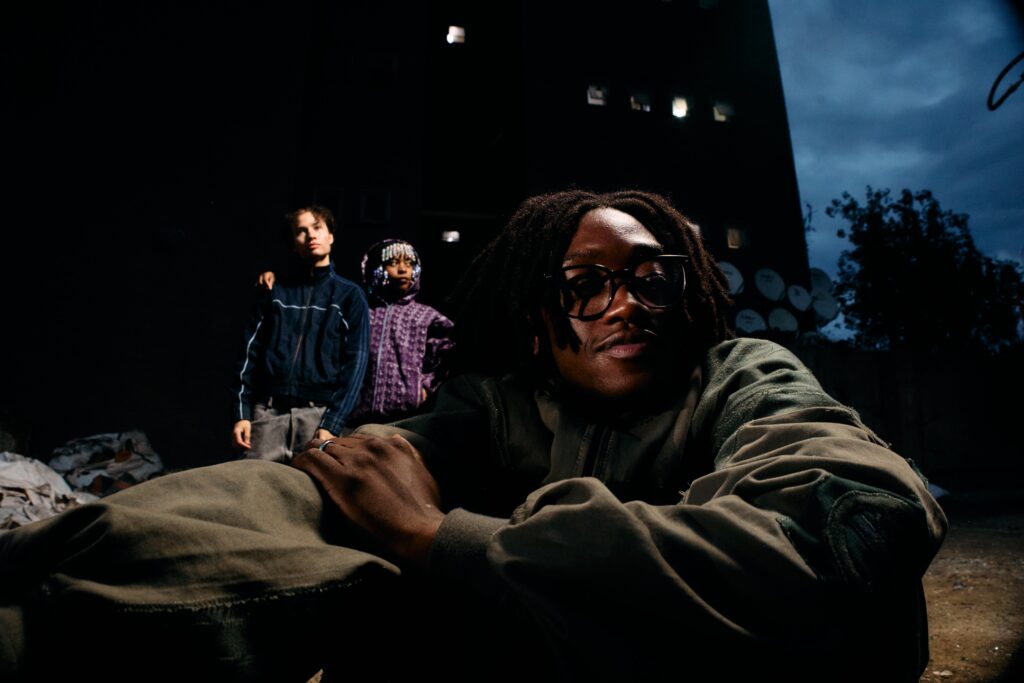
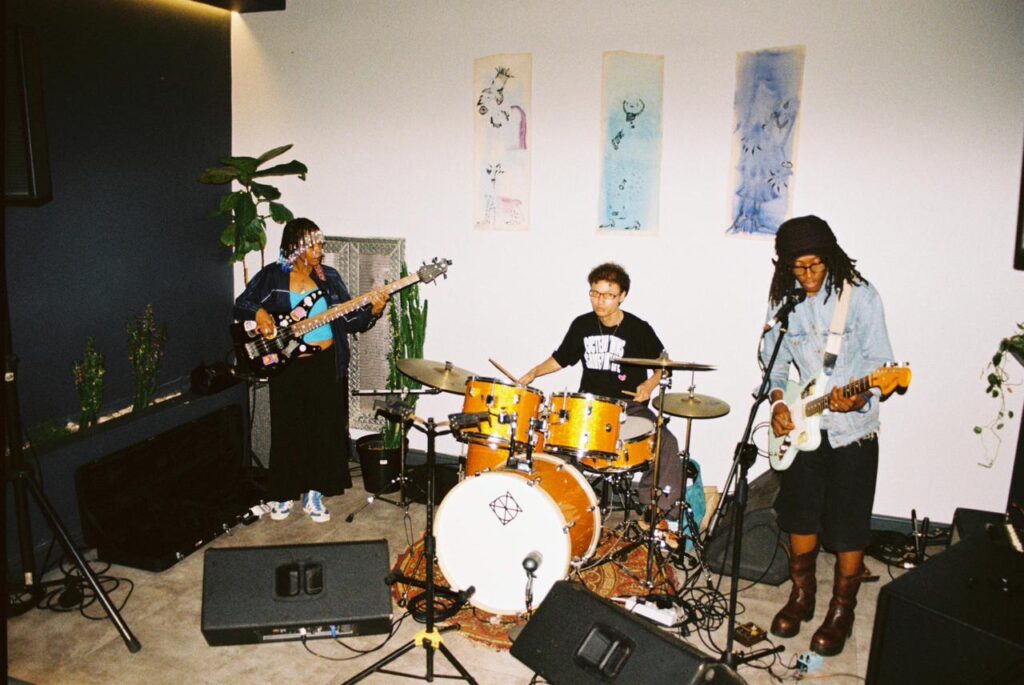
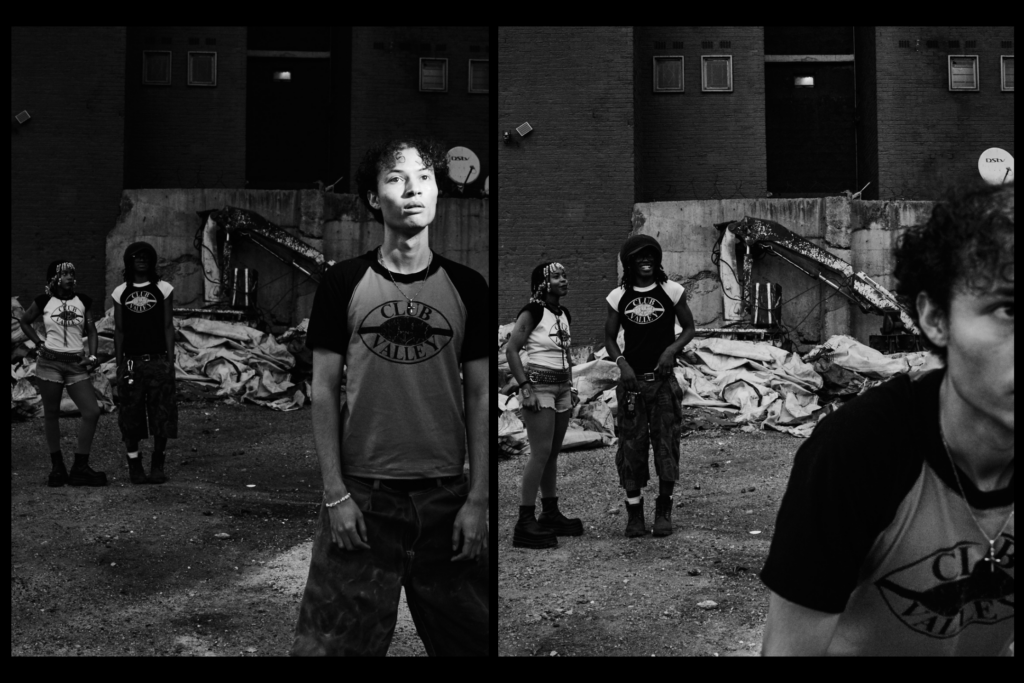
I’m interested in how this triadic dynamic functions. How do you collectively run the Club Valley ship? Even though this formation is still relatively new, could you speak to how roles take shape within the group?
Nigel: Yeah, totally. I mean, structurally, it’s set up like any other band in the sense that we’re all songwriters. The songs come from things we’ve lived, both individually and together, so there’s always a shared emotional foundation.
Typically, I’ll bring in the initial ideas. I’ll sketch something out and then present it to the group, and that’s really where the process begins. Nothing is ever considered finished until it’s been shaped collectively. Once it’s in the room, we rework it, shift things around, and refine it together.
Everyone writes their own parts as I’m not dictating Jason’s drums or Blessing’s bass. What we start with is a core idea, and then each of us contributes to building it out. The goal is always to get the best possible version of that initial idea, whatever form that takes. So yeah, at its core, it’s a very collaborative process.
The first time I saw you perform live was at a very small pop-up event at 44 Staneley, for the local fashion brand called Studio Bananaaa. After that, when I properly went to check you out, the first song I heard was Wallflower. What struck me was how you approached the idea of a “wallflower.” Typically, it points to someone shy or on the periphery, but in your lyric ‘I’ll be a wallflower on your wall, someone looking out for you’, it shifts into something else entirely. It feels less like someone who is timid, and more like a quiet-intentional presence; someone observant and lingering in a way that feels protective rather than withdrawn.
So I’m interested in how that reinterpretation came about. What drew you to that perspective, and what were your intentions in conceptualising the song in that way?
Jason: I’ve always thought about the phrase “‘a fly on the wall.” It usually carries this slightly gross with a negative connotation of someone lurking, something almost intrusive, with no real sense of beauty to it.
So with Wallflower, I liked the idea of shifting that. A wallflower, to me, still has presence, but it’s quieter and it exists on the periphery in a way that isn’t necessarily negative. There’s a sense of being there, but also slightly removed, slightly observing.
For me, the song always carried a different emotional weight as well. It felt like it was about loss, about someone who has passed on, and how their presence still lingers in the world. Even lyrically, lines like “You’re the salt of earth” point to that idea. But it doesn’t have to be literal death either; it can just be about absence, or a moment that’s passed. The connection still exists, but the person, or the version of them you knew, is no longer there in the same way.

What is your relationship with Jozi?
Blessing: I think I have a very special relationship with Johannesburg. It will probably always have a really special place in my heart, especially considering I’m originally from Pretoria. I was born there, spent some of my early childhood in Polokwane, and then moved back to Pretoria where I finished high school. That’s also where my entry into music really began.
The way I ended up moving to Joburg wasn’t under the best circumstances, but I do believe in divine relocation; divine orchestration, in a sense where you’re placed where you’re meant to be. Johannesburg was really the entryway for me into music and into the creative space, and in many ways, into adulthood as well.
Like any place, Joburg has its downsides, but for the most part, I think it’s incredibly special. There are so many talented creatives across different fields. I’ve never met so many driven people in such a short space of time. It’s really inspiring. Everybody is doing something.
Some people might see the fast pace of the city as a negative, this constant sense of movement, but for me it fuels me. It pushes me out of my comfort zone and my limits. It also shows me that there are so many different ways to exist and create, you don’t have to be boxed in.
Jason: I grew up in Pretoria and spent most of my life there, so I’m quite used to the quietness and slower pace. I only started going to Johannesburg regularly around 2019.
One of the things I really love about the city is the graffiti. People often overlook it or dismiss it, but I think it’s such a powerful form of expression. If I had less fear, I’d probably engage with it myself, but I find it really fascinating.
I also think Johannesburg is a great space for the early stages of trying to pursue your dreams. It really shows you how people respond when you say you want to do something because there’s a lot of push and pull in that process. But the city gives you space to figure it out while still forcing you to do the work.
There is a kind of fight to it, and I think I appreciate Joburg for teaching me that. It also creates a kind of boundary or barrier within yourself, because you can’t really be too nonchalant. You have to be firm in who you are and what you want to do, even in the smallest things, like walking somewhere. You can’t just drift through it. You have to move with intention.
Nigel: I grew up in Joburg and lived there my whole life, before moving to the West Rand when I was a teenager. Truthfully, I think I actually prefer that side. Joburg can be quite jarring when you’re a kid, and honestly, I still find it a bit jarring at times; but it’s also a very beautiful place, and I love it wholeheartedly.
That said, I do see it more as a stepping stone or a place where things get busy, especially for people who feel like they have something to prove. Right now in my life, I’m not anti-Joburg at all, but I also don’t feel like there’s anything to prove in that way anymore.
Blessing: I feel like I just want to add on to what Nigel said. It’s not all Joburg glaze here. From the conversations we’ve had, there’s definitely an appreciation for the city. I’ll always love Johannesburg in my own way.
However, ‘stepping stone’ is probably a good way to put it. We’re very much in a space where we’re embracing travel and any opportunity we get to take the music outside of Joburg and not being confined to one place. It’s also about the connections and experiences in general, even beyond music and beyond the city itself.
I think me and Nigel actually had a conversation about this where we spoke about how Joburg, or Gauteng as a whole, can function more like an anchor. Like a tethering point on a kite while everything else is in motion. It’s a bit of a corny metaphor, but it makes sense to us.
You can fly out, move around, and experience different places, but coming back to Joburg does feel grounding. It gives perspective. And then you can go out again.
In all the genres that exist in the world, what led you to indie rock as the sound you’ve chosen to work within? Do you even categorise your music in that way? I know artists sometimes resist being placed in boxes, but I do believe in genre placing. I think it holds space for something; categorisation is a very human thing.
So I’m curious about your thoughts on that, and also what led you to creating the kind of music you make?”
Nigel: We’re definitely a rock band. I love that we’re a rock band. We listen to so much rock music, it’s actually constant when we’re together. It’s just part of our sonic DNA.
We don’t really fit into a traditional image of what people might expect from rock, but that’s kind of the point. We’re approaching it from our own lived experience, our own perspective, and our own sound.
Blessing: One of the really cool things about being in this band is how much of a connecting force music is for us; sharing songs, discovering new music together, and playing things we know we’ll all appreciate. That naturally feeds into how we relate to our own music as well.
Even before this band, when I first started making music, I was heavily inspired by indie rock. I experimented with other genres in different band settings, but coming into Club Valley felt like finally being able to express that part of myself in a tangible way.
There’s also something special about bonding with people who share that same musical language. For us, it’s indie rock at its core, but it’s more than just a genre because it’s a shared reference point.
There’s something really meaningful about finding each other through it, and also introducing the music to people who might not usually engage with it.
To close us off, Nigel, what’s one line from all the music you’ve written? And for you, Blessing, what is your life motto that you live by?
Nigel: My favourite line we’ve ever written is probably from the newer material, because we’re currently working on a lot of new music as a band. There’s a line I wrote that goes: ‘A familiar evanescence suggests heaven’s hard to come by, not only is it overcrowded’
That’s my favourite line at the moment. I don’t really want to over-explain it, but I just really love it; it feels like lines that sit together in a way that makes sense to me.
Blessing: I think my life motto, to sum it up, would be something along the lines of: it’s all working out exactly as it should. I really believe in divine orchestration, but not necessarily in the sense of something external dictating every outcome. More in the sense that my part within whatever is unfolding is exactly where I’m meant to be.
I don’t think I would take back anything that’s happened in my life. I believe that any direction you go in is the right direction for you at that time. And as long as you trust that, you’ll be carried through it in a certain way. One of our favourite words in this era of music has been ‘grace,’ and I think that ties into it as well. If you believe you’re going to be carried through with grace, and that you’ll be met along the journey, then that’s how it tends to unfold.
Nigel: It’s about trusting the process and letting the story play out in glory the way it’s meant to.