
Two things you need to know about this trio—Anastatia, Renaé, and Hlengiwe—are: 1. Laughter is at the core of our existence, and 2. We love a good debrief. Since it was our first time at the Investec Cape Town Art Fair, it only made sense to share this debrief with you—because next year, we leave no one behind!
Whose work resonated with you the most? Which piece made you stop and think, this is a strong body of work?
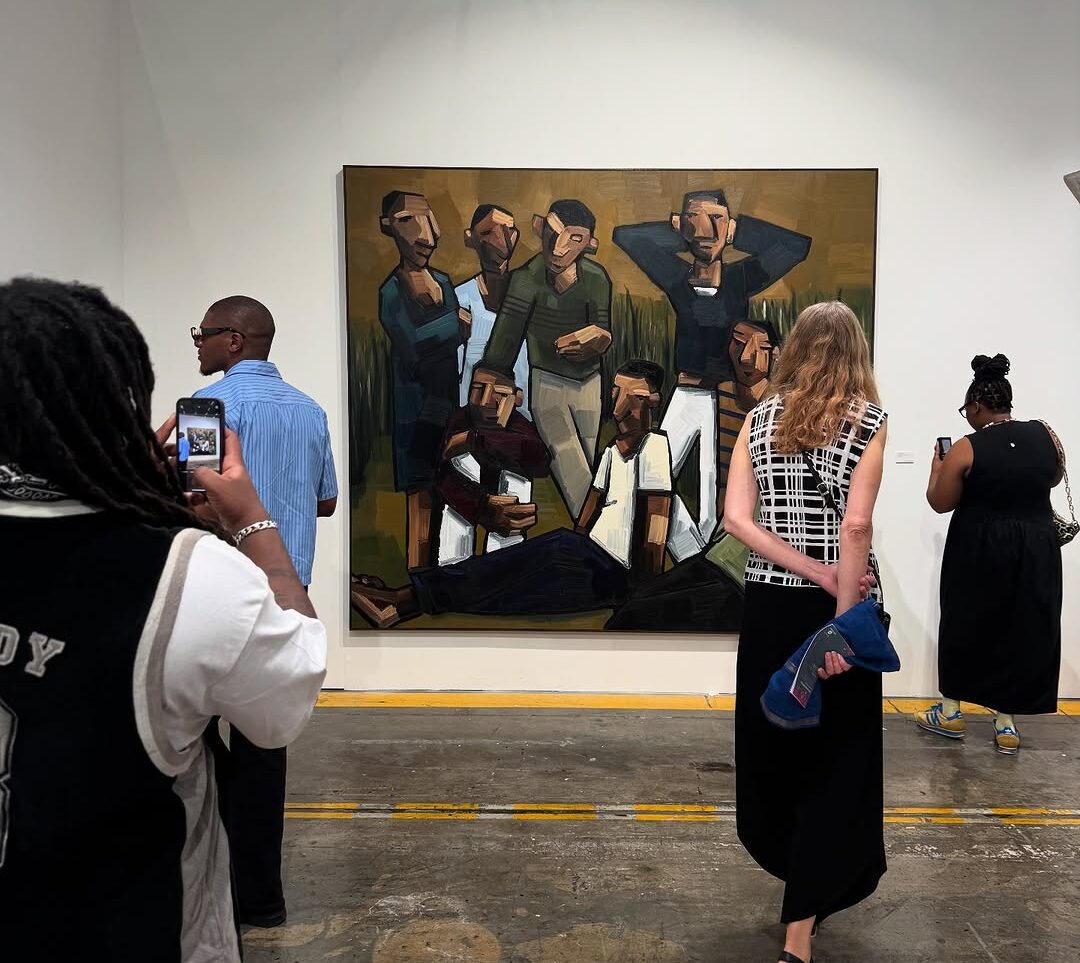
Anastatia Nkhuna: For me, it was definitely Mmangaliso Nzuza’s work at Southern Guild. I really want to learn more about his process, especially since he works in large-scale cubism. Seeing his pieces in person was incredible—they’re much bigger than they appear on social media.
I could imagine his work in my home, in the entryway, brightening up the space. Cubism is such an expressive art form, and I love seeing a young Black artist use it to tell his stories. The geometric shapes and muted colors align with my personal taste.
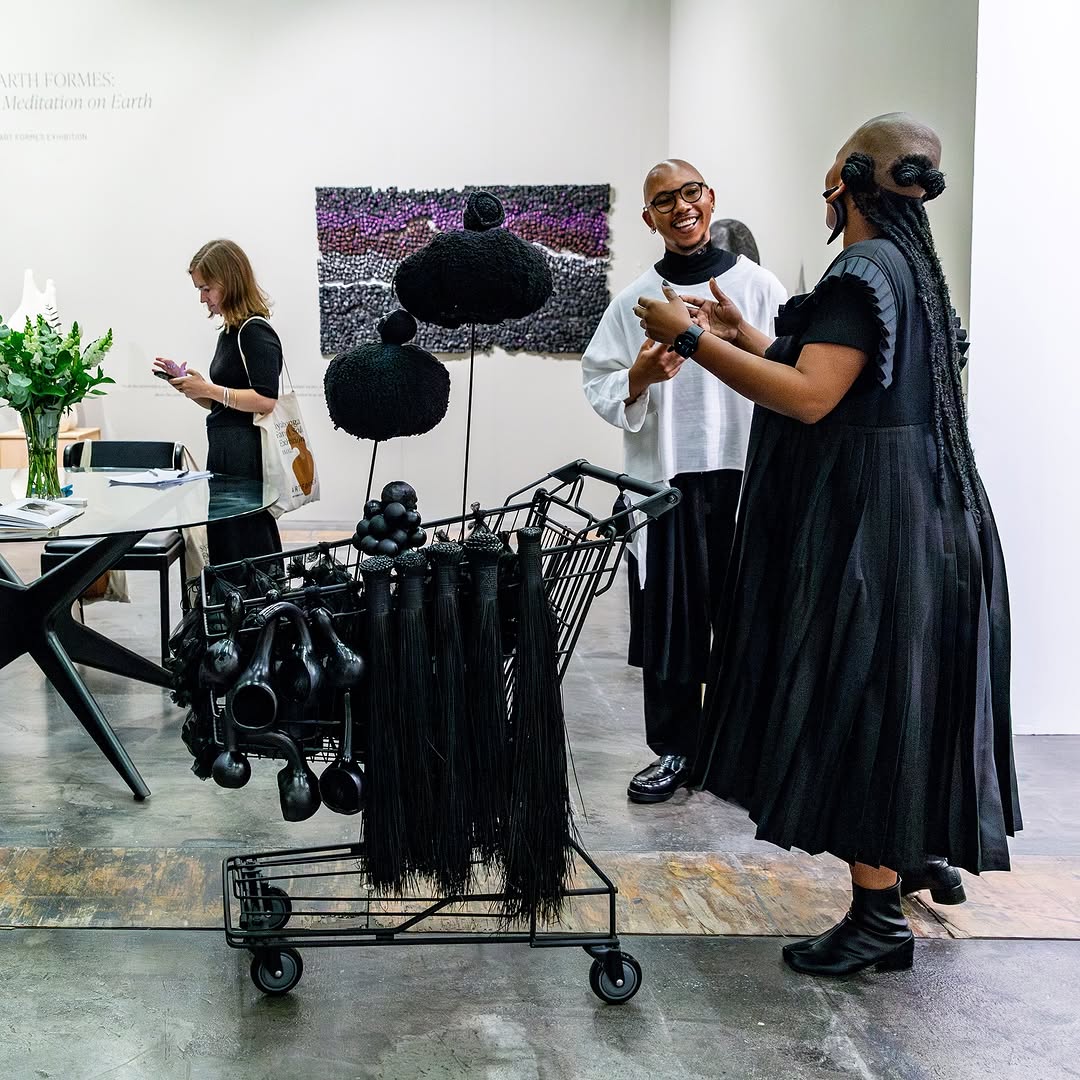
Hlengiwe Mkwayi: Will it be too obvious if I say Cow Mash?
The way she utilized black was mesmerizing—every piece in that space shared the same gradient, creating a profound atmosphere. The small head sculptures, the exaggerated neck adornments, and the way they were placed—it felt like stepping into her imagination.
What struck me was how all the figures had their eyes closed. It reinforced the idea of imagined realities, almost like stepping into a dreamscape. It was like experiencing her dreams, but through form and texture. Even when dreamscapes have a solid darkness, there’s still shape and form within those spaces.
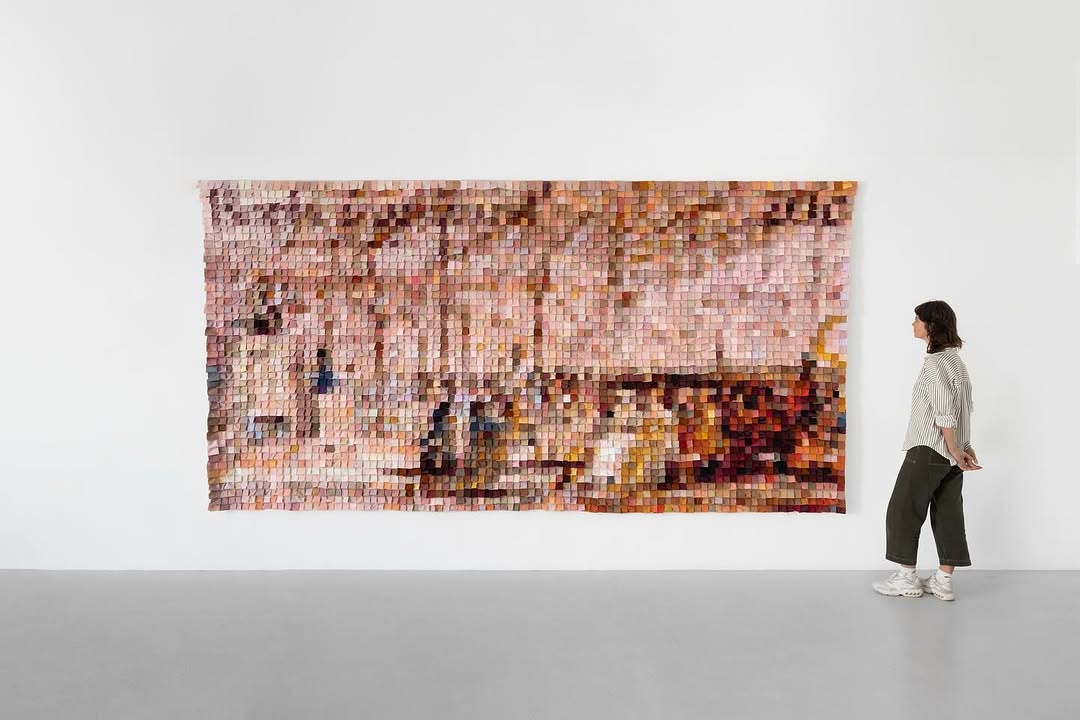
Renaé Mangena: Thaba Nchu is actually my favorite. Xhanti Zwelendaba & Ben Stanwix are why I came to the Art Fair. I fell in love with the work even before I saw it in person. It’s a strong body of work. Actually, I want that in my house!
First of all, I loved the sheer magnitude of it—how big it was, how it took up so much space. I loved the color palette, the fact that it’s made of actual fabrics, and how open it is to interpretation.
They could be talking about the beauty of the landscape—which, having been there, I know is breathtaking. Or maybe the work is leading somewhere else. I really love how it explores the connection between textiles, fabric, and art. How those elements can be woven into something that feels as significant as this.
I wasn’t surprised that it won the Investec Emerging Artist Award. It did what it needed to do without being loud, without being overtly political—it just existed. And I miss art like that. Art that doesn’t need to be translated into words for you to get it, because it simply speaks to you.
That’s what I loved most—it wasn’t trying to be political, it was simply being. And that’s exactly what I felt, both online and when I finally walked into the space.
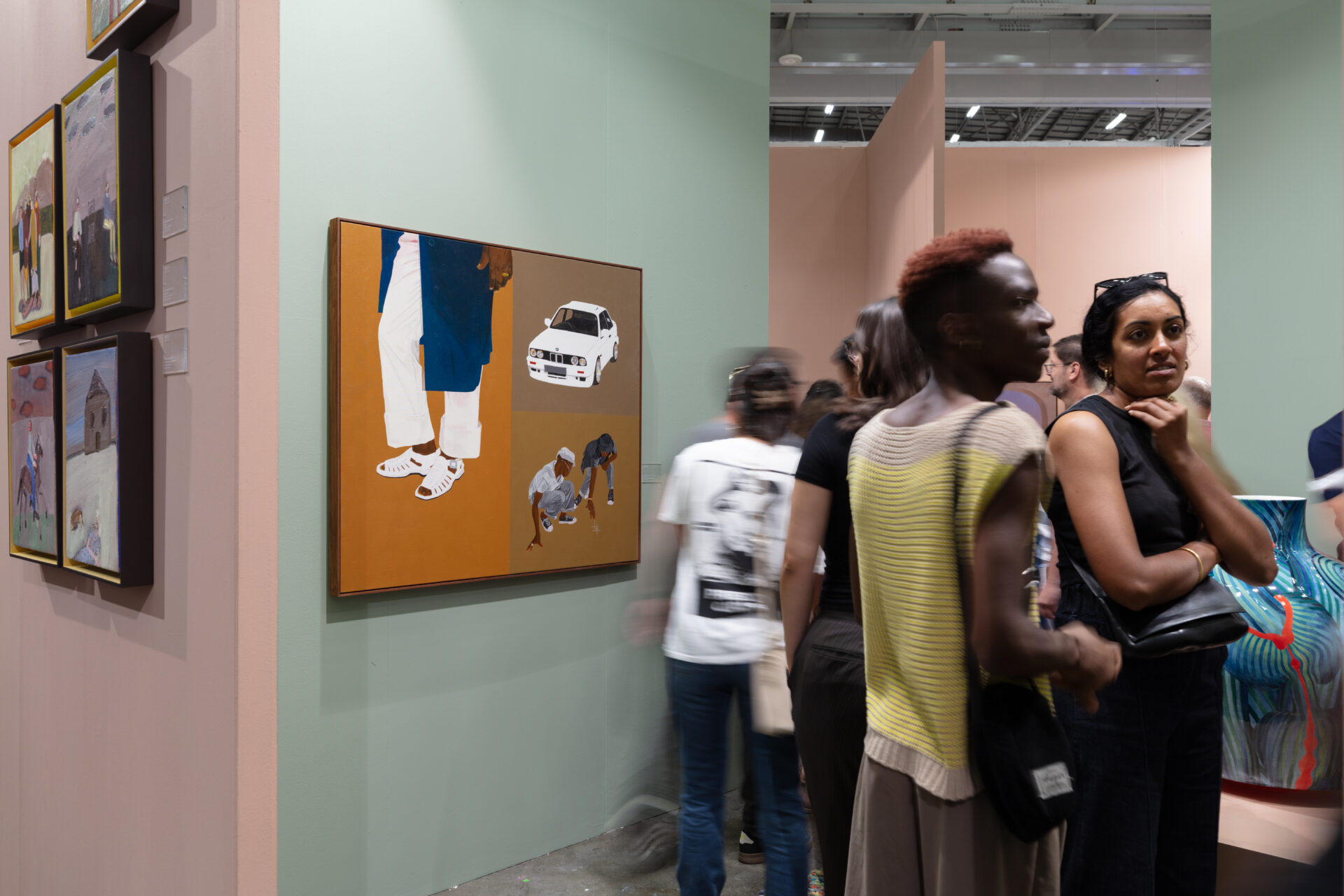
Another artist I really enjoyed was Blessing Rooi. His work was simply beautiful. There’s an ongoing conversation about how Black men and boys are represented in art, and his work really brings a softness to that representation. His color choices and the way he captures his subjects—it’s stunning.
I loved how his curation touched on cultural fashion influences from Kasi Flavour and Wanda Lephoto. It’s the kind of art that elevates a space and invites deeper conversation.
Which artwork did you find interactive, experimental, and sensory-engaging? It can be an artist or a gallery that truly embodies the theme.
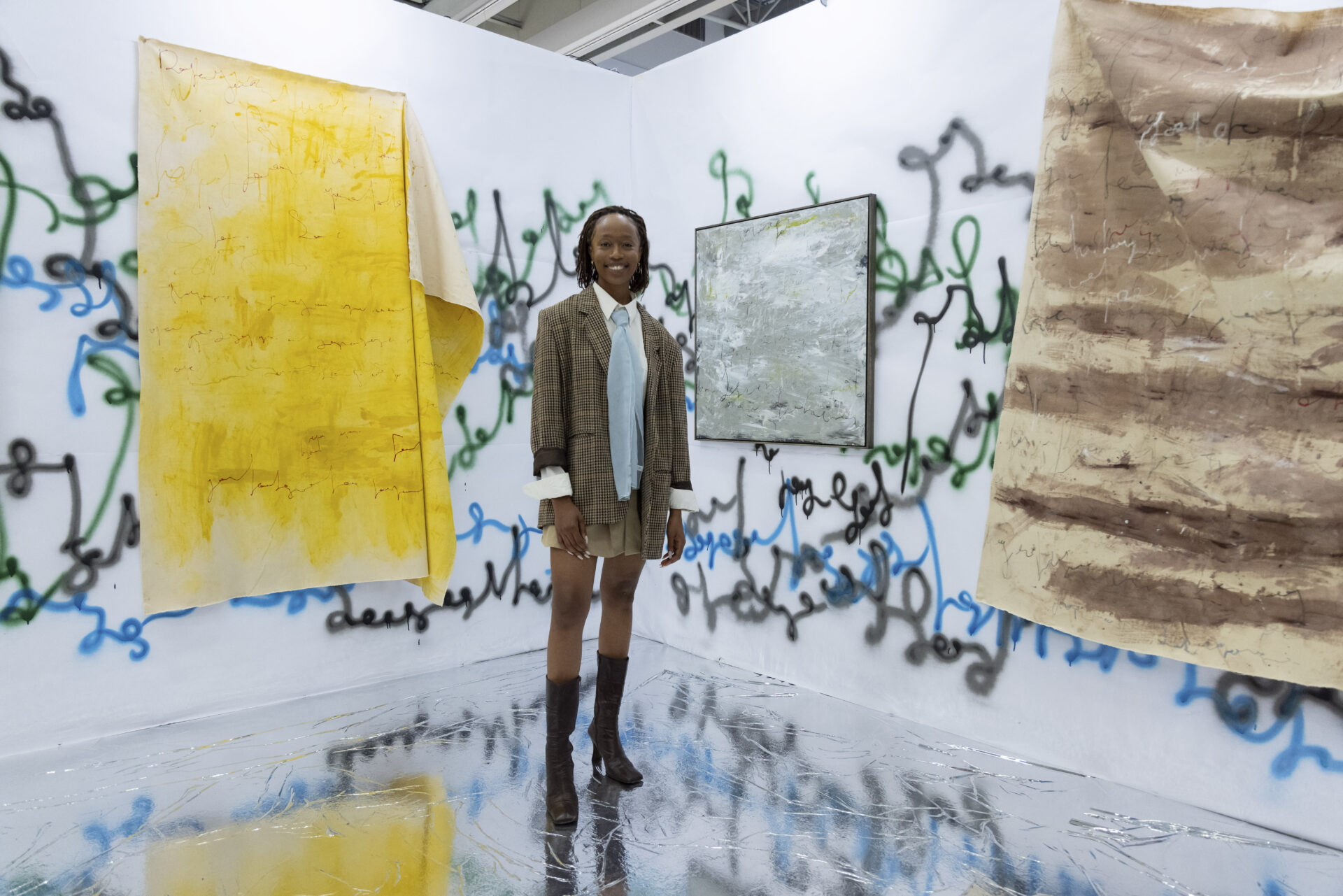
A: For me, it was Mankebe Seakgoe with the BKHz Gallery. I loved the flooring. I loved the couch in the booth. It was playful—it gave that “sit down and wire us the money because you love the artwork” energy. Or even just “sit down and take a breather”. It felt like a community too. The booth became a stopping point where all of Joburg gathered and so being there felt like home.
And also, Mankebe is our girl. I loved how her current artistic expression felt so cemented, how it has formed into a clear identity of who she is. I loved that she experimented beyond just framing her work—there was fabric carrying her expression, and even a wire popping out one artwork. It was fun!
H: Totally echoing what you’ve said, Ana. Our girl broke away from just presenting her work on a canvas.
What I found brilliant was how she expanded her expression beyond the canvas using the walls themselves as part of the installation, holding their very own utterances. The flooring made me think about nostalgia—how it functions and how it connects to play.
As you step into the booth, the works are reflected on the floor’s surface, mirroring how memory functions at times. We don’t always recall experiences in vivid detail, but rather as fragments of something once felt. That’s what made Mankebe’s work reflected on the floor so beautiful—it was a physical representation of what remembering feels like to me.
Mankebe fully occupied that booth and that’s on black womanhood!
If you had to select two artists from the Fair to be on your team for a game of umgusha, who would they be?
R: I’d say Terrence Maluleke because he’s strong. We would argue because he probably doesn’t like to listen to rules,(this is me assuming) but with good instruction, he’d follow. My second pick is Cow Mash. That’s a winning team.
A: Okay, so I’m picking Kea Seema. She has the artistic flair to make us win. Even in her collage work, she plays with form so effortlessly. She’d bring that into the game. Second would be mfana’kasi, Blessing Rooi.
H: Cow Mash & Blessing Rooi would have definitely been my fighters.
A: Oh my word, you know who I’d love for you? Dr Esther Mahlangu.
H: I see it. Me, Mam’ Esther & Boemo Diale. We can do all things, man!
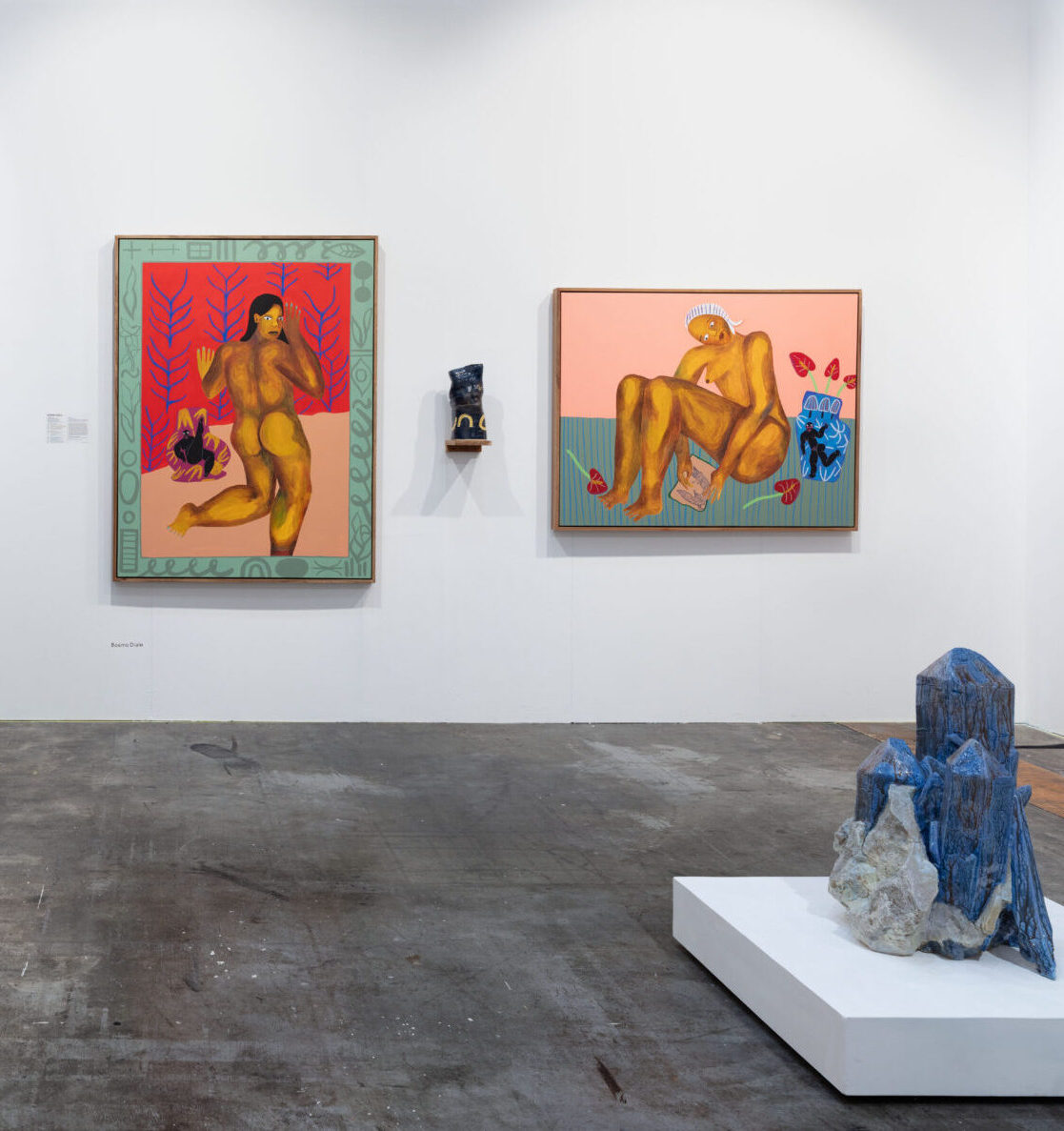
A I loved seeing Black women exhibiting at the Art Fair—it was truly amazing. Every time I attend established Art Fairs and see Black women represented, I can only imagine the hurdles they’ve had to overcome to get these opportunities and break out of the confines of the white cube.
Carlene Komuntale from Uganda , with that striking bright yellow in her booth, literally made me stop and walk back. But most importantly for me, witnessing Boemo Diale collaborate in multiple ways—with Investec, with the VIP booths, having her name on signage—it was inspiring to see how intentionally she positioned herself within the fair. Winning the 2024’s Tomorrows/Today prize and then returning to contribute so much to the fair’s branding made her presence even more impactful.
As a Black woman who deeply appreciates art, this was truly inspiring. It makes me want to invest even more in these spaces—whether by attending or even collecting works—because, wow, they are really doing THAT!
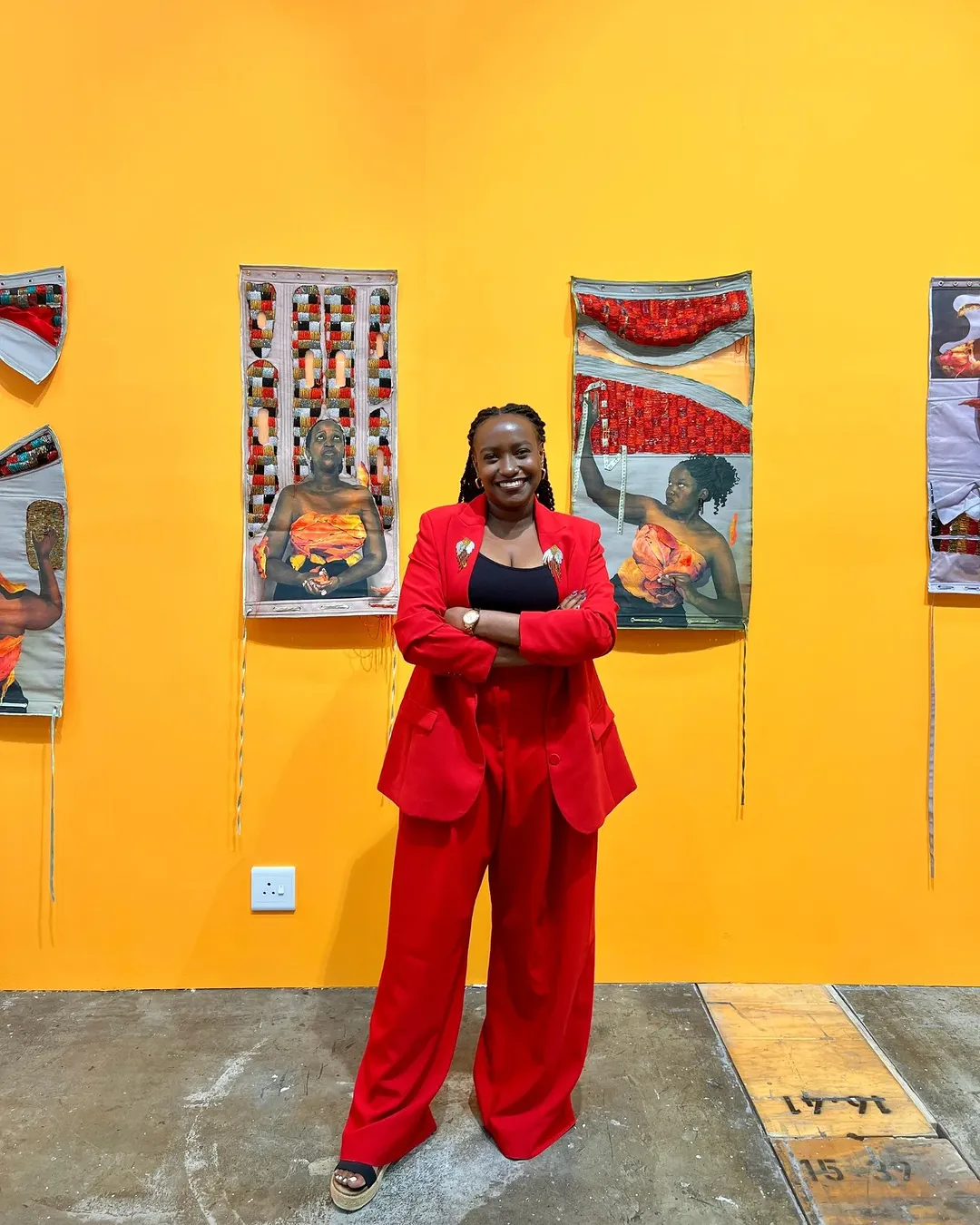
R: Representation is one of my favorite topics in the world, especially when it comes to Blackness. It’s rich with nuance, existing in various forms and movements beyond a single definition. To me, Blackness in this particular context extends race; it’s more of a way of being and existing in the world. Seeing artists explore this concept was amazing.
What stood out was how the work wasn’t presented in a linear way, focusing on personal experiences rather than just the usual socio-political narratives of Blackness. This approach allowed for deeper personal interpretations.
Cow Mash is just one example, but there were many ways Blackness was represented and respected. Black artists today are redefining their role, experimenting with mediums and presenting them in enacting, intentional ways. The work felt carefully considered and nurtured, which made it stand out. I hope that level of care becomes a norm, even in smaller galleries, creating spaces where the depth of the narratives is immediately felt.
H: I’m quite in love with how the nuance of Blackness was reflected in the art. Even when addressing heavy themes, the pieces didn’t rely on shock value; instead, everything was treated with beauty and care. It was never about feeling distraught by Blackness. Instead, there was a sense of resilience because we were actively seeing that through the works. Beautiful portraits of Black women, even in their strength, were expressed with such grace.
The tension and struggles of lived experiences were treated tenderly. For example, if Mankebe is grappling with what articulation means, it’s done thoughtfully and not violently. If Cow Mash is reimagining the lives of her ancestors and the land lived in along with its objects, it’s handled gently, spotlighting personhood over (but still in connection with) placement within oppressive systems.
Typically, political themes are foregrounded in representation, but here, it was the personal that took center stage. The works I saw weren’t violent in their performance, they saw no need for aggressive gestures. And all of that jazzed me up in the best way.