
I love conversations that make you think about things you’ve never considered before, and what makes them even better is when the person sharing those thoughts is deeply passionate about the subject, and it shows in their eyes. My conversation with Khensani Mohlatlole left me with the sense that every thread she pulls in her work is connected to something deeper.
She is a writer, fibre artist, and advocate for sustainable fashion whose journey into African fashion history didn’t follow a set path but rather curiosity, frustration, and rediscovery. What began as a return to her sewing machine during lockdown has since evolved into a thoughtful, multidisciplinary practice, one that’s as much about creating garments as it is about repairing the gaps in cultural memory. Through embroidery, podcasting, and research, Khensani is chronicling fashion and at the same time exploring what it means to inherit, preserve, and reimagine tradition.
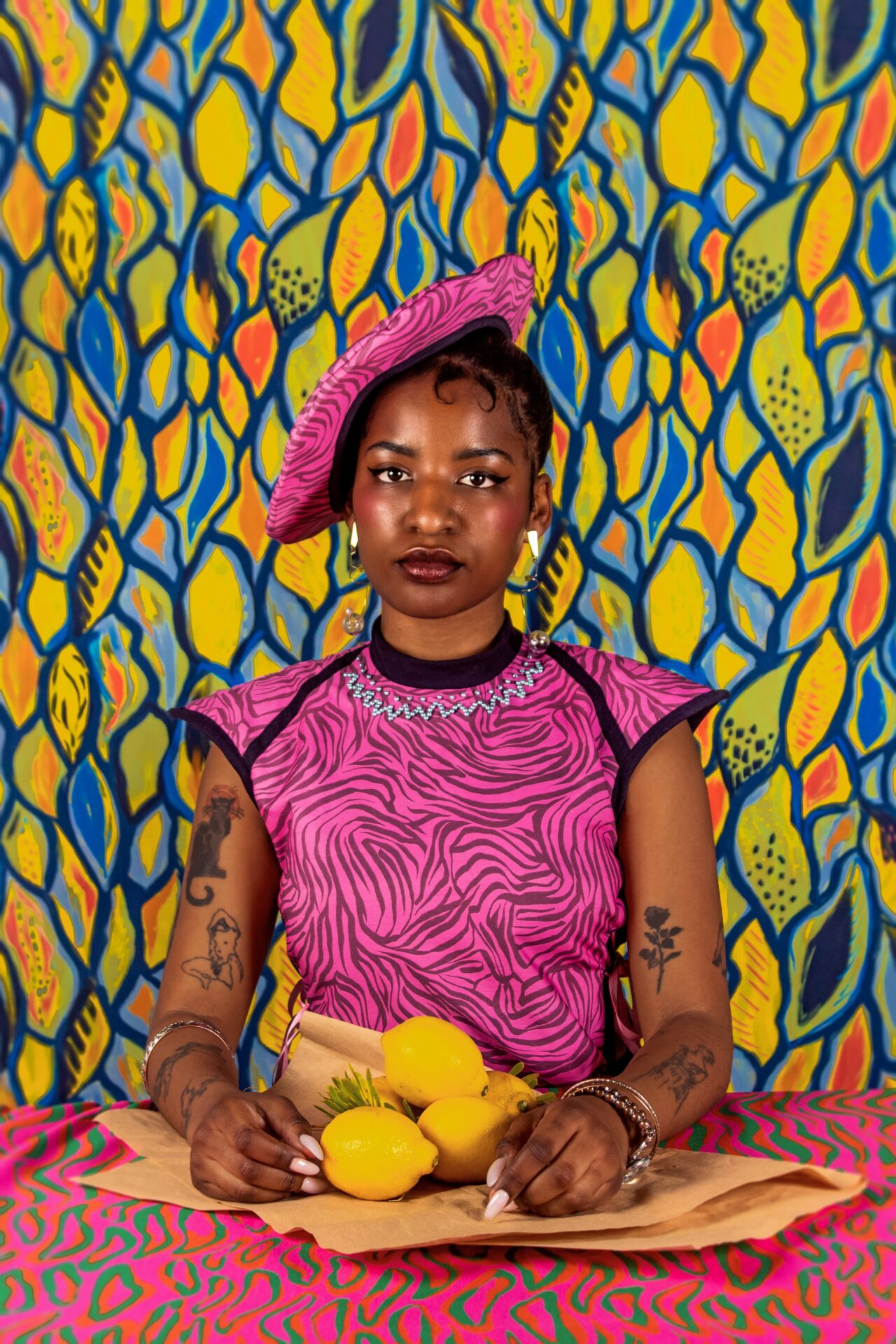
"There’s beauty in working within a lineage, altering traditional designs while acknowledging their past."
Let’s start with the basics: can you give me a brief bio; who you are, how your journey started, and how you found yourself in space?
I’m always bad at describing myself, but here goes. I’m Khensani Mohlatlole , from Johannesburg. I’ve been working professionally in fashion for about a decade now. My main bread and butter has been in marketing and media, copywriting and content writing pay most of my bills. But I’d also describe myself, for now, as a textile or fiber artist. I hesitate to call myself a “fashion historian” because I think that title should go to people who’ve formally studied it. My work is more practice-based. I’m interested in African fashion history and costume, exploring heritage, ancestry, and culture through clothing and textiles. I initially went to fashion school, did about two and a half years, and then dropped out. I’d become really disillusioned with the design and production side of fashion. It felt like I was being trained to work in a factory or for a big commercial retailer like Mr. Price which wasn’t my path. I pivoted into media and marketing my first job was as a social media assistant, and I really took to it. I worked in PR and didn’t touch a sewing machine for about three or four years.
Then COVID hit. I lost my job and had a lot of time on my hands. My mom asked me to alter a pair of dungarees for her, and I dusted off the sewing machine. That led to a conversation about traditional garments, and it made me realise that I didn’t actually know much about our own clothing heritage like, where these garments come from or what they mean. My mom didn’t know much either, beyond general knowledge, so that curiosity sparked something.
I got really into historical costuming. I found this amazing YouTube community of women who recreate 18th- and 19th-century garments using historical techniques. That inspired me to start learning more about African clothing history through whatever sources I could find, even if that meant starting with British archives or colonial accounts, just to see what was documented. From there, I started sharing my work and thoughts online, connecting with people who knew more than me, and slowly building my knowledge base.

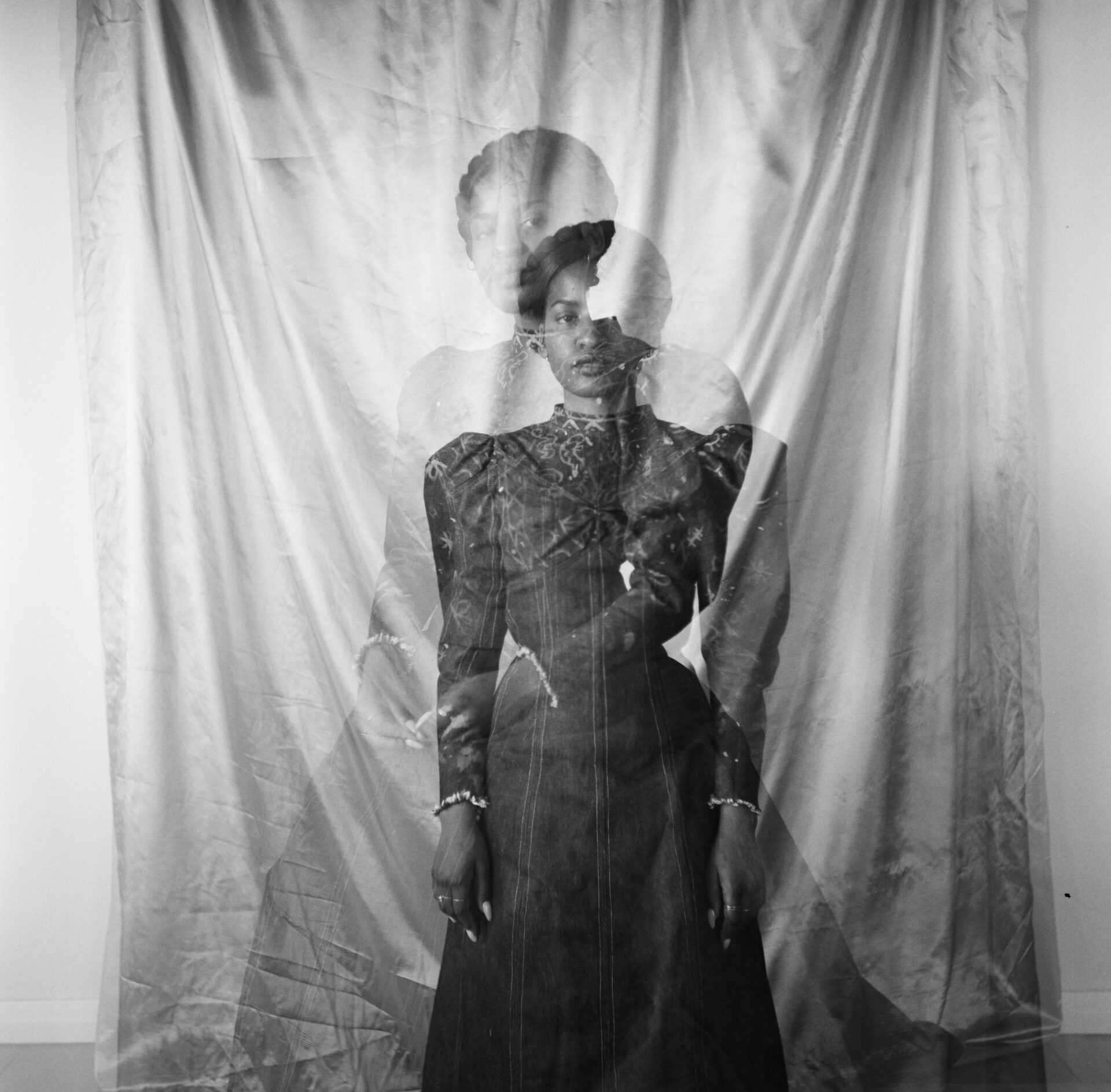
You hosted Closed Minded, a series that explored facets of South African fashion history. Why did you feel that was necessary, and how did the process influence your design philosophy?
I always try to be careful when I say this, it’s not that the information doesn’t exist, but a lot of it is held in oral traditions or academic spaces that are inaccessible to most people.
If we don’t ask our grandparents questions, that knowledge can disappear. And when it’s in academic journals or private archives, it’s hard for everyday people to engage with. I wanted to create something open and accessible, to get the conversation going. I’ll never have all the answers, but if I can start a discussion, someone else might fill in gaps or correct me and we build together.
In South Africa, I think we’re behind other African countries when it comes to preserving and openly sharing our fashion heritage. The Closed Minded series made me realize that design doesn’t have to be about originality. There’s beauty in working within a lineage, altering traditional designs while acknowledging their past. You become part of a long, communal creative process.
It also showed me how much we share between cultures. Apartheid tried to segment us into isolated ethnic groups, but so many elements, fabrics, silhouettes, customs are shared. There’s real power in recognising those connections.
What’s your creative process like? Do you always start with your own heritage, or does it depend?
Every project is different. I don’t always start from a personal place. I collect ideas constantly from books, films, and Instagram. Sometimes it’s random. The other day I got obsessed with aprons. I found out it’s the first garment mentioned in the Bible, and from there I went down a rabbit hole of aprons in Zulu and Ndebele culture.
Usually, it starts with a question, something that sparks curiosity. What does this garment mean? Why do people wear it this way? How is it constructed? Sometimes I want to recreate a piece; other times I just want to talk about it. It all starts with a sense of mystery and a desire to understand.
Your work reaches a global audience. What’s the reception been like outside of South Africa?
Most of my audience is actually outside of South Africa about 60% in the U.S., and 20% in the UK and Australia. I get a lot of interaction from African Americans, who are further removed from the continent and hungry for reconnection. The reception is mostly positive. People are fascinated by the similarities between cultures. I did a video about how many African garments are built from rectangles, and people from India, Scotland, and elsewhere were like, “That’s just like saris or kilts!” You start to see these global connective threads.
On the flip side, some people get very defensive. I’ve had pushback when I say something like, “Shweshwe” is not originally African it came via Indonesian trade.” Some folks insist it’s indigenous. There’s a lot of emotional attachment to these textiles, even when people don’t know the full history.
But overall, even that tension is productive. It shows people care. And honestly, I’ve had some incredible moments older white women reaching out to say my work helped them reflect on how they benefited from apartheid, for example. Fashion opens the door to deeper conversations.
You’re a writer and an artist. How do those identities intersect and inform each other?
I’ve actually been trying to map that out myself. Everything I do kind of feeds into everything else. Writing feeds the research side. Making gives me hands-on knowledge, which in turn improves the writing. It’s an ecosystem. That said, it makes it hard to define myself in five words. I do a little of everything and I’d like to do even more!
How do you see the relationship between art and activism, particularly in promoting sustainable fashion?
Sustainability has always been central for me. At first, I thought sustainability was just about the environment but I’ve come to see it as also deeply about people.
Caring for the Earth means caring for the people in it. A lot of African textile practices are inherently sustainable; they predate mass production and come from philosophies that emphasize not taking more than you need.
But I’ve also learned that people tune out when you come at them too strongly with “activism.” So I try to offer a gentler entry point. Talk about craft, memory, family. Sustainability isn’t just about saving the world it’s about honouring what we already have.
On that note, you once described yourself as an “aspiring eco-terrorist” what does that mean?
[Laughs] that’s just a bit of tongue-in-cheek humour. I’m really into radical environmental activism, the people who throw paint on gallery windows to make a point. I like the idea of taking bold, disruptive action for the sake of the planet and our communities.


How do you think exploring South African fashion history helps preserve culture in today’s world?
A lot of our history has been recorded by outsiders usually white academics or colonial collectors who didn’t fully understand or care about the significance of the pieces they took. So now you’ve got museum collections labeled “married woman’s apron” with no date, no context, no origin. Without that context, we lose part of our identity. And without understanding our past, how can we move forward? I’d love to see more narratives controlled by the people they represent, and more spaces where these histories are accessible and alive.
Preservation isn’t just about keeping garments in storage. It’s about understanding the craft, the meaning, the labour and making sure those stories are passed on. Wearing something made with that knowledge is like putting on a second skin. It carries centuries of meaning. That’s powerful.
"I’d love to see more narratives controlled by the people they represent, and more spaces where these histories are accessible and alive."
