
“You cannot take away my musicality from me. You cannot take away my activism from me.”
– Moonga K
Written by PAL
SOULWAVE 2153 is a true odyssey through hopeful histories and futures, one that tells stories of love and joy through Moonga K’s impressive musicality.
As a group of cyberpunks in the year 2153 traverse the airwaves from a pirate radio station, they journey through the history of music; all the way from the 1970s right through to our present day. The music they encounter carries culture, indigenous knowledge, resistance and freedom. It is music that honours the past, present and future, as they become radically intertwined. It is music that is both archival and prophetic. Music that is Moonga K’s.
Similar to the narrative’s impressive interrogation of our ideas around time, so too does Moonga’s work disrupt ideas of genre as we know them. Blending Funk, Soul and Motown, with Reggae, Zamrock and Alt-pop – making SOULWAVE 2153 in every way a call to groove. In the words of Moonga K “not simply as entertainment, but as a force for collective remembrance and survival.”.
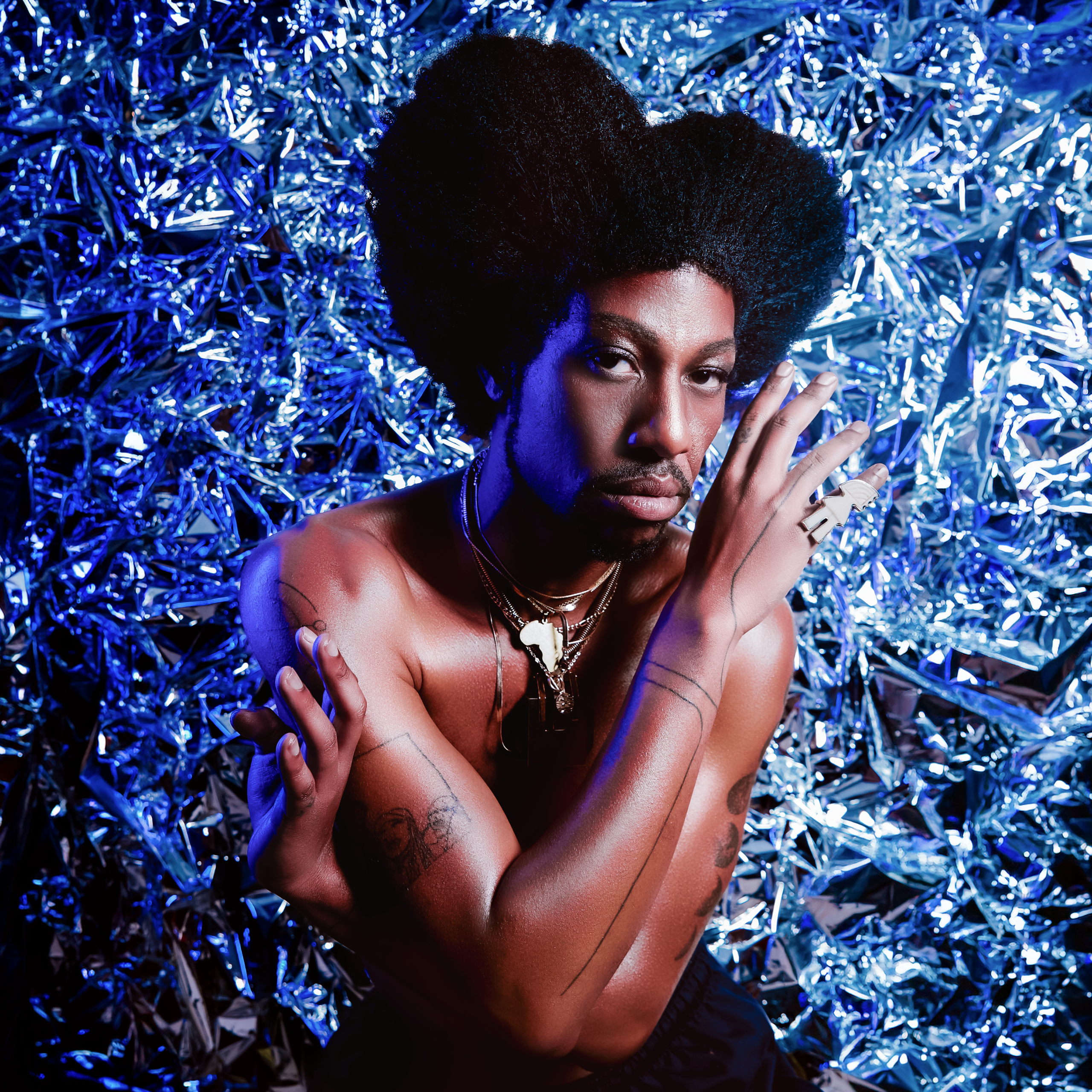
The SOULWAVE 2153 universe plays with time in the most radical and sometimes uncomfortable ways. You’ve built this world where a group of cyberpunks more than a thousand years away from us find a way to hack frequencies and travel back through time. Memory, ancestral knowledge and these cultural blueprints become the story of hope being shared.
Why was building this world around your art so important to you as a clearly gifted storyteller?
I wanted to transmute a lot of the pain that I was going through from the inception of this record into a project that felt adventurous and fun and joyful, and speaking from the lens of the future, which is something that I’m very obsessed with, constantly. From constantly obsessing about what will happen next, but also from the lens of my obsession with sci-fi – I’ve always loved the visual aspect of what we see for ourselves in the future. I’ve always said that I am an artist sent from the year 2153, sent here to disrupt the status quo, and that is what I wanted to finally tackle in this album, and you know, storytelling from a sonic lens has always been fun for me. But also now tapping into a lot more effects that give in to the sci-fi notes, the Afrofuturism of it all, was something that I really wanted to tap into, and I had so much fun doing it.
From the title and artwork, one’s initial encounter with SOULWAVE 2153 might lead them to assume the story is solely set in the future and indeed – Futurism makes up a huge part of the world you are creating. But once you start listening, you realise that the past and the future almost become one. Why was challenging our ideas of time important for you in this storytelling?
You know, like I said, at the start of my career I’d be in interviews and they’d ask me to describe myself. I was like, “yeah, I’m Moonga K, and I am from the year 2153 sent here to disrupt the status quo” and now it’s something I’ve said for the last eight years, that I genuinely just made it up. And then when I was thinking about writing a project from the sci-fi lens, SOULWAVE just immediately [reflected] the wave of Soul music, the 70s and present day Soul music – and the future of it.
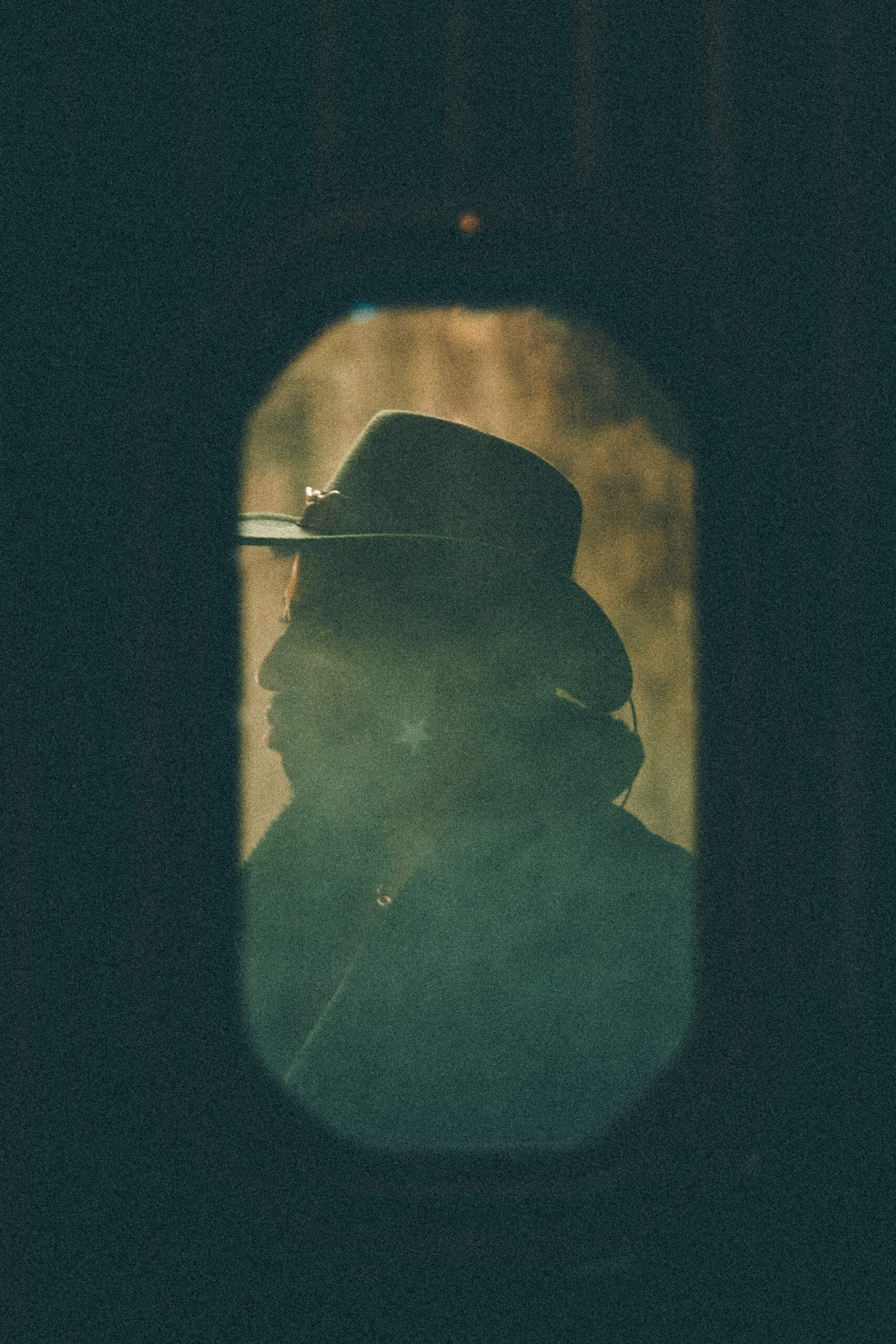
Funk is immediately what comes to mind on first listen, until you peel back the layers and hear the richness in sound and genre on this project. One of my favourite inclusions is the switch at the end of Satisfied, to a sound that feels indigenous, very reminiscent of guitar led genres like Soukous from Congo, and Mbira from Zim for me. Why was the inclusion of the sounds of our ancestors something you wanted to do?
I believe in honoring the past and present to inform who we are in the future, and that’s what I wanted to do sonically as a songwriter. I’ve always been inspired by Stevie Wonder. He’s my all-time favorite musician, and I’ve always been obsessed with the 1970s Motown influences. You know your Curtis Mayfield, your Funkadelic, your Parliament, Marvin Gaye. All of these incredible artists and musicians who tapped into a futuristic lens of black consciousness.
I wanted to give honor to them sonically and vocally as well, because goddamnit, they were singing, and I love to sing. And in present day soul music, which I do believe still has aspects of the past, is seeing a lot of us musicians – male, female, non-binary, really give into the Soul and the Funk of it all, and honoring those histories. It really does make the future look a lot more colorful in my mind, and I believed it was important to traverse through these different timelines sonically. To one – not give you a linear journey and keep you on the edge of your seat, and keep you active, keep you focused.
Because I also get very bored quickly when I’m creating music, so I’ve always, especially in my live shows, wanted to put people on a journey that takes you from fast paced, to slow, to mid-tempo, to back to fast. Keeping you on your toes. Creating an album with that sort of sequencing was really really important to me.
In many ways this project feels so joyful, and positive; it really does pull me towards movement and dance. At the same time, it’s set in the future… a thing that haunts us very much in today’s AI world. Did you intentionally choose to offer joy instead of fear with this? Why?
I’m going to be very, very transparent because a lot of people know that I have built a life and a career where I believe in complete radical honesty. The inception of this album was from a place of pain. I guess I’ve been going through what they call a Saturn Return because I’m turning 30 in two months, and the last three years I would describe as a fever dream – a lot of beautiful moments, but a lot of traumatic and painful moments too. Whether that’s you know mental health issues, familial issues, financial issues – trying to survive in this industry, heartbreak, and just before I had made this album, I had been spiked. It was an experience that I didn’t think I would have gone through and it was terrifying, to say the least.
To feel that violated and anyone that’s closest to me would know that my form of coping is to spiral and to retreat from real life, and to disconnect, and not communicate, and delete my number, and all of these things. In approaching turning 30, I still can’t believe that I’m about to hit this new timeline of life because I genuinely didn’t think I would have made it beyond 17. It’s a miracle, honestly, that I’m about to hit this milestone age. And so, when I had gotten home and I had taken a nap, I woke up and I told myself I don’t want to have the same coping mechanisms as I transitioned to this new timeline, I want to do things differently because I know how things look.
So after what had happened, I sat by my laptop and over three days wrote and produced what was the initial bulk of the album, and what I told myself at that moment was to write music that I needed at that time to feel hopeful, to feel some sense of a joy that I could cling onto, and the result was creating this exciting music that made me dance in my little apartment. It extended into sharing it with my co-producer Ryan Marshall, who’s based out in the U.S. and he did his thing that added so much, it became this body of work that felt bigger than me.
When Matthew Garton, our additional producer, had offered his studio space to us, where we had recorded the strings, the horns, the choir, the guitar, the bass – all these beautiful musicians that I reached out to over Instagram and sent demos to – they immediately had said yes and believed in the music. All of that just elucidated the fact that this music was important and bigger than me, and a necessary project that we need in this current timeline, where we’re so unsure of when the next paycheck is going to come, we’re so unsure of when the next natural disaster is, politically or economically. All of these things that are plaguing our sense of being. I wanted to contribute something that was the opposite of that.
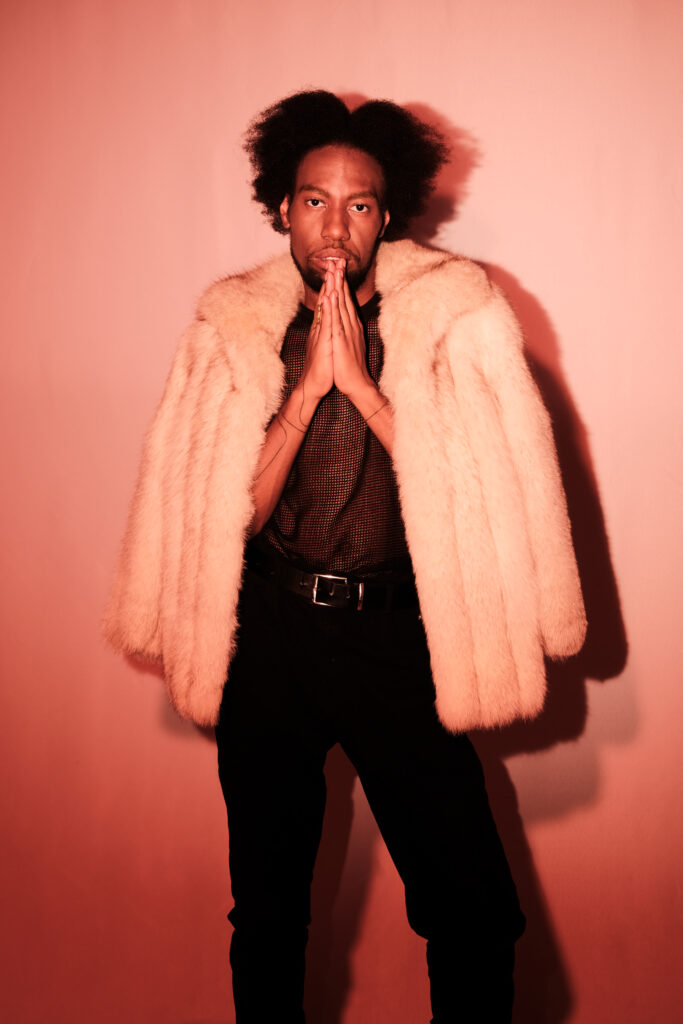
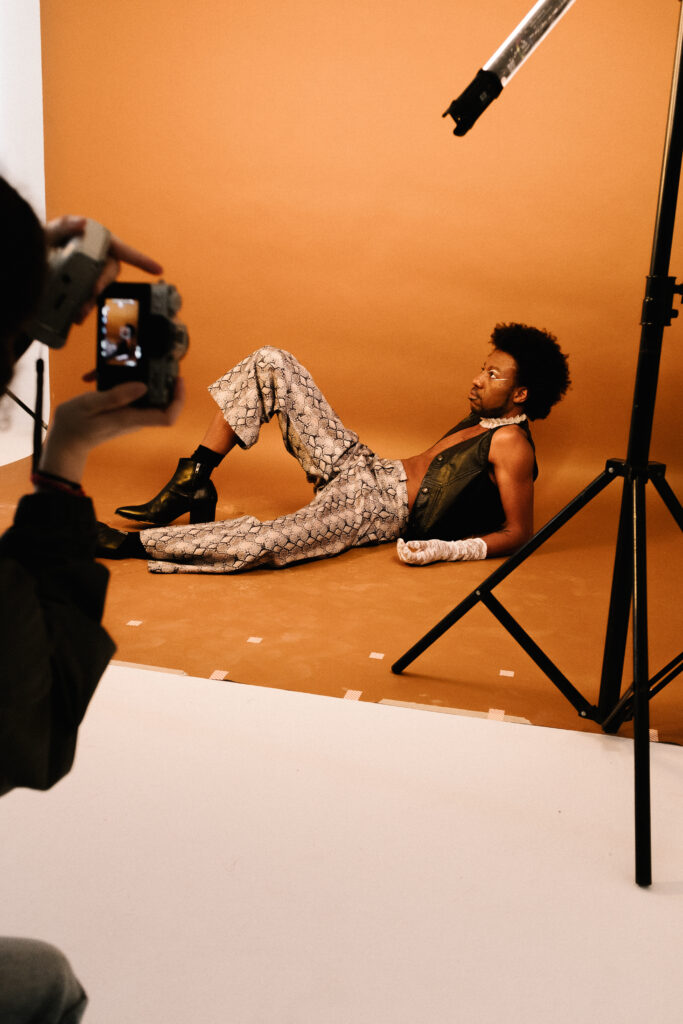
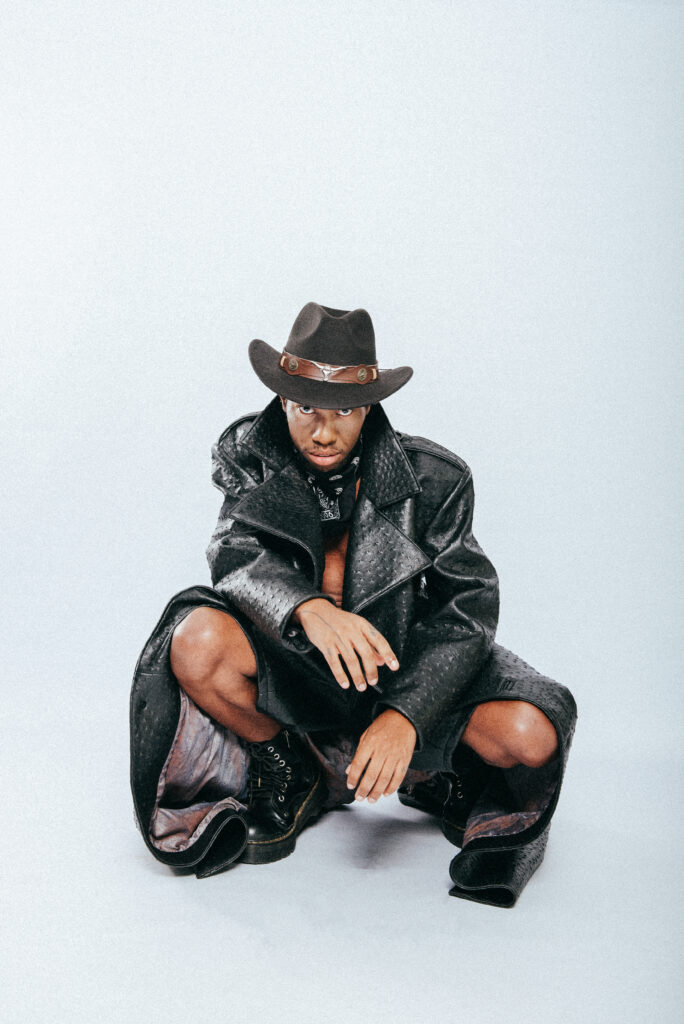

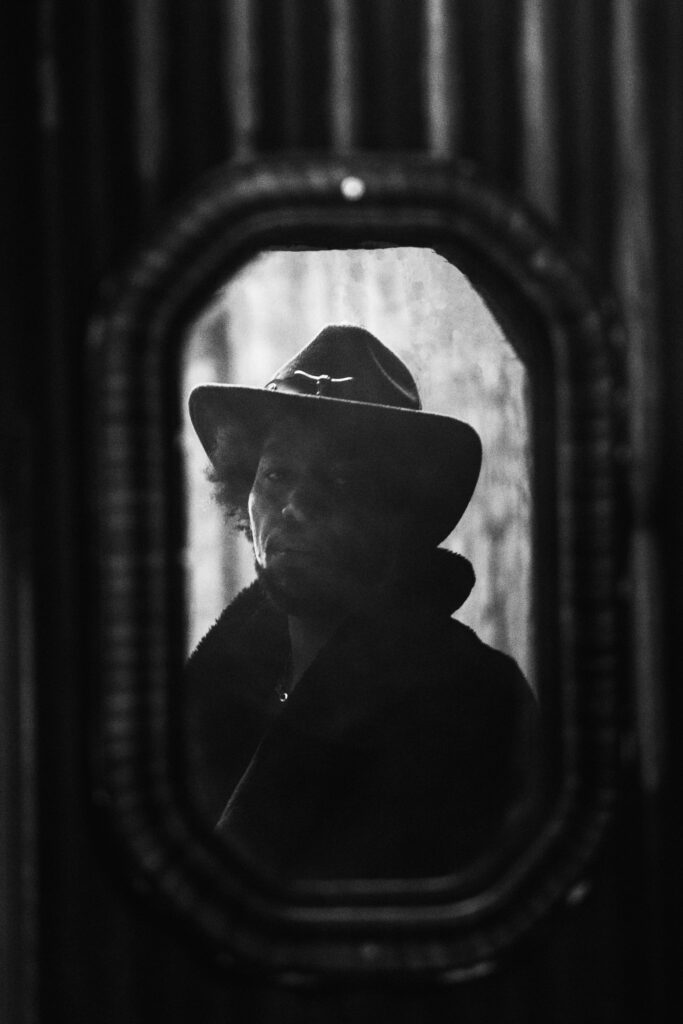

Throughout this project you speak in the collective format. “We”, initially I found this strange, wondering who “we” is? We’re so used to single narrators in music, and there is something about this language that challenges that. What does collective voice mean to you?
I would say I’ve always been vocal about community and not pursuing this career alone, and I wanted to, through these radio transmissions, get into a bit of voice acting and channel that into the interludes, while transmitting these messages that are not being solely from me, but being from the people that think and live and look like me, or want the same goals as me. I think that as a people, we are more connected in unification, echoing that this project is bigger than me. I wanted to also, in the language of it, make it known that it was a collective commitment to this hope of bringing joy to people that listened or connected with the music, or feel validated through it.
On Time Travellin’ Lover you open with “I’ll hold on to the magic, won’t let the fear turn me into a monster.” Here you are talking as a lover, but hearing it in this post-apocalyptic context, it also feels like you’re talking about a regime. Is there a relationship between love and oppression you are trying to highlight here?
Absolutely, Thanks for getting that. That’s brilliant! I love that you acknowledge that because I guess the title to some, may make it seem like it’s a love song, and with previous songs of mine that are love songs, there’s always been a double entendre to it or multiple meanings. With Time Travellin’ Lover, it definitely was set more in the year 2153 and that line specifically is quite autobiographical, where anger has always been an emotion that I’ve disliked. When you are facing oppression, unfortunately, anger is a tool that you have to utilise to call it out, to demystify it all, to tackle it, to challenge it.
I guess that’s how I wanted to transmute it by saying that as much as I’m angry about whatever is going on or how my loved ones are being treated, I will not allow those monsters to turn me into one of them. Holding on to the magic, holding on to the uniqueness of us through the timelines that we go through is how we stay in that static. Just kind of using lyrics to bring that up. I would hope to make a film out of this album and translate these lyrics onto screens. Whether it’s star-crossed lovers that are part of a regime, or part of opposing regimes that are trying to save the planet from whoever is trying to oppress us in these unique, minute ways. I don’t know. It’s all up to interpretation.
But yeah, Time Travellin’ Lover, like a lot of the music on this project, has multiple meanings that speak to calling out oppression, indignation, suppression – and also holding on to the love through it all. Because I think sometimes we forget that we can. Our anger can also be used lovingly, and not in a way that’s destructive.
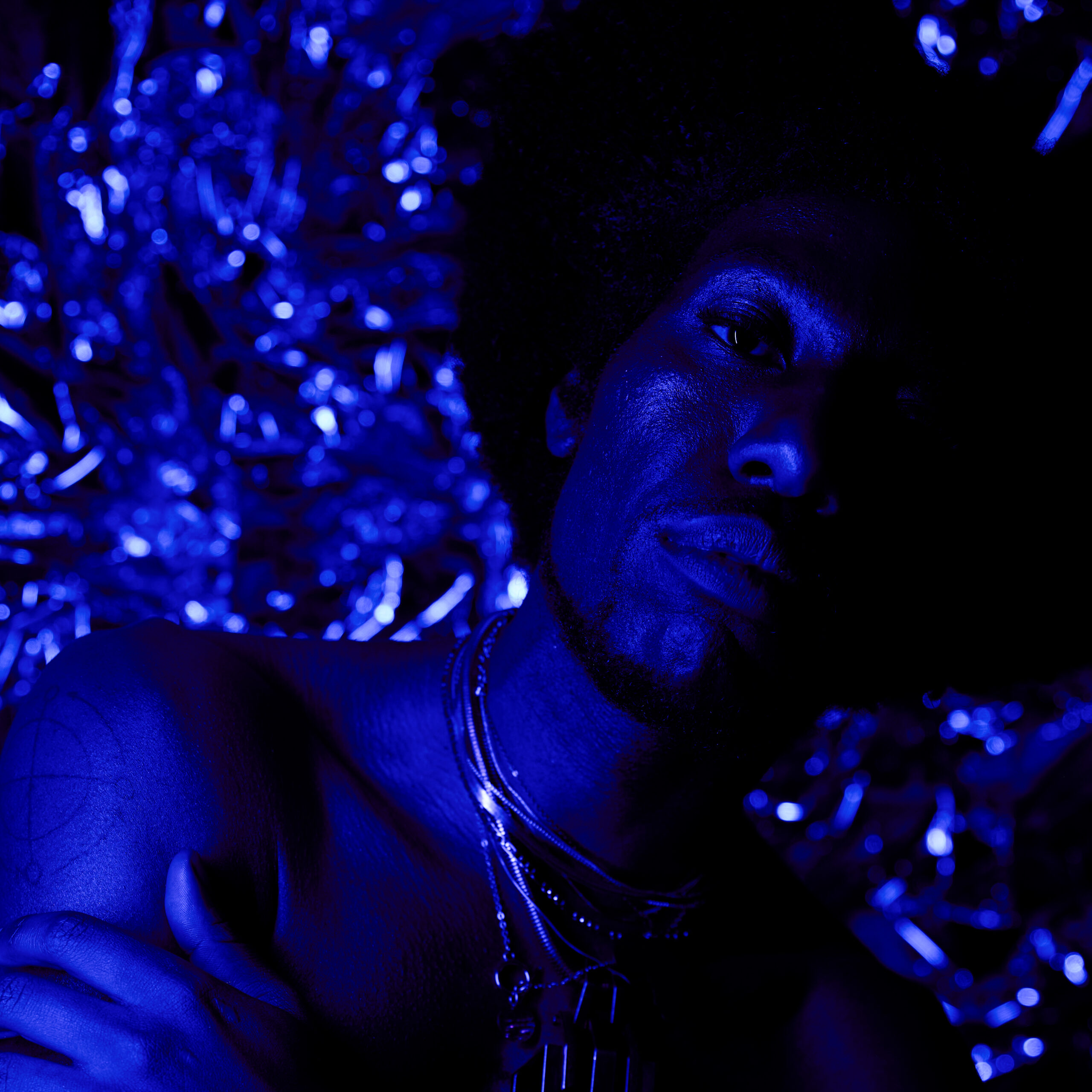
The project made me think of our siblings in Palestine, Congo, Sudan, the people across the world living under genocide and oppression – it feels like there are links between dystopia and genocide, for me. How does your music speak to your activism, and what is your hope with it all?
Yeah, a lot of my music from day one has always spoken to uplifting the voices of women, queer folks, children, and more specifically in birthright on the album, calling out the genocides happening in Palestine, Sudan, the Congo, and everywhere else. Everywhere else facing all of this oppression, violence and vitriol from evil people. I always quote Nina Simone as artists, we are supposed to reflect the times as much as I will write songs about love, or romance, or friendship and all of these things, we have to speak to the realities that are happening around us. Music is such a powerful tool that brings people together, that brings knowledge to the forefront.
Again, acknowledges Stevie Wonder, who, for me, is my all-time favorite songwriter – he’s used his gift in a way to unite a lot of people across races, across sexualities, and that’s what I would hope to do as a musician, and as an activist. Because for me, they’re one and the same. You cannot take away my musicality from me. You cannot take away my activism from me. I am the same person you will meet in person, and the same person you will meet on stage. My politics will never change for anybody, and that is a confidence that I have built over time. I think there’s that quote: “Speak the truth, even if your voice shakes.”
As a young person, even though I was still vocal, I was scared to do that, but I still pursued social justice. I mean, I majored in it, and to be able to do that as an artisan, as a musician, is important. I hope that people feel hope from this album, I hope that they also educate themselves on a lot of these topics, whether it’s the genocides happening, queer rights, gender – all of these things. I would hope that I’m doing my role and part as an artist to inform the folks that listen to this music, and also inform them of the realities of what it also is to be a musician in 2026, an independent musician that is trying to really put out the best music out there, despite the fact that the machine, and now with the rise of AI – wants to promote all of this inhumane bullshit. I’m someone that has experienced a lot of rejection, and at a point where I am so sure of myself and confident in my abilities, and confident in the fact that my abilities will reach the people that they need to reach. So that’s what I hope. I hope this project makes people feel loved, seen, acknowledged, educated, and aware of the life that we’re living on this current planet, but also how beautiful the future can be for us if we just continue to hold on, and hold on to each other.
SOULWAVE 2153 is out August 7th on all streaming platforms.