The Visual Language of Connection: Hlengiwe Lala
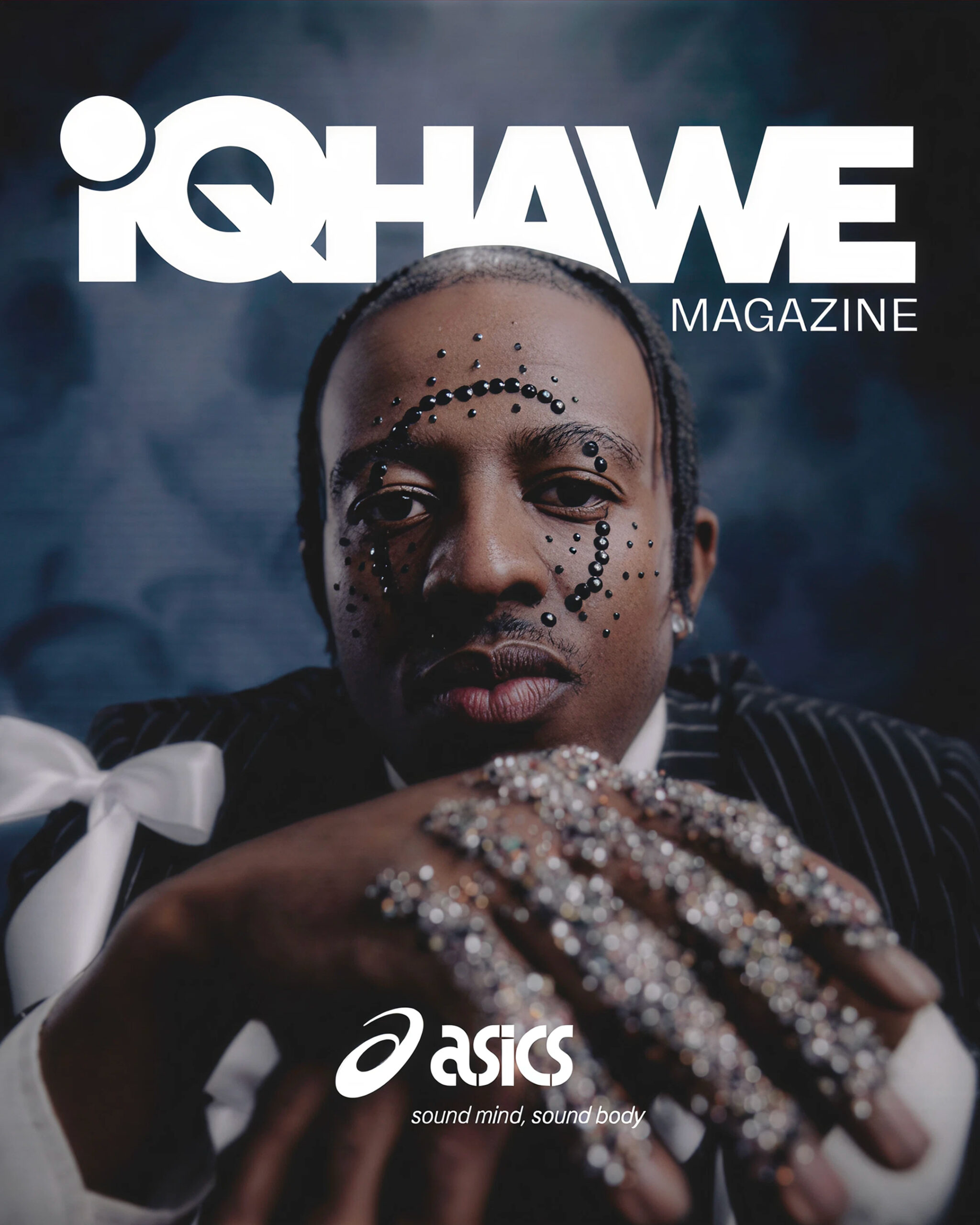
For Hlengiwe Lala, photography has been a medium less about images as endpoints and more about people as entry points. What began as curiosity in his early years moving from Botshabelo and later Johannesburg, evolved into a practice rooted in connection, shaped by instinct and refined through collaboration.
From learning lighting through experimentation and reference, to understanding photography as a bridge between himself and others, his work exists in the space between instruction and intuition. Whether on commissioned sets or in personal projects, Lala is constantly negotiating how images are made, what they carry, and who they speak to.
In this conversation, he reflects on beginnings that were shaped by the ongoing process of building a visual language grounded in people, openness, and intention.

Please kick us off with the very beginnings of your journey.
I was born in the Free State, specifically Bloemfontein, raised in Botshabelo from 9 months until 4 years. It’s a small town that almost sits between Bloemfontein and Lesotho. I then moved to Johannesburg in 2014. As for how I started shooting, or what I initially wanted to do; I actually wanted to be a football player. I really loved soccer growing up. But, you know, plans went left. Funnily enough my dad was kind of the church photographer. He never took it further, but he loved photography as a hobby. So it was always around, just very subtly through my dad.
I was in grade 8 when I started taking it seriously. My cousin, Seth, played a big role in that as it really came from curiosity in understanding what he was doing. He had access to his uncle’s cameras, and I remember asking, “Yo, can I please shoot?” And he was like, “Nah, you’re going to break it,” but that just made me more curious. Over time, when I eventually got a camera, I began to see it as a way to connect with people. I was never the biggest socialite, so photography became a bridge for me, a way to connect with my peers and people my age in high school. And it worked out.
Even now, that’s still the overarching thing for me: connection. Photography brings about connection.
You’re well versed in photography and lighting a frame. How do you understand the relationship between light and image, not just technically but conceptually?
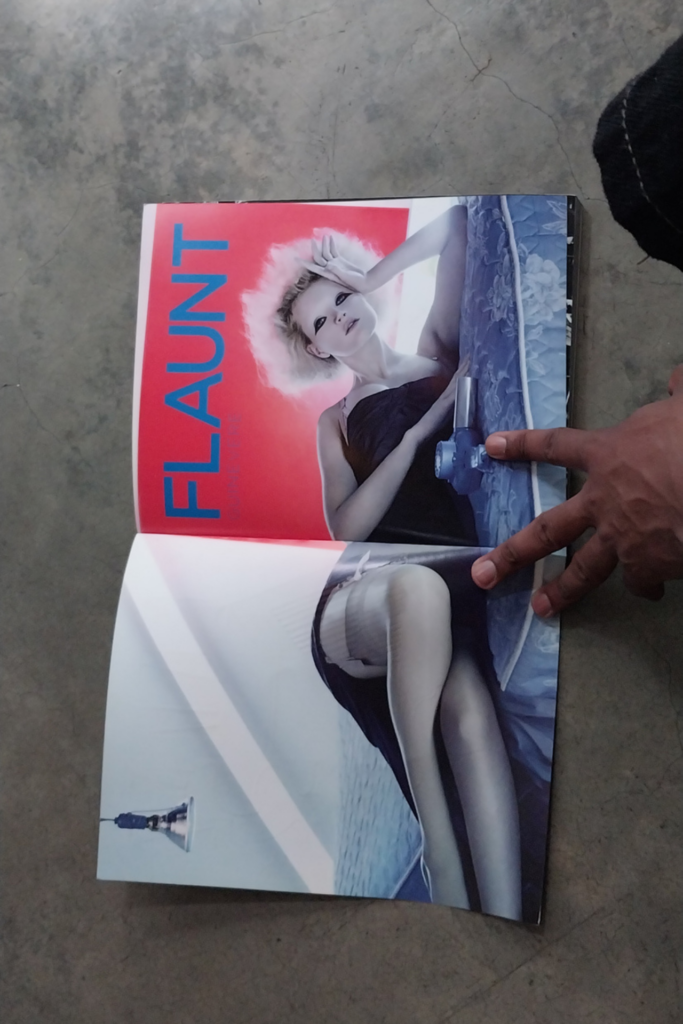
I was first exposed to the work of photographers like Petra Collins, Hugo Comte, Gunner Stahl and Gregory Crewdson. At the time, I was already shooting, using the on-camera flash, but I wasn’t getting the results I was seeing in their work. I thought maybe it was some kind of effect or something, and I was just trying my best to figure it out. Then I got to university [studying Visual Communications at Open Window] and, in my second year, I was introduced to lighting. That’s when it started to click. I realised, “Oh, this is the element that’s been missing all along.”
From high school through to university, I was almost obsessed with figuring it out: how to achieve that kind of look seen from Petro Collins’ work, especially the use of bold, colourful lighting, and trying to emulate it. I didn’t even know colour gels existed at the time, so I’d improvise by using things like plastic bags to create colour, or my phone’s flash, or a torch, just trying to get as close as possible to the effect I had in mind. That obsession stayed with me. I always knew lighting was a vital component of what I wanted to do. For some people, it might not be a big focus, but for me, it became central.
I make a point of assisting and learning from people who are far more technically well-versed than me just to keep developing that understanding, with mentors and teachers like Mishaal, Paul Shiakallis and David Blaq. It’s such an important part of the work, and my relationship with it has become a really significant one.
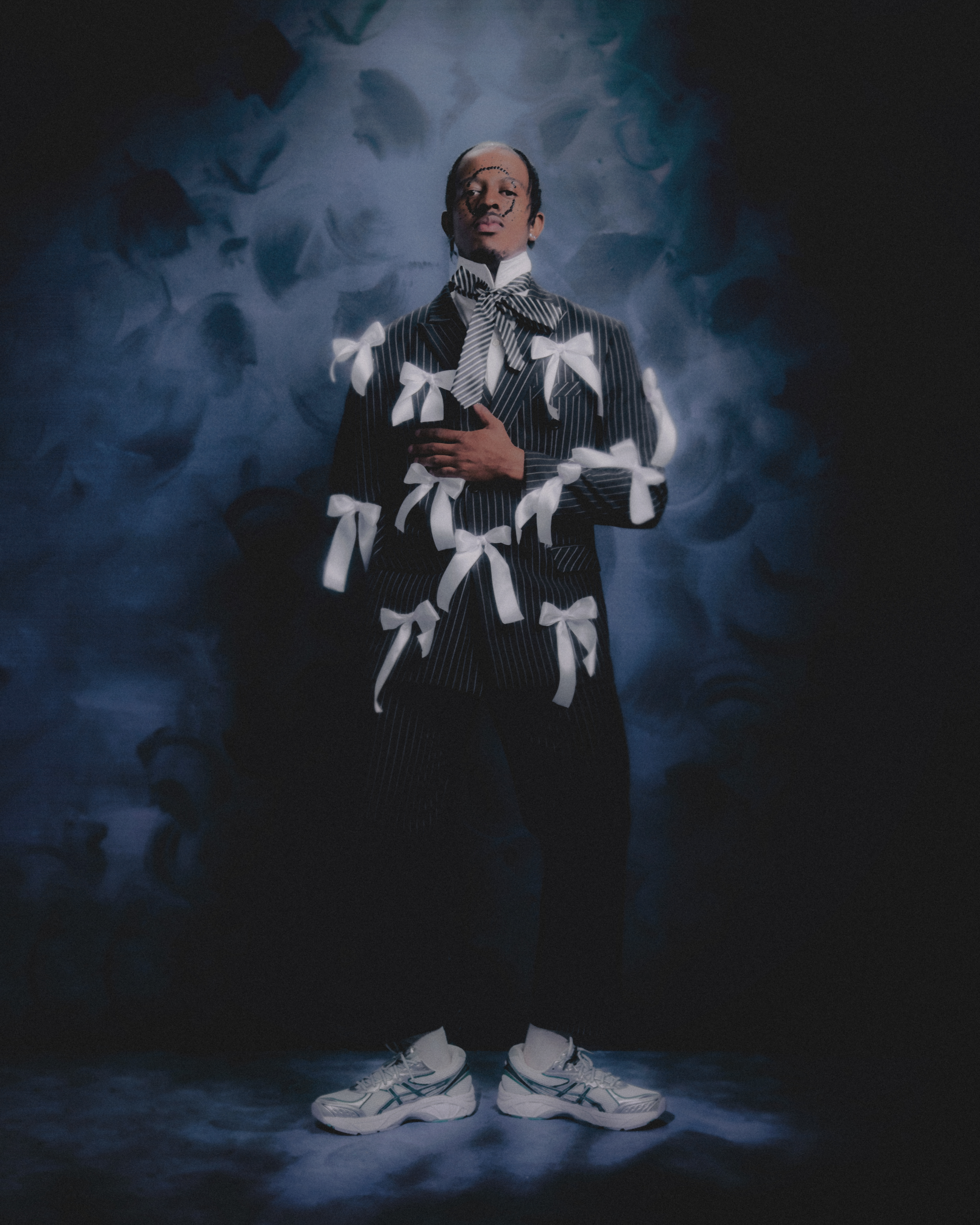
And was there any hesitation from your family in your decision to study something creative?
My mother is my biggest cheerleader. From the beginning, whatever I wanted to do, she supported it. I think she just trusted that I would find a way. The hesitation came more from my dad, but my mom was the one who said, “Let’s just do it.” She believed in me, even in moments where I didn’t fully believe in myself. I had doubts about whether it’s a profitable career, all those questions that traditional adults tend to ask. And those thoughts crept in, making me second-guess things.
But she kept encouraging me and so we’re here. I am a product of her belief in that sense.
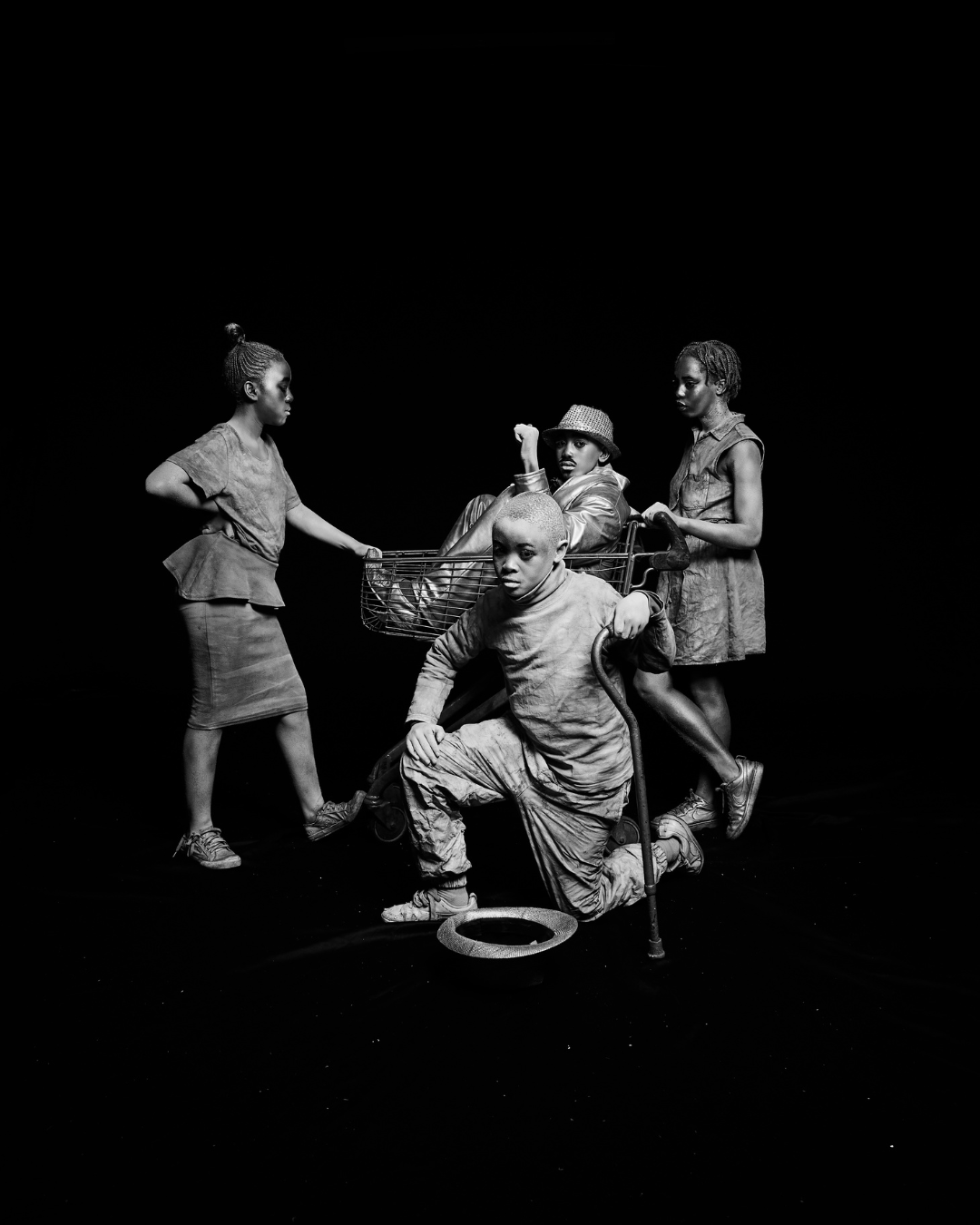
My favourite set of images is what you shot for Ntsika from Internet Girl as well as Club Valley press images. Oddly, both sets are black and white and just how you composed and lit the frames is so tasty. So I’m curious about your creative approach. Do you do research beforehand? Do you sketch things out? What are you watching or referencing? What was your approach on it beforehand?
I think I just really love working with friends who are in music. Musicians are probably my favourite people to photograph. They’re fun, and they give me the space to interpret their ideas. Sure, I love working from a brief, something that gives direction, and then I can interpret it in my own way. That’s a big part of my process.
In terms of composition, it’s also a very collaborative experience. I like to listen to everyone on set and hear their input. I’m big on collaboration and open dialogue because I want to understand where everyone is coming from and how I can best serve the vision. Sometimes that openness can make things feel a bit hazy, and it does happen often, but I value that exchange.
From there, I interpret the vision through my own lens, drawing from what I’ve seen and what I personally enjoy. Film is a big reference point for me. I love the compositions in Scott Pilgrim vs. the World; that’s one of my favourite films. I was also a big fan of AWGE. the creative agency founded by Asap Rocky, and I enjoyed how their output introduced me to a greater level of taste and quality.
I’m also inspired by films like Oldboy (Korean Version) and Paris, Texas by Wim Wenders. They use similar compositional techniques and great lighting. So I take all of these references, everything I’ve watched and absorbed, and my brain kind of pieces something together that fits the moment. Then it’s about aligning that with the artist’s vision. From there, we just have fun. A lot of it is instinctual; we figure things out as we go, allowing room for impulse while still being grounded in a shared direction.
What have you been currently consuming that has inspired you, and somewhat speaks to your aspirations within Photography?
I think my aspiration from the beginning has remained the same; it’s always been about connection. Connection is a big thing for me regardless of where photography takes me. Some of my closest friends are people I’ve met through photography and being in this space. It’s brought some of the most amazing people into my life. So for me, it’s always about connecting, whether locally or internationally. I want to go further so I can meet more like-minded people. That really excites me.
I remember going to Cape Town (not on holiday with my family, but on my own) and suddenly I was meeting all these new people, stepping into a different scene, experiencing new energies. I love people. I’m constantly inspired by others and that’s what keeps me going. I’ll see something incredible that someone else has created, and it pushes me. There’s something powerful about seeing someone fully apply themselves and it reminds me that it’s humanly possible. Not that I want to replicate what they’ve done, but it motivates me to maximise my own potential. It pushes me to ask: how far can I go? How much can I grow?
Seeing what others create makes me want to push myself to that same level of intention and excellence. To create something just as meaningful in my own way.

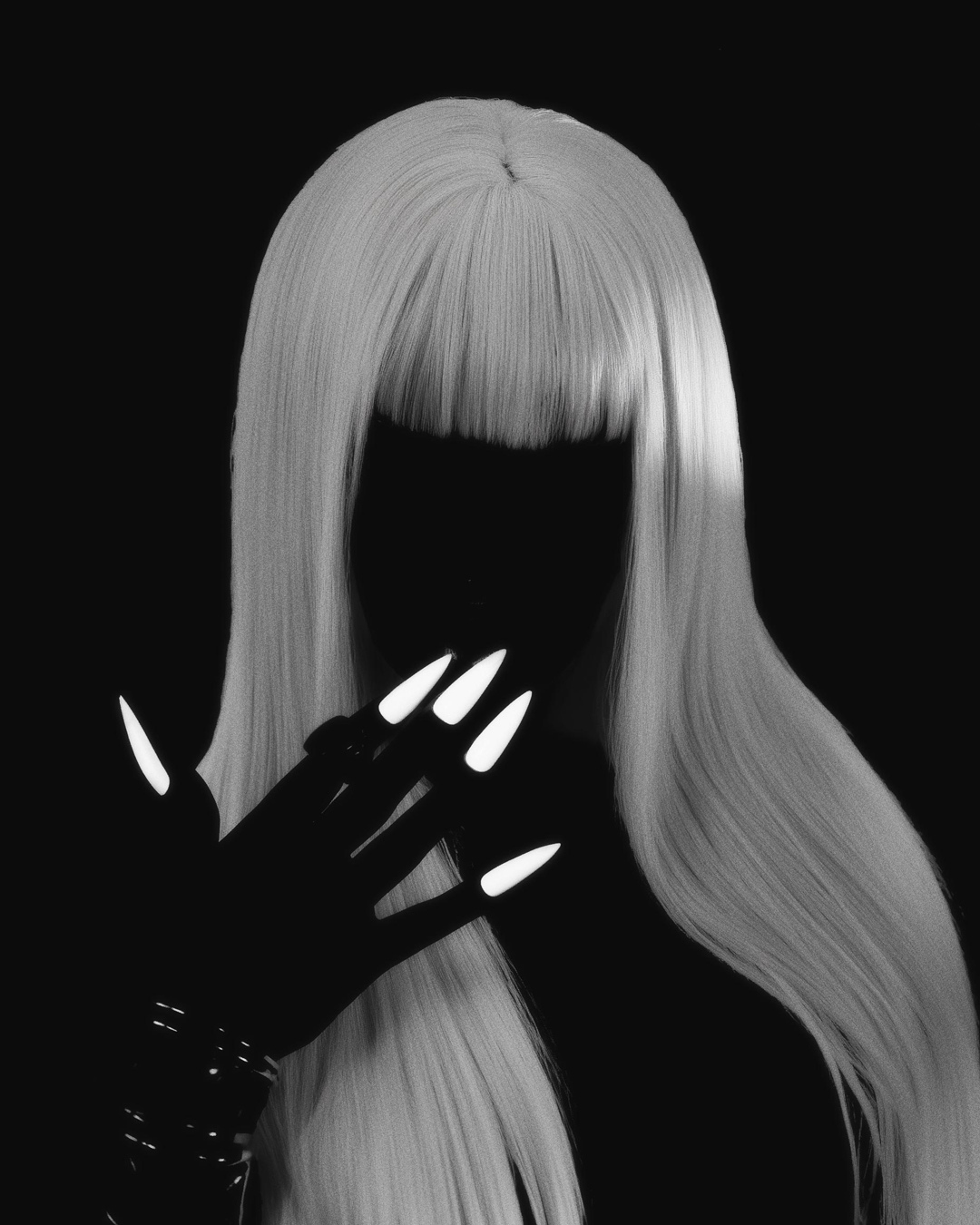
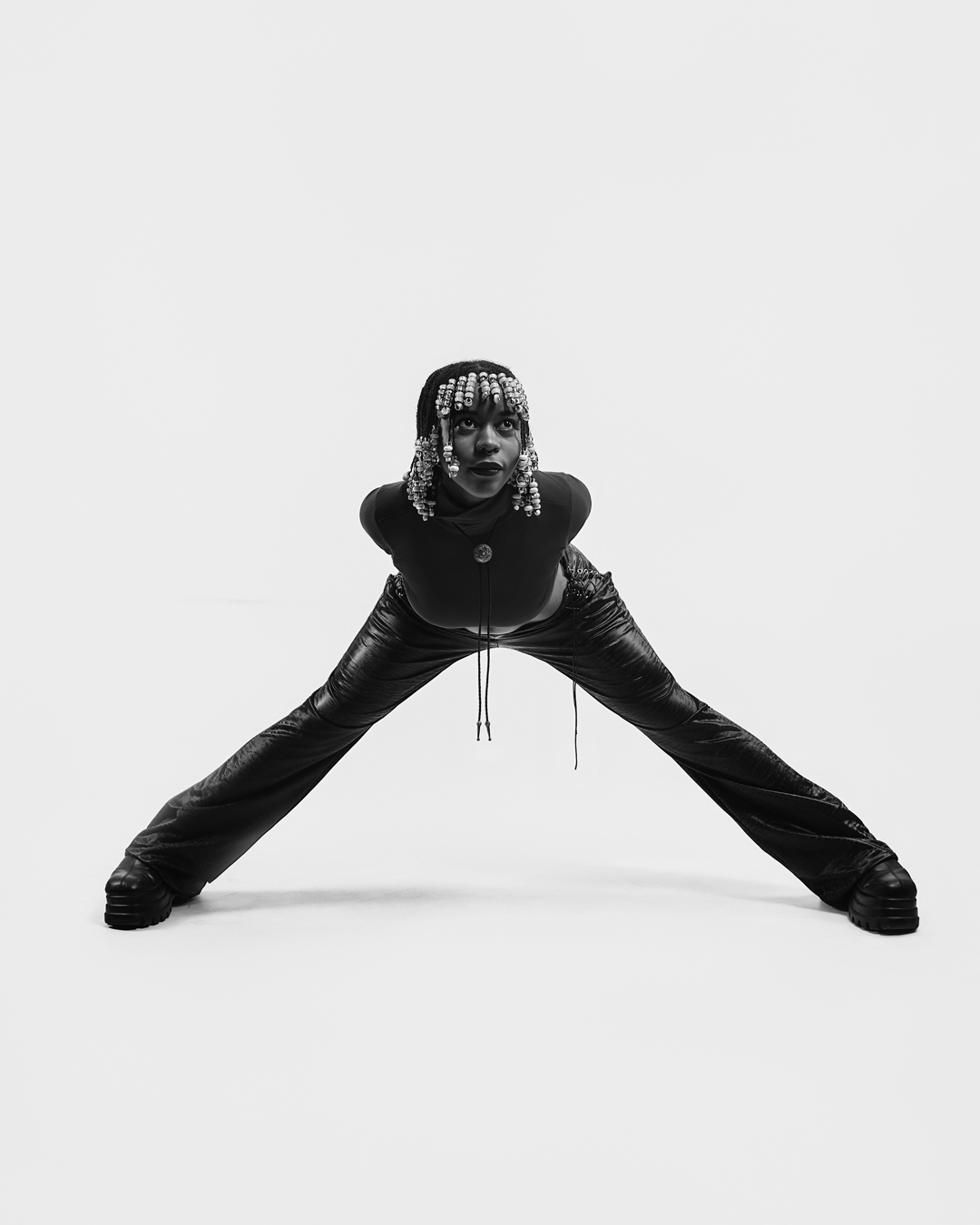
ASICS speaks to the idea of a sound mind in a sound body. In a practice that asks for both emotional presence and physical energy, what keeps you grounded and in rhythm?
If I’m being honest, it’s not always a sound mind. I push myself a lot, and sometimes I struggle with stillness. I get agitated just sitting as I find it frustrating. I’m more naturally drawn to the messiness and the busyness of it all. That’s where I find some sense of calm, as strange as that sounds. I think I’m just calibrated to function in that working space, constantly responding to problems, figuring things out, moving through that process. That’s where I feel most at ease.
And it also helps that I’m working with people I genuinely love. A lot of the time, it’s my friends and partner. So even when things are intense, it doesn’t feel as heavy, because you’re surrounded by people you enjoy being around. That makes the experience a lot more meaningful.
And what are you learning about yourself as you work? What are the things that make you pause and think, “I didn’t know this about myself,” or “I really love this about myself?”
I think what I’ve been learning about myself is still unfolding to me. As I mentioned earlier, photography was a way for me to connect with people. I realised that some people can form connections naturally, without needing anything else. For me, I needed a vessel, something like photography to help facilitate that. That’s how it had to be for me at the time. But through that, I also started to realise that I’m a person beyond the camera. There are other parts of me that need to grow and be nurtured, outside of just the work.
So I’ve been developing skills like communication and learning how to engage with people better, how to create a more meaningful experience for those I work with. Those more personal aspects of myself have become really important, because they directly shape the work and the environment around it. I’ve also discovered how much I enjoy theory. It just has to be something I’m genuinely interested in. When I was in school, I wasn’t the biggest theory person, but when it came to the arts, and especially photography at university, I really connected with the theoretical side of things.
It made me realise that images don’t have to just be images, understanding that they can carry meaning, they can contribute to conversations. I started to understand what images can do, what they can represent, and how they function within a larger context. That’s been a big shift for me; recognising that I can contribute to a broader conversation around image-making, whether globally or even within a more local context like Johannesburg. And that excites me knowing that I have a voice within that.
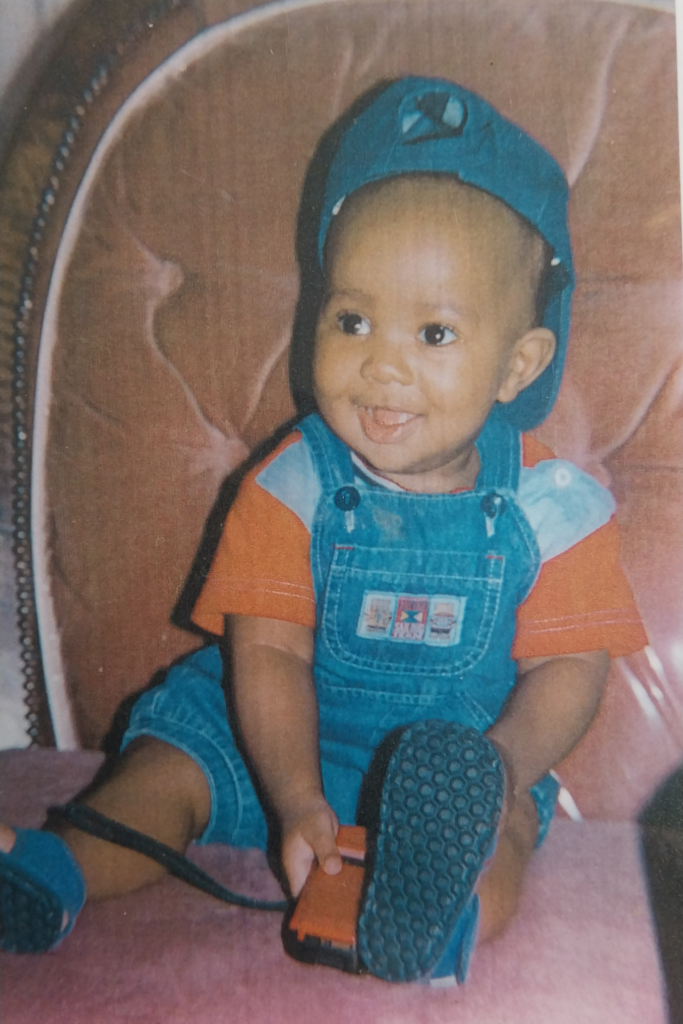
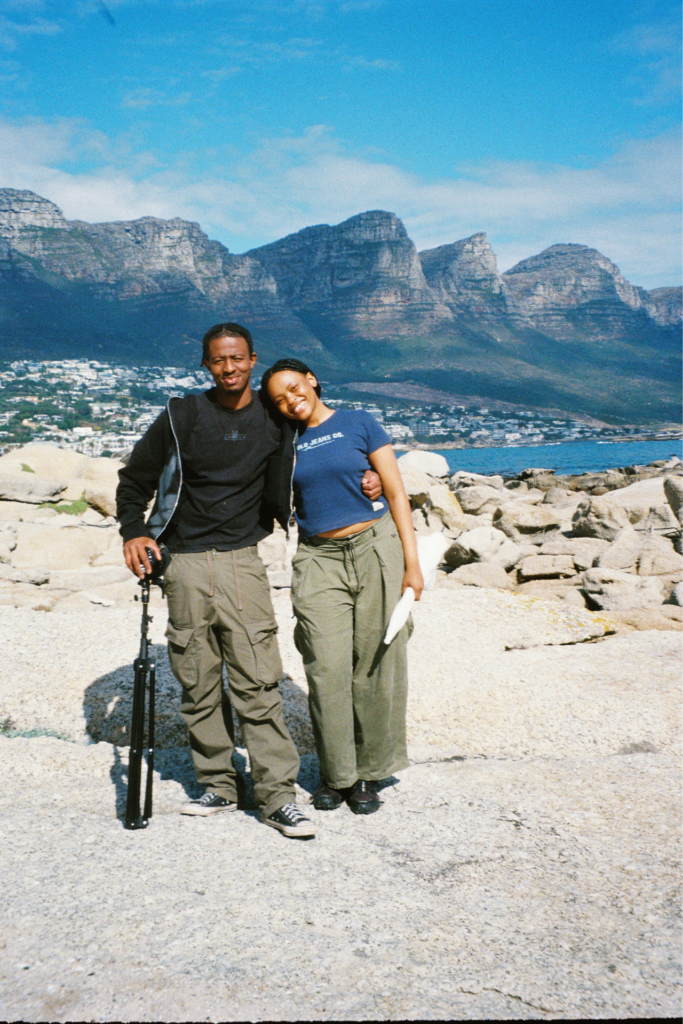
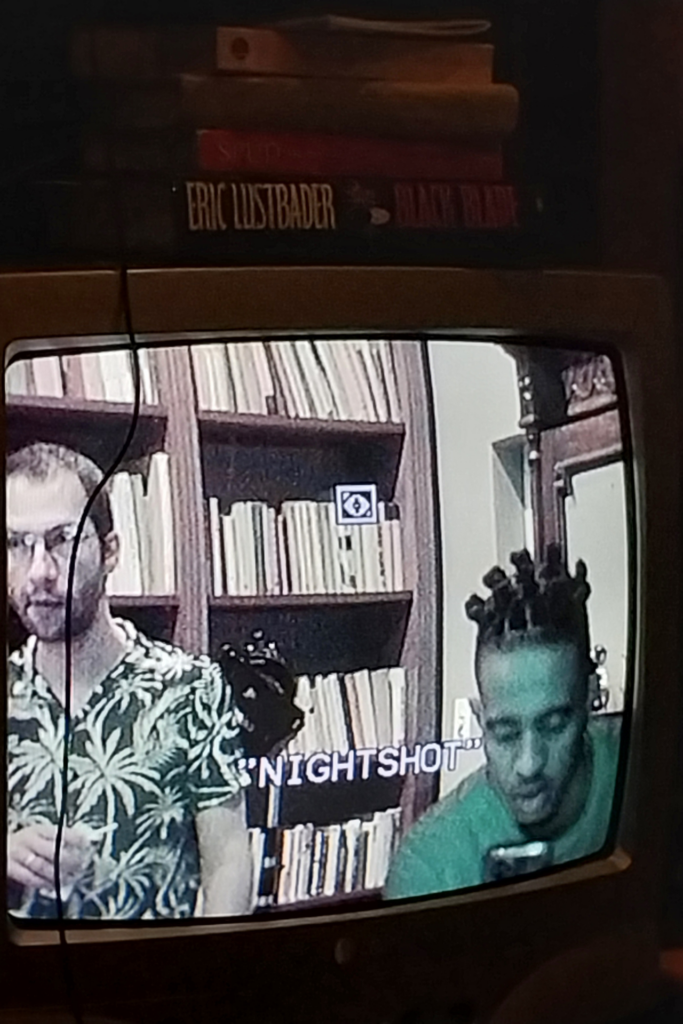

Can you expand more on the functionality of an image be outside of what we traditionally know or see it as.
An image can carry so much more than what we initially see. Someone can look at one of my images, or even compare it alongside work from other photographers in different places, and it can speak to where you come from, what you’ve lived, what you’ve experienced. It holds context. It holds history. It holds identity. That’s when I started to realise the kind of power images actually have.
And I think that shifted something in me. I became a bit slower in how I create. More intentional. More selective, or at least more aware of what I choose to put out. Because once you understand what an image can do, and what it can mean to someone else, you start to respect it differently. You become more conscious of its impact. So for me now, it’s also about learning how to use that power responsibly, and how to make sure what I’m putting into the world actually carries something meaningful for someone else who encounters it.
Has there been moments in your career where you’ve had to trust your instinct over instruction? What did you learn about yourself in those moments?
It’s a tricky question, especially because when you’re commissioned, especially in the way I’ve come through the industry, sometimes you’re brought in purely for the service you provide in terms of skill, not necessarily input. It can be very much, “We’re paying you to follow instruction,” rather than, “What is your perspective on this?” And that’s the reality of a lot of commissioned work.
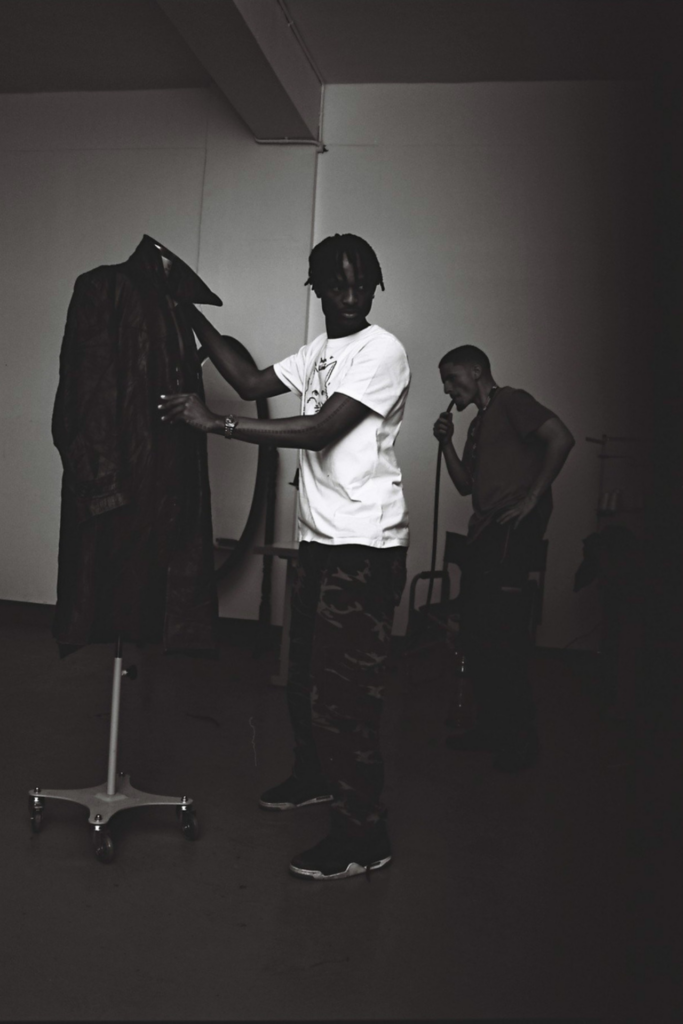
That’s also why I’ve found it important to separate those spaces. I don’t necessarily try to merge the two all the time. I do commissioned work where I execute what’s needed, and then I create space for my personal work where my voice, my ideas, and my perspective can fully exist. So when I’m working on things like what you referenced with Club Valley and Ntsika, or with iQHAWE, that’s where I feel I have more room to explore and shape things differently. That’s where I feel like, in those spaces, I operate more instinctually because the room is open for that kind of expression. So it’s been about understanding that separation: knowing where there’s instruction, and then creating space for instinct, personal expression, and a more collaborative way of working.
I think more recently, I started noticing it even in the way I get commissioned, for example, being asked specifically to come and do lighting. In those cases, people already know what they want, and I’m there to execute that. It’s also a respect thing, you know, just respecting someone’s idea and vision without pushing unsolicited input or trying to impose my own thing into a space where it’s not needed.
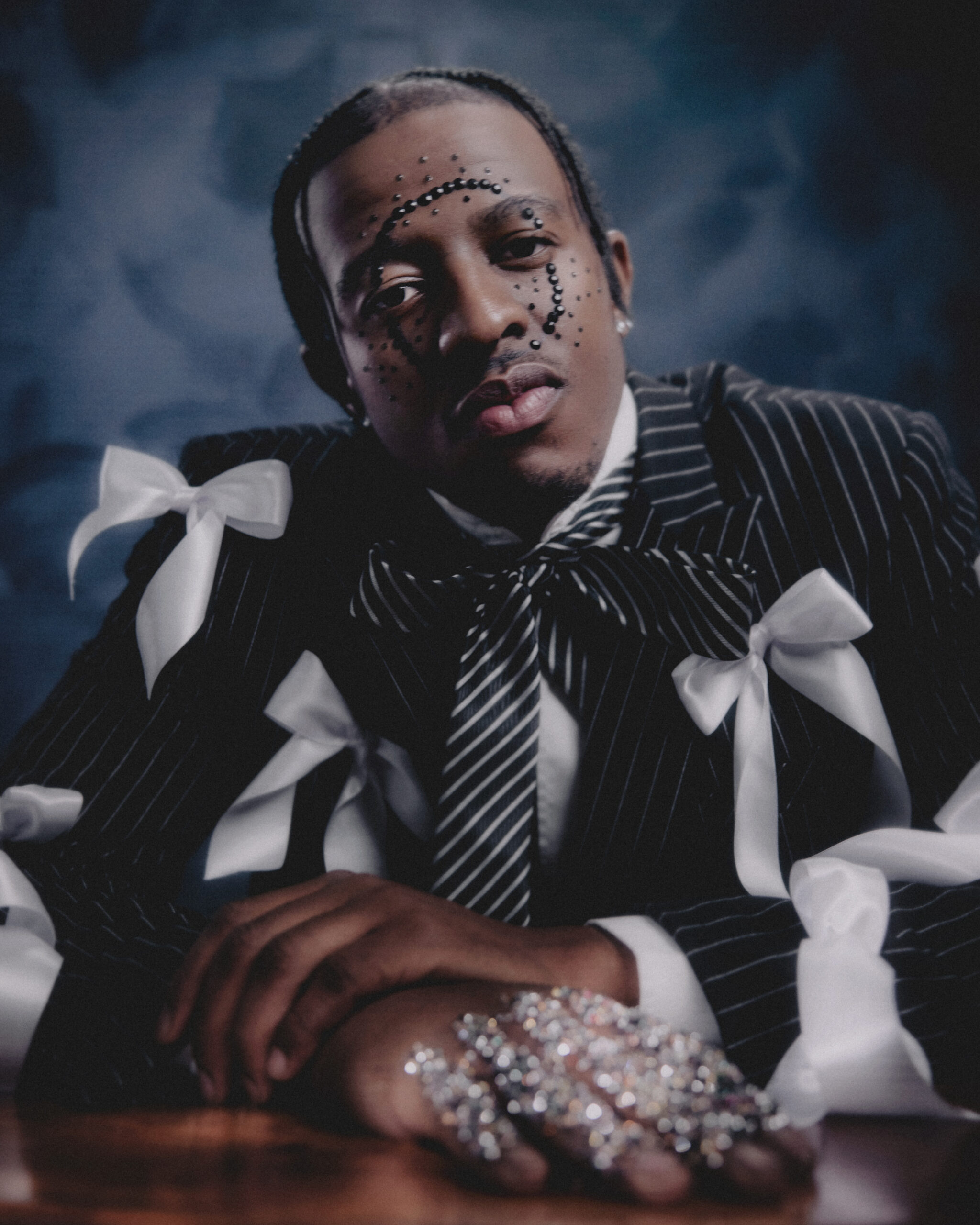
There is a long history of photography in South Africa engaging questions of identity, representation, and visibility. How does your work position itself within or against this lineage?
I think again, it goes back to that connection thing. In how I work, I don’t really close myself off to people or their ideas. I stay open to different visions, whether it’s musicians, fashion designers, or just people from different walks of life. I’ll sit with them, understand what they’re trying to say, and then respond to that. And I think in that way, you almost end up representing a wider range of people. When you’re open to others properly, you can reflect them more honestly in the work.
So for me, it’s less about imposing my own fixed idea, and more about allowing myself to engage with whoever is in front of me. If someone comes with an idea that’s interesting or different, I’m like, let’s do it. And I think there’s something powerful in working from that place, especially when it’s not just your own idea being executed. For example, when I work with people like Khumo or Kleinmuis , who are in fashion, their work already carries so much meaning. It speaks to South Africa, to youth culture, to Johannesburg, depending on what they’re exploring through garments and styling. So when they come with an idea and say, “Let’s shoot this,” I see it as aligning myself with that intention and contributing to an ongoing visual archive of those stories.
That openness to different people and perspectives is what, for me, naturally positions the work within that larger conversation.
To close us off, what are your plans and aspirations for this lifetime?
“… this lifetime” has an intense weight, but I think I just want to keep pushing myself further and see how far I can take image-making as a practice. I want to challenge myself beyond the confines of photography as well, and start extending ideas into other formats, where the idea itself is the central thing. Just exploring concepts across different mediums, and allowing the work to move in that way.
I’m excited by that, by not limiting myself to one form, but seeing how ideas can exist and evolve elsewhere too. And I’m also excited to see how I can contribute to pushing the South African narrative and landscape within a global context, and how that dialogue continues to grow and seeing my work fitting into that broader conversation.
So yeah, that’s really what I want to do in this lifetime.
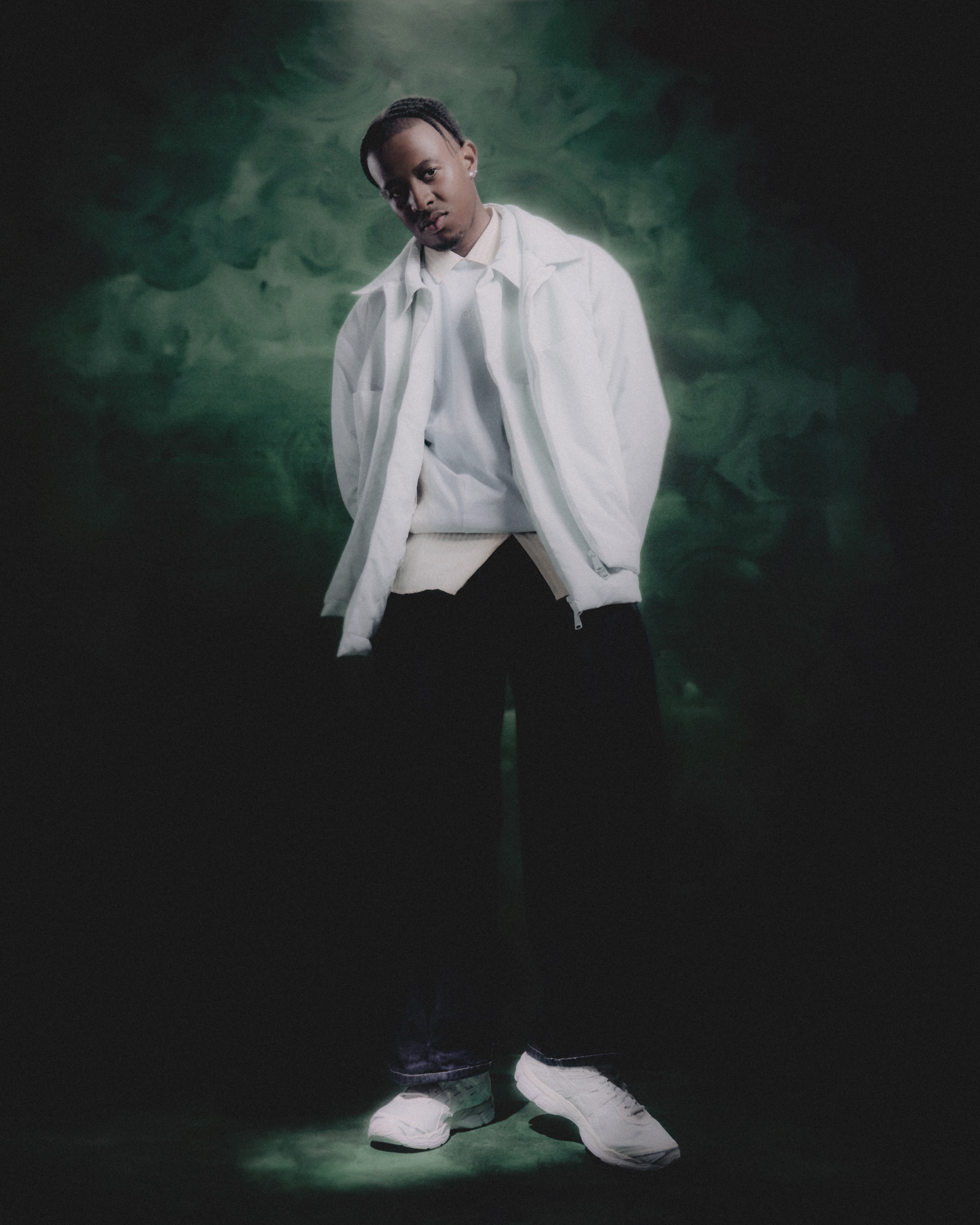
“I was never the biggest socialite, so photography became that bridge for me; a vessel to facilitate that connection with people.“
