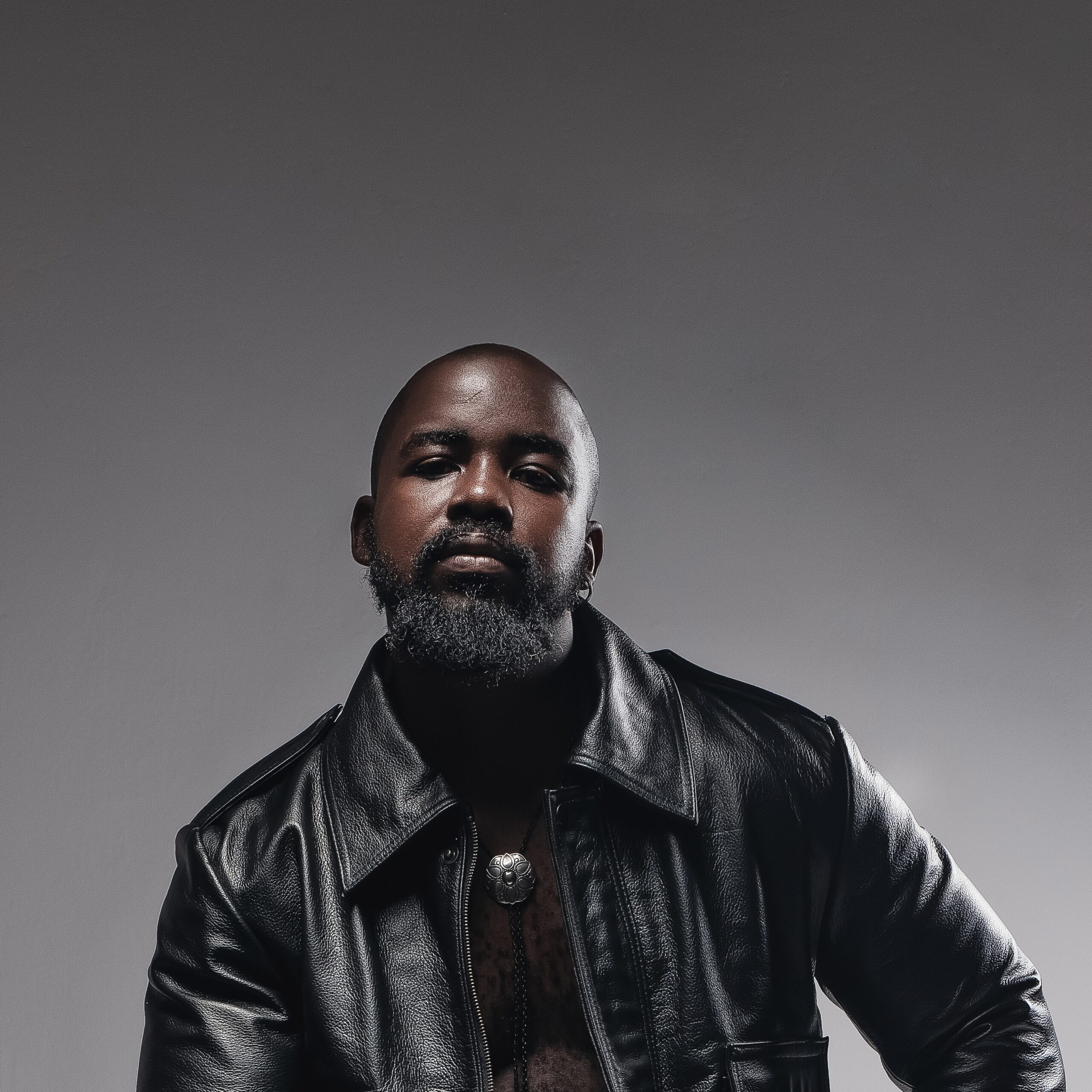
“We make time for the things we love.”
– Wandile Mbambeni
Written by Hlengiwe Mkwayi
When Wandile Mbambeni joins our virtual interview session, he sits perfectly in the middle of his camera’s frame. Behind him is a dark brown wooden wardrobe and a partially visible guitar leaning in the left corner of the screen; subtle markers of both home and practice.
When I first listened to Wandile Mbambeni’s music, I was placed in a world of stripped-back honesty and deeply human lyricism. With his storytelling drawing from themes of faith and doubt, grief and grace, love and loss, the eMthatha-born and currently Johannesburg-based singer-songwriter blends soul, folk, country blues and Afro-inspired techniques that present like confessions.
Ahead of his Things We Love tour which headlines vocalists Simmy and Rowlene, alongside DJ duo Nouveaux, we chat through his new journey as an events promoter, the art of line up curations, surrender, healing, as well as self-discovery.
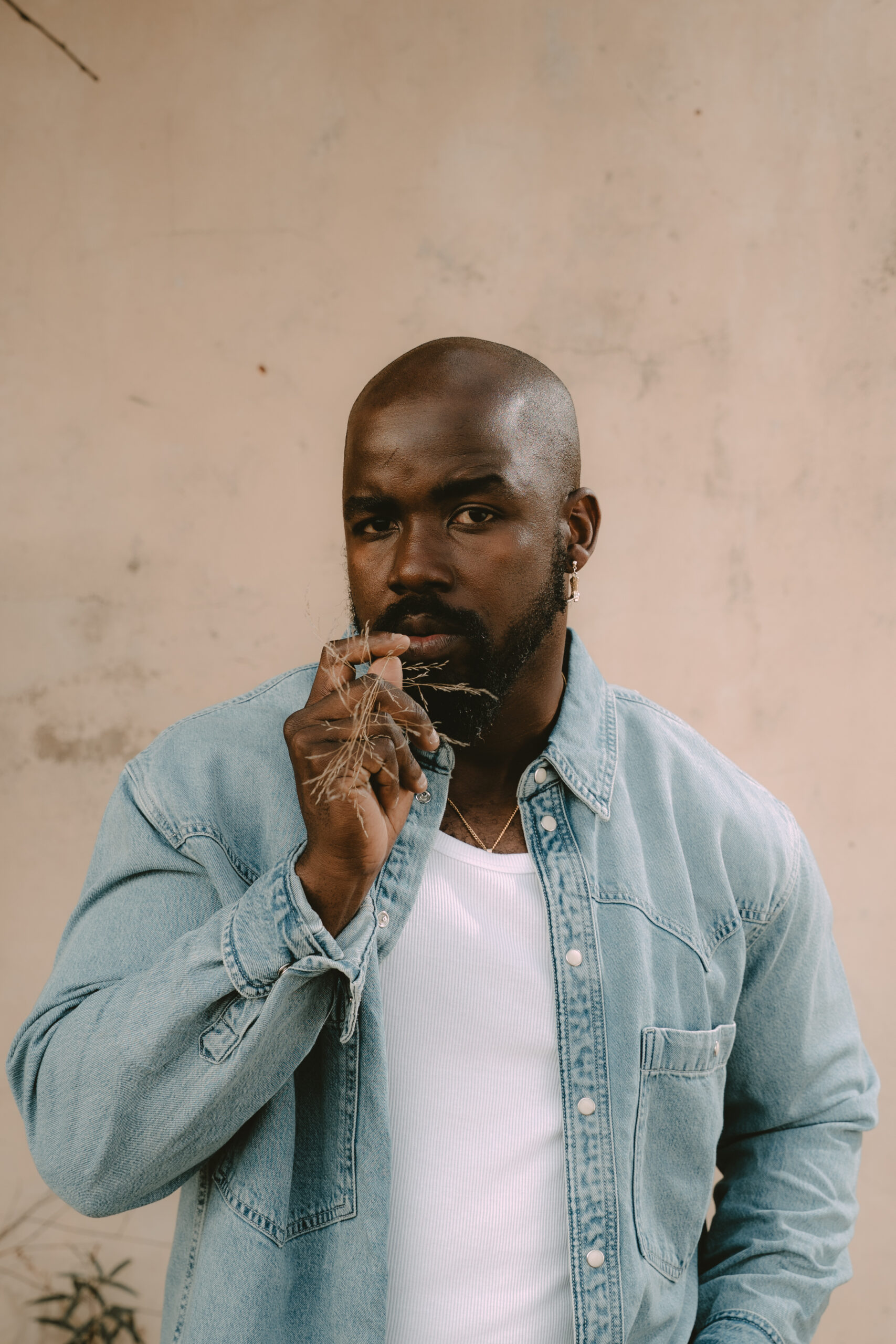
Who is Wandile Mbambeni?
I was born in eMthatha and grew up in eMonti in East London. I’m one of three boys, the last born, hence the name Wandile. My middle brother is Onele, which means “the children are enough.” My two brothers were born quite close to each other, almost a year apart, and then I came much later, as the extension. I grew up in a sports-driven environment, playing a lot and being deeply obsessed with it, but also drawn to music from early on. That duality has always stayed with me.
I still try to hold onto where I come from, that being a small city that’s deeply rooted in community. There’s a kind of closeness and awareness of people that shapes you, and that’s something I carry with me. It’s part of how I see the world and, ultimately, how I tell stories. Now, I am a songwriter and I tell stories through music. More recently, I’ve also stepped into promotion, putting shows together and working more intentionally behind the scenes in the music industry.

My first introduction to you was through the song Hey Lord. I can’t recall where I was when I first heard it but I remember it bringing me to a posture of surrender to God. What were you pulling from when writing the song?
In my mind the timeframe felt brief but looking back, it was actually an intense eight- to ten-month period. During that time, I was writing a series of songs — “This Room Feels Like Hell,” “A Father’s Prayer,” “Halo” — all circling the same thing: a return to God, a return to self, a process of making peace and learning to surrender.
I had given my life to Christianity quite young, around 15 or 16, and carried that with me through high school. But when I left the structure of home and church and moved to Port Elizabeth to pursue rugby with the EP Kings, I was suddenly exposed to a very different world that was no longer sheltered. There you’re meeting different people, encountering new energies. In that space, I drifted from the path I had known.
For a long time, I felt that distance. But then there came a period, one of the darkest in my life, marked by loss. Some of it was material, but much of it was relational. People I knew were passing away, and others were simply disappearing from my life; those “we’ll never speak again” endings. It forced me inward.
What was difficult to make sense of was that it didn’t feel like something I had caused. It felt like something I had to go through. And in that space, I began to feel called back to God, to something deeper within myself. That process required surrender. And surrender, at times, can feel dangerously close to giving up. Part of what lives inside those songs is an apology to God for the moments of doubt, for questioning, and for coming so close to letting go entirely.
As a storyteller, what are the earliest stories you remember carrying, and how did they begin to shape your sound as a musician?
I wouldn’t say I went into music with the intention of telling stories. If anything, I was drawn into storytelling through music. I’ve always been pulled toward honesty and music that feels true.
Some of my earliest memories are tied to music. When I look back, it was always present in moments of celebration. Whenever family gathered, music was there, almost like a reward. As a kid, you’d be called up to dance in front of your parents and uncles, those small, joyful performances becoming part of how you experienced it all.
One of the most vivid memories I share with music is with my dad. We’d drive alongside the ocean while he played Oliver Mtukudzi records. I didn’t understand a word he was singing, but I felt it. It felt good and whole. Even now, when I hear his music, it takes me straight back to that scene: sitting small in the passenger seat, seatbelt on, head out the window, the smell of the ocean in the air.
I also remember asking for a Mandoza cassette, this was around the age of nine or ten. At the same time, I was listening to Celine Dion, Dolly Parton, Teddy Pendergrass, and Brenda Fassie. That’s all to say that there was a wide range of music in the house and the mix of sounds really shaped my earliest relationship with music.
I’d like for us to then stay with that EP for a moment. In the track You Love Who You Love that features Langa Mavuso, the opening lines are “Did God Send You My Way? I Don’t Remember Praying For You.” What has been a moment that has come as both a surprise and yet still within destiny?
I was actually speaking about this the other day that it’s crazy how songs arrive. You can feel them in the air, in the way days begin to move. It feels like a season you’ve known before, but at the same time, it’s entirely new. With You Love Who You Love, it really came in phases. That’s why I placed Hey Lord at the beginning of the EP. It anchors you in the struggle, in the weight of it, and then carries you through that journey. Moving through pain, but arriving at a place of acceptance, where you can say, I don’t regret it. You begin to see the beauty in what you’ve gone through.
By the end, with A Father’s Prayer, there’s a sense of hope, of destiny, of imagining the kind of father I might become. And then You Love Who You Love sits within that arc as well. As much as I write and understand the process, there’s something intangible about it. I can feel when a season has begun; I don’t know if the song will come today or next week, but I know it’s there. And sometimes I rely on that feeling a bit too much, instead of just sitting down to write. But even then, it remains a kind of mystery how songs find their way to you.
And outside of music, beyond your everyday practice, are there other moments of surprise you’ve encountered in the quiet pockets of life?
I’m always surprised by how things work out, they just do. Even though I’m not always the best at believing that, or even acting from that place, it still unfolds that way. This morning I was complaining about going to the gym. I’ve been waking up at 5:00, 5:30 every day since the start of the year, and today I felt exhausted. I was like, I’m actually tired of this. But then you get there, and something shifts. There’s a kind of resilience that reveals itself, one you don’t always realise you’re building.
And it’s in those moments that you see it: I’m stronger than I thought. You start to feel capable of taking on things that once felt bigger than you. You realise you’ve arrived somewhere you didn’t expect. So I’m often surprised by that; by my own resilience, and by how my perspective continues to shift.
What are you currently unlearning as an artist, and now on your new journey as a promoter?
I think my sense of curation isn’t always the best thing for me personally. What we want things to look like isn’t always what works best for us. I’m learning that what feels “real” is different for different people, and I’ve had to unlearn my own idea of what “real” looks like for me. For a long time, it was about putting out content that looks great and functions well, and in some ways that still matters. But the music I make is rooted in something real, and I’m realising it needs a real person behind it too. Not just polished visuals or a perfected image.
I’ve had to unlearn the need to hide the more honest, vulnerable parts of myself; interestingly, the parts that already exist in the music don’t always exist in how I present myself publicly. Right now, people often have to find me through the music, but not necessarily through content that shows who I am day to day, that being how I think, how I move, what I’m sitting with. And then on the other side, as a promoter, I used to see that as something completely separate from being an artist; just logistics, plugging shows, finding the right headliner, pushing sponsored posts, selling tickets. But I’m starting to see that shift in culture. People aren’t just buying into a headline anymore but they’re buying into community, into experience, into story.
So I’m also unlearning what I thought promotion had to look like. There’s often a tendency in that space to hide the difficult parts, whether a show is struggling or not doing well. But as an artist, I’m used to telling the truth. So I’m learning to bring that same honesty into my work as a promoter too. I don’t want to inherit shame around things not working out. I’m okay with vulnerability in songwriting so I’m learning to extend that same openness into how I operate behind the scenes as well. It’s uncomfortable, but I think it’s necessary.
Instagram is, a lot of the time, my first point of reference when wanting to catch a glimpse of someone’s world. So while going through your profile, I noticed that you use the bandaged heart emoji a lot. What does that symbol hold for you, and why does it keep recurring in how you express yourself?
Yeah, for me it’s really the best emoji to explain who I am, or maybe who we are. I believe we’re all hearts that have gone through something, we’re all carrying some kind of bandage, some kind of scar. None of us are fully untouched; we’re hearts that have lived. It speaks to the idea that something in you has been injured, and you carry that forward, but you’re still here and feeling.
A “pure” heart, for me, feels a bit idealised. It leans more romantic in a way that doesn’t fully reflect real life. I was looking for something that feels honest, something that speaks to lived experience. I think I started using that emoji around the time I released I Don’t Regret It — a song about love, loss, and coming to terms with a relationship not working out. Not from a place of bitterness, but acceptance.
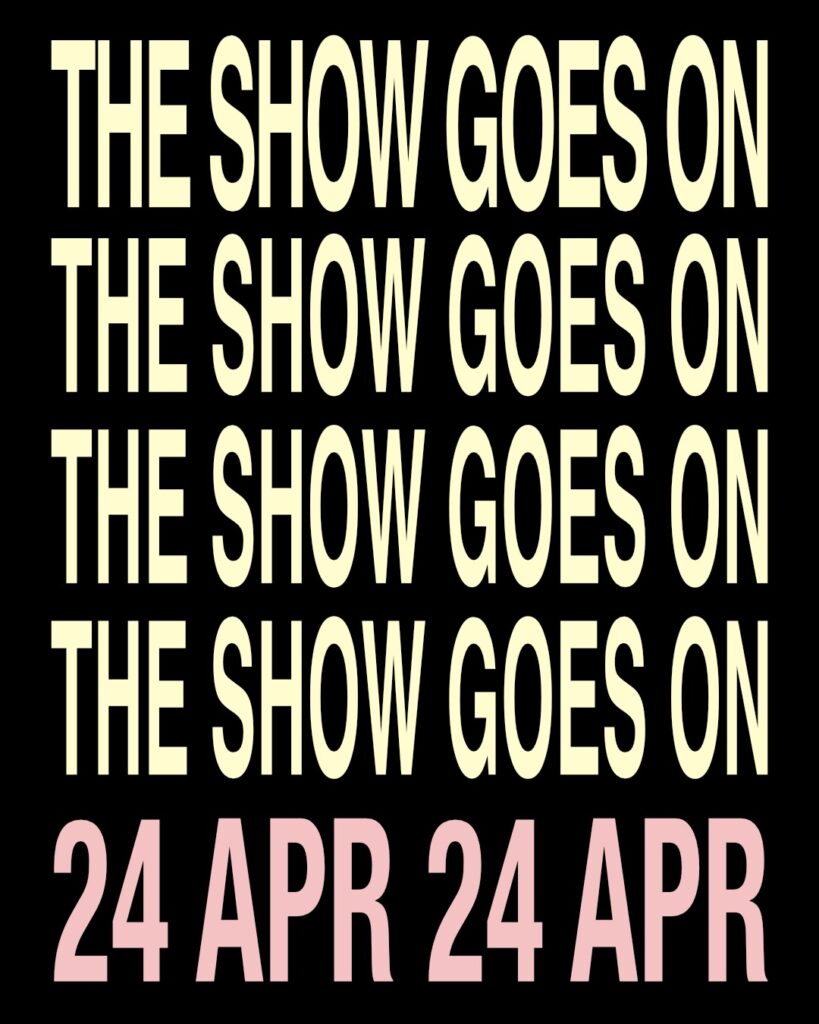
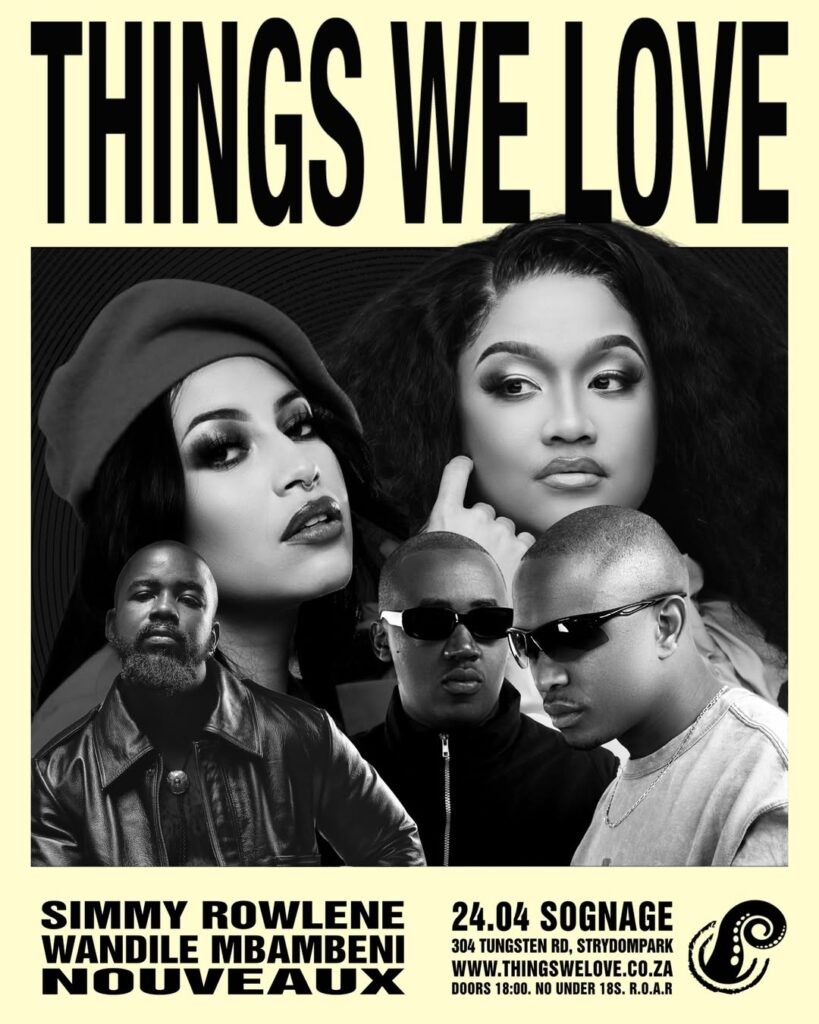

You’re currently on your Things We Love Tour, starting with Jozi on the 24th of April. How have you gone about curating the lineup?
The Things We Love as a series isn’t really about me. The idea actually came from a song I’ve written called Things We Love. There’s a line in it that says, “We all make time for the things we love, and honey, I’ve got time for you.” I took that first part because that to me feels like a universal truth.
So Things We Love the series is about creating space for artists who are often overlooked in headliner positions. Artists you usually see on festival lineups, but not necessarily as the main act; the midday slot, just before the headliner, or somewhere in between.
It’s about placing those artists in the positions they deserve and giving them the lighting, the production, and the audience attention that allows people to see them as ticket sellers in their own right. I genuinely believe that if we start positioning artists in that way, their perceived value shifts, and over time they begin to occupy those headline spaces more naturally across other platforms too.
Even from a promoter’s perspective, it’s easy to default to the same headline names everyone books. But I wanted to do something different and work with artists who are often bubbling just beneath that surface, but not always given the opportunity to lead. We started with Manana. And what’s been interesting is seeing how that perception is already shifting. He’s now selling out shows, doing multiple nights in a row. I’m not taking credit for that, but I do feel affirmed in the idea that these artists were always capable of that level.
We also worked with Internet Girl and Blackie as headliners. With Internet Girl, I wanted to create that crossover space between hip-hop and alternative audiences. They’re now doing bigger international and headline shows, including in Europe, which is really exciting to see unfold. With Simi, for example, I still don’t think she’s consistently positioned as a headliner, even though she absolutely should be. She’s often paired with other artists, but rarely placed at the top of the bill. For me, Things We Love is about changing that perception and recognising when an artist is already operating at that level, even if the industry hasn’t fully labelled them as such.
So the intention is simple: to give people the stage they already deserve, and hopefully shift how promoters see and position them going forward.
Father’s Prayer had me assuming that you might be a dad because it reads as written from the perspective of a father-to-be and in the same breath, in conversation with God. How do you understand that relationship between the two; your relationship with God, and how that informs the kind of parent you either are, or hope to become?
I didn’t grow up with the strongest example of a father and that’s essentially where A Father’s Prayer begins. There’s still a sadness I carry around that. Not to dismiss what my father did give as he showed love in his own ways, but the version of fatherhood I experienced isn’t the version I would want to become.
It’s something that comes up in small, unexpected moments, watching a series or coming across a video of a present, loving father. There’s always that quiet thought: I wish I had that. And even though it’s complicated to long for something you never had, that absence became the starting point for the song.
The reason I frame it as a prayer is intentional. My father wasn’t a praying man. He’d watch us leave for church with my mother, but never joined us. So for me, imagining fatherhood became tied to imagining a different kind of spiritual grounding. I had a recurring dream about a daughter and so I wrote the song to her, almost making her real. It became a letter to this future child, saying: when I meet you, this is the kind of father I want to be. A praying father. One who leans on something greater than himself. Someone who understands he won’t be perfect, but believes that, through God, he can come close to being the best version of a father for her.
Beyond that, the song also opens up into something broader. It’s a reflection on fatherhood at large, especially within Black communities, where absence is something many of us have had to navigate. I wanted to speak to that, particularly to men. At the time of writing the song, it felt important to create something that invited vulnerability, encouraging fathers, or future fathers to surrender and seek guidance beyond themselves.
Your name Wandile speaks to expansion and prosperity. What do you want to see increase in your life?
Oh, favour, blessings and I think it’s already happening. Every year I ask myself the same question, and every year I realise it’s already in motion. It’s part of my name. I’m growing every day. I want to grow better as a person, as a songwriter, and also on the business side of things. I want to grow my audience too, grow the people who listen to my music.
Last year we were at around 4,000 monthly listeners. This year we’re starting at just over 50,000. So it is growing. I’ve also learned that growth is uncomfortable. It stretches you. It pulls you into unfamiliar places. And that’s something I’m getting used to; learning that discomfort is often part of the process. What I’m really asking for is resilience, patience, and the grace to keep growing without resisting it.