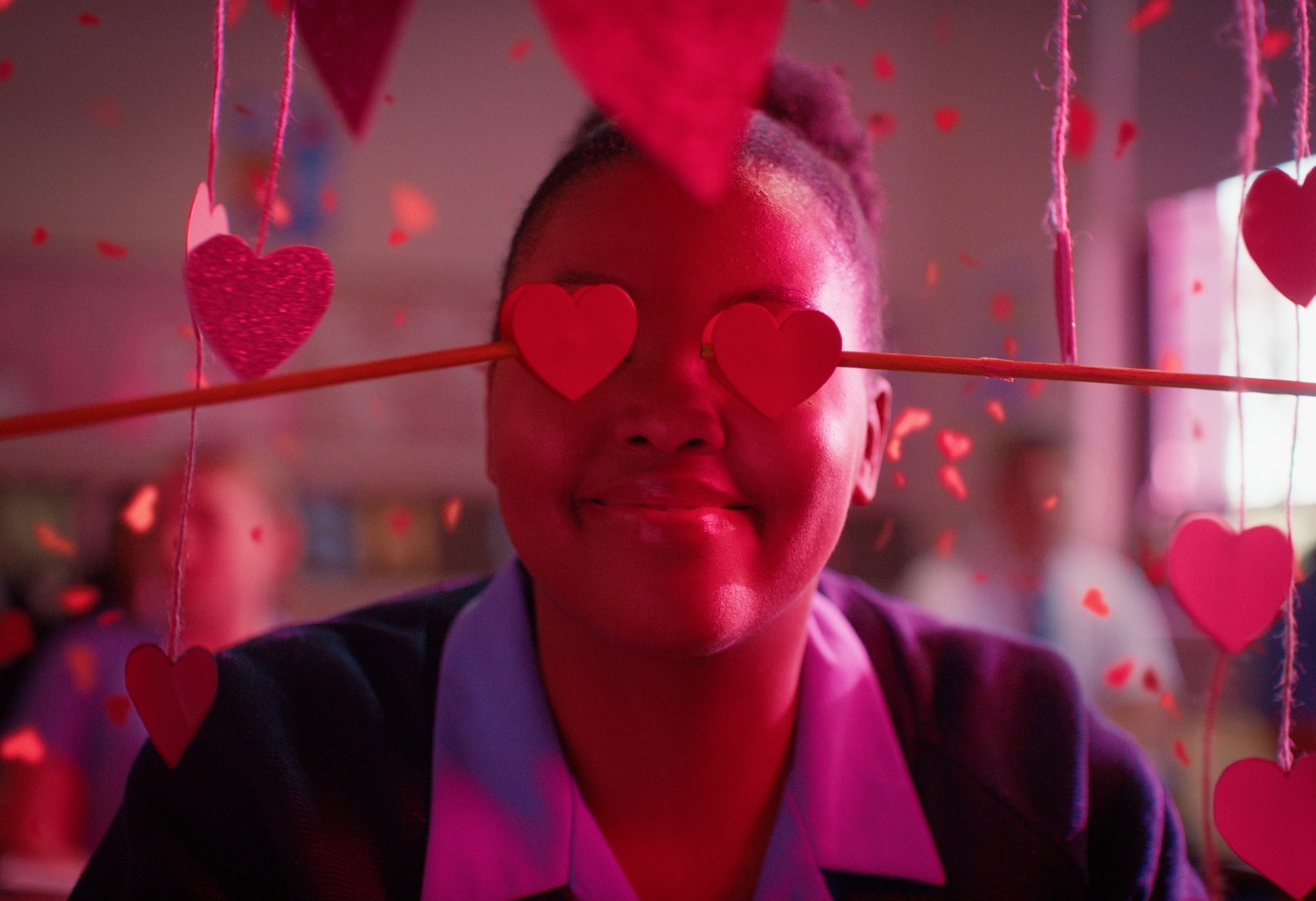
“Making films is hard. So why spend your time making anything you don’t want to make?”- Royd Ringdahl
I’ve always found it interesting how we often like to imagine creative work as something entirely separate from the technical, as if all the moving parts that go into composing a frame can’t be traced back to precise processes rooted in engineering and mechanics. That’s why, when I learned that film director Royd Ringdal trained as an engineer, it didn’t surprise me at all. It explains the meticulous attention he gives to every single frame.
Born in Pretoria and now based in Cape Town, Royd has built a career that feels like an experimental love letter to youth. He speaks passionately about his deep affection for the idea of youth, an energy that seeps into the way he films his subjects and approaches storytelling. His natural ability to craft a visual language that seems to transcend the boundaries of reality and norm is something worthy of studying. In this conversation, I aim to do just that: explore his creative process while also uncovering the person behind the craft, a Welkom native raised in John who set out to chase the Capetonian dream.

Let’s dive in with a classic: when you’re at a party and someone asks, “What do you do?” How do you usually respond? And practically speaking, what does that actually look like?
Great question. I usually say I’m a filmmaker. Technically, I’m a director, I make music videos, commercials, short films. But “director” comes with a lot of assumptions, so I prefer “filmmaker.” In our industry, labels come with baggage, and at the end of the day, I really care about the work itself. It takes a village to make any piece of work, and I think the old-school “auteur theory” doesn’t reflect the reality of today’s collaborative creative process.
That said, I’ve been directing for a few years now, and I truly love it. It challenges me and rewards me in the best ways, sometimes it even terrifies me in the best ways.
I heard you studied engineering, tell me about that. What was that transition like?
Yeah, I studied engineering in Pretoria. I didn’t grow up around a creative community. Some people are born knowing exactly what they want to do. I wasn’t one of them. I wanted to be a footballer, then a stockbroker… and eventually, it just clicked. I had friends who made music, and I used to make music myself, but gave that up for football and later, engineering. I still wanted to be part of that creative process, though, so I started filming and editing videos for them. There was no agenda, it was just curiosity, seeing what I could make. I remember editing all night and being surprised when it was suddenly 4 AM. That kind of time melted, that’s when I realized, “Okay, this is what I’m supposed to be doing.” So I kept creating in my free time, and by the time I finished my degree, I knew I wanted to pursue filmmaking. I moved to Cape Town, worked at a few production companies, and eventually went independent. I’m loving it, working with amazing people, constantly learning and being inspired.

That’s beautiful. Do you think your engineering background influences your approach to filmmaking?
Definitely, filmmaking is both creative and practical. You need to reverse-engineer shots, figure out how to make things work, and solve problems on the fly. Engineering gave me a knack for efficient problem-solving, which really helps on set. I’m also into practical and visual effects, two areas where you often don’t know how you’ll achieve something until you start. So that confidence to dive in and figure it out later? That’s been key.
Tell me about your creative process. Do you go into a shoot with everything planned, or do you let things unfold on the day?
I go in with a very clear vision, shot lists, moods and angles. But life always surprises you. The beauty of being prepared is that when something unexpected and magical happens, you can recognize it, adapt, and incorporate it without losing your overall structure. Some of my favorite moments on set weren’t planned. That keeps me humble. It’s not “me” creating the magic, it’s the world offering it up.
Is there a project that stands out as a personal favorite?
Yes there’s a music video I directed for Internet Girl called Pull Up. It was just pure fun. There wasn’t a deep emotional message, it was about aesthetic play and collaboration. Everyone on the team believed in the vision, and we just kept building on each other’s ideas even in post-production. The song had such a visceral energy, and I loved translating that into visuals. It felt like play.
How does your personal connection with someone, like Internet Girl, affect creative collaboration?
When you’re close with someone, collaboration becomes fluid. Sometimes I take the lead, sometimes they do. That’s the beauty of it. We share a similar visual language, so it doesn’t matter where the idea starts, it’s about building together. Music videos are a service. I’m here to help showcase the artist’s identity. Even if my vision comes through, I try to keep the intention rooted in service to their story, not mine.
Between commercials, shorts, and music videos do you find any format easier to work in?
They all come with trade-offs. You might have more creative freedom in one, but more resources in another. I don’t have enough of a sample size yet to say one is “easier.” But I try to challenge myself on every project. If I ever feel like I’m repeating myself, that’s when I know something’s off.
Your work feels deeply connected to youth culture, it’s visually stunning, emotionally charged. Why is that an important space for you to explore?
I see youth as this beautifully raw and unfiltered phase of life. There’s something so powerful about that moment of rebellion and discovery. It’s no wonder that filmmakers have returned to the coming-of-age story over and over again. I’m drawn to the emotions of youth, the purity, the tension, the freedom. And aesthetically, I often chase a kind of bliss: “This is what this brand feels like,” or “this is what this song feels like.” Sometimes I’m resolving an emotion from my own life in a film. My work swings between those two poles: aesthetic expression and emotional truth.
What’s next for you? Any new themes or mediums you’re exploring?
I’ve been diving deeper into narrative projects and surrealism, I want to push that further, go to stranger, more imaginative worlds. I’ve also become more interested in brand identities, so expect more commercials and shorts. Music videos will always be my first love, but I’m excited to keep evolving.