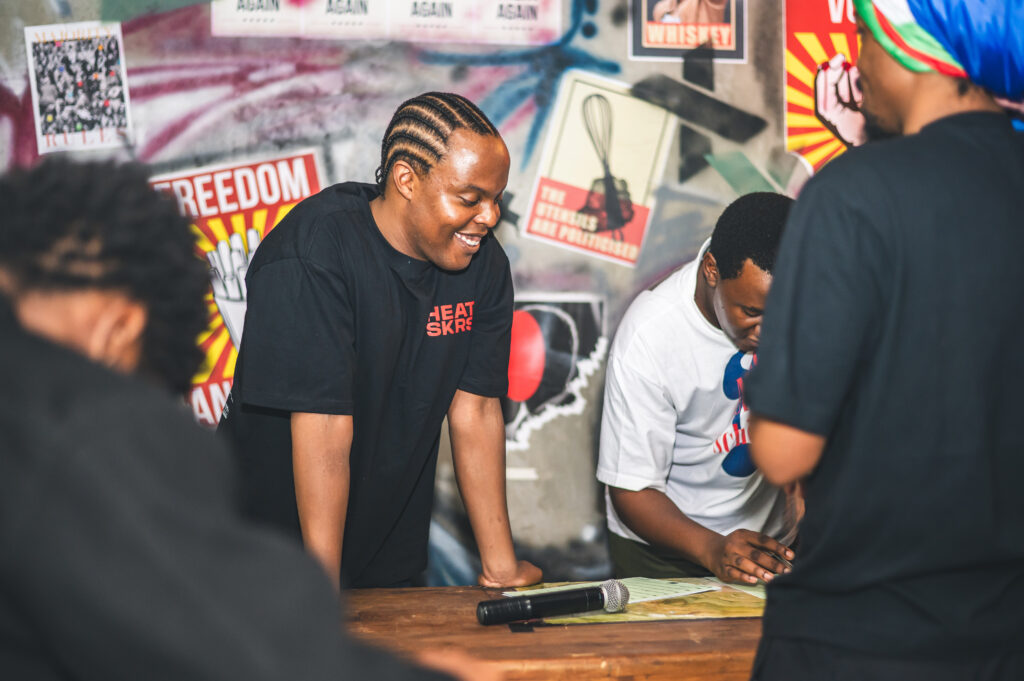
I met Yazz about five years ago, shortly after he asked me to be part of a panel he was facilitating. Back then, he went by Yazz the Student and what’s remarkable is that, to this day, he remains committed to learning and constantly evolving into something better. One of the first things that struck me about him was how genuinely excited he gets about other people’s work the way he lights up when speaking about the incredible things happening around him. From our very first conversation, I could tell that his passion runs deeper than rap.
As someone who speaks to many directors and creatives, it’s quite rare to meet someone who truly lives by what they say they stand for, someone whose purpose isn’t rooted in self-validation or career-building, but in a genuine love for the work itself. I know I sound like I’m overhyping him, but I promise this is all true.
Yazz embodies what it means to care deeply for his people, to uplift young Black voices, and to nurture creative ecosystems that connect and celebrate African cinema. It’s an especially important undertaking, given the current state of the South African film industry, which makes his work through BAI and HEATSKRS all the more meaningful.
In our conversation, Yazz reflects on the importance of creating spaces that celebrate and sustain young Black and African voices. From the inception of his showcases to his explorations at the intersections of film, fashion, music, and digital storytelling, he also shared the challenges of building that ecosystem and how it can support youth-led creativity and his long-term vision of archiving African culture for future generations and his mission to center young African voices across all forms of media.
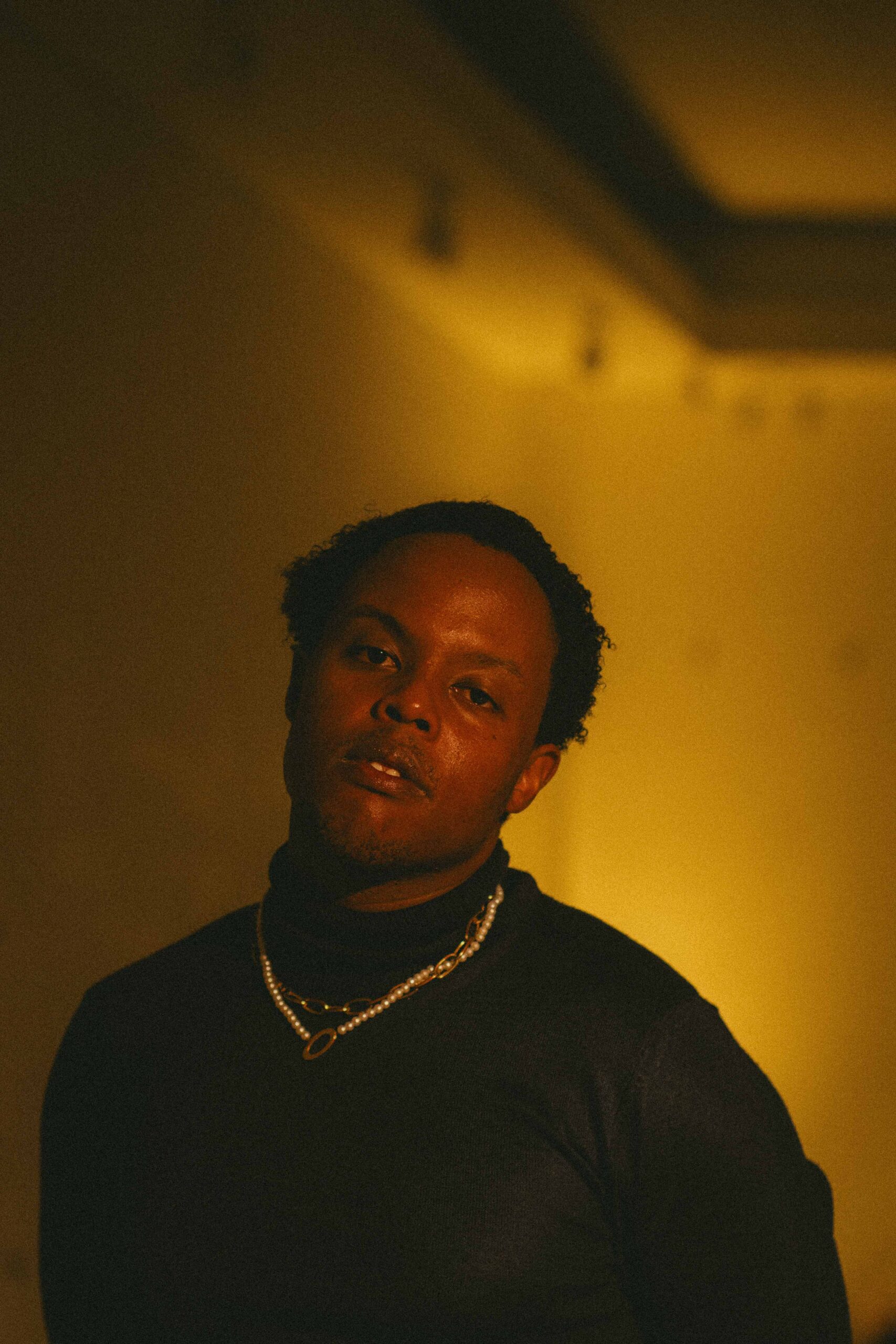
Let’s start from the beginning. Tell me about your childhood, where you grew up, and the experiences that shaped you personally and professionally.
I honestly can’t remember a time when the entertainment industry wasn’t part of my world. My mom was a broadcaster, she worked in radio and later on Nation News in Kenya and my dad was a teacher. My parents met while studying in Manchester; my mom was there in exile from South Africa, and my dad had come from Kenya.
I spent my early childhood moving between different parts of Kenya before we eventually came to South Africa. One of my favorite stories is that when my mom first went on air, my siblings and I literally broke the radio trying to find her voice. We didn’t understand how she could be “inside” it!
Growing up, I was surrounded by music videos and pop culture. I was obsessed with artists like Janet Jackson, watching her dance across different cities in one video. My child brain thought she had superpowers. That sense of wonder made me want to create worlds too.
I started writing poetry around age seven, then music, and by nine I was writing scripts. Moving around so much as a kid, the one constant in my life was the media. The same pop culture, from TKZee to Destiny’s Child, followed me wherever I went. That became home for me.
Once you knew you wanted to work in film and media, what were the first steps? Did you study it formally?
I did, but in truth, my education started long before that. My mom was my first creative mentor even though she was strict! She wasn’t fond of my singing, but when I wrote, she saw something there and encouraged me.
In high school, I used writing as both expression and survival. I wrote poems for my classmates’ assignments , sometimes even for other guys to give to their girlfriends! I also wrote house plays and scripts for school productions. By the time I formally studied audiovisual communication at university, I already had a sense of voice. The theory helped me make sense of what I’d been doing instinctively.
Now, as an adult, I’m circling back to all those early passions, acting, music, writing and exploring how they can coexist in one creative world.
I love that. So, when someone asks what you do, what’s your tagline?
That’s taken me a while to figure out! These days, I describe myself as an artist, filmmaker, and creative producer. I sometimes say “organizer,” but not everyone understands what cultural organizing is, so “creative producer” captures it better.
I produce events, podcasts, and creative projects, my brother handles the financial side, and I focus on the artistic direction. But at my core, I’m a storyteller. Whether it’s through film, writing, music, or curating events, everything I do tells a story. Even the way we program artists or pair performers together at showcases is part of a larger narrative.
That’s a great way to put it. Let’s talk about the African Film Club. You started it during lockdown, right?
Yes, 2020 was a wild time. Our production company had just finished Ho kena, our first film for MultiChoice, which was set to release in late February. Around the same time, we were planning an edition of our showcase, The BAI (then still called The Broke Ass Showcase), for March. It felt like the start of a great year and then the world shut down.
Because my family is spread across the world in the U.S., Kenya, the U.K. I’d been hearing whispers about COVID early on. By mid-February, I knew lockdowns were coming, and I started wondering: If this lasts years, how do we still connect through film?
During the first few days of lockdown, I noticed two things: people were revisiting old content and exploring new things they’d never had time for. That sparked the idea, a collective viewing experience. We called it Quaranstreaming was a play on “quarantine” and “streaming”
The idea was simple: we’d all press play on an African film at the same time, then discuss it online. I reached out to a few filmmaker friends, and within a day ten people said yes. We made a poster, shared it, and suddenly it was a thing.
I started reaching out to producers I didn’t even know asking if we could host watch parties for their films. To my surprise, Yellowbone Entertainment, one of the biggest names, said yes. That gave the project legitimacy. We ended up screening eight films and doing five live Q&As during the initial 21 days of lockdown.
That evolved into The Afriqan Film Club, which became both a community and a podcast series. One of my favorite conversations was with Kenyan filmmaker Likarion Wainaina whose film Supa Modo is one of my all-time favorites. It’s a superhero story about a little girl with cancer whose town helps her believe she has powers. It’s beautiful, joyful and heartbreaking at the same time and it represents what African cinema can be: deeply emotional, communal storytelling.
I also want to talk about your own web series, Pride & Petty and The Unmanly Men Association. Both use humor to explore serious themes. Why is humor important to your storytelling?
I think humor is part of how we survive as Africans. Growing up in Kenya and South Africa, I was surrounded by comedy, it’s embedded in how we communicate. Our lives are political and complex, so humor helps us process tension. It’s how we make sense of chaos.
From a filmmaking perspective, I realized early on that horror and comedy are two sides of the same coin. Both rely on timing, tension, and release. Comedy often plays with anxiety, it lets you confront uncomfortable truths safely.
My first film, The Ring, was meant to be a thriller, but everyone I pitched it to laughed! So I leaned into that and began exploring how serious ideas can be told through humor.
With The Unmanly Men Association, the concept came from my brother. We were running a YouTube sketch channel where anyone could pitch ideas, and we’d develop them into short sketches. One stuck, and we realized there was a full series there.
Pride & Petty started similarly, the chemistry between the leads, Niki and Kibz, was so strong that we built a series around them. The humor came naturally, but it also allowed us to talk about relationships, gender, and pride in ways we could relate to and laugh about.
There’s clearly a thread of youth and African identity that runs through your work. How intentional is that focus, and what are you trying to say through it?
Very intentional representation is at the heart of everything I do. I grew up immersed in global pop culture. I could tell you what was number one on the Billboard charts any given week but when I entered the film industry, I realized I knew almost nothing about our industry.
Everything I studied in university was American or European. Even when I actively searched, I couldn’t find information about African filmmakers. That bothered me because if I, someone obsessed with research, couldn’t find it, what about everyone else?
That’s what led to my first publication, Next Gen Greats, where I began documenting emerging African filmmakers and projects. The response was overwhelming. Students from UJ and Wits wrote to me saying they finally had local references for their dissertations. That’s when I realized how big the representation gap was.
Around 2015 to 2020, shows like Insecure, Chewing Gum, and Lovecraft Country were changing Black media globally. Seeing Black geeks as leads in Lovecraft Country actually made me cry not because of the story, but because it showed a version of us I’d never seen before.
So my mission became clear: to archive and amplify African youth voices to make sure that ten or twenty years from now, young filmmakers don’t have to start from scratch the way we did.

That makes sense. Let’s talk about The BAI and Heat Seekers. There’s a clear ecosystem you’re curating, one that connects film, music, fashion, and comedy. Why does this kind of space matter?
HEATSKRS is really the evolved version of our first showcase, the “next Pokémon,” if you will. At its heart, the touchpoint is always film. I don’t see film only as an art form, but as a science and a multiplier. A thriving film industry signals a thriving economy because it requires so many other industries to function, from fashion and music to technology and art.
Think about the great films of the 80s and 90s: they came with iconic soundtracks and style moments. That means music and fashion were integral to their success. The same applies now for a film culture to thrive, all these creative sectors need to intersect.
When you look at Black American cinema, the best examples were born from those intersections. Friday exists because Ice Cube came from music into film. His experience connected those worlds and changed comedy culture forever. Many great filmmakers started with music videos because that space allowed visual experimentation.
For African creatives, we need to cultivate that same cross-pollination. When filmmakers, designers, and musicians actually know one another, innovation happens. That’s what Heat Seekers tries to facilitate genuine collaboration across creative fields.
Building such spaces must come with challenges, especially within a developing industry. What have been some of the toughest moments for you, and what have you learned from them?
There have been many challenges, ageism being one of the biggest. A lot of my early approvals came through grant processes where the work spoke for itself, because when people saw me as a young Black filmmaker they often underestimated what I could accomplish.
I remember pitching a highly researched project at 22. Years later, the same organization saw the exact same proposal again and suddenly called it “incredible.” The difference was just that we looked older.
Another big challenge is explaining the multicultural and digital nature of what we do. Once, a funding body rejected Heat Seekers because they thought it was “too digital” to be a film festival, even though we were screening web series and shorts. That mindset shows how misguided funding decisions can be when it comes to understanding new creative ecosystems.” are when it comes to understanding new creative ecosystems.
It’s often easier to get funding for traditional film projects because people understand that model. But when you’re trying to build something that connects film, music, and digital art, something that’s about long-term sustainability, it’s harder for funders to grasp.
So yes, there’s a lot of talk about supporting youth, but less actual trust in youth to lead at scale. We’re proving ourselves constantly, but we still have to start from scratch every time.

The work you’re doing feels deeply intentional, something that will have an impact far beyond the present. What kind of legacy do you want to leave behind?
I think about that often. Ultimately, I want to build the kind of cultural archive I wish I’d had growing up. When I was a kid, I could tell you everything about American pop culture: the number-one songs, the iconic films because that information was accessible. I want the next generation of African kids to have the same depth of access to our culture.
If, by the time I’m 50 or 60, there’s a ten-year-old who can tell you what the most important African film of 2027 was and why it mattered, then I’ve done my job. That’s why we document everything, why we create trivia and archives so that it’s not just oral history, but something you can see, touch, and engage with.
From a film perspective, I want to make work that lasts, films that have a life cycle. I want to do ten-year anniversary screenings, re-releases, collaborations. Art should live and breathe beyond its initial release.
Finally, what’s a quote or guiding principle you live by?
I have a few, but one that’s always stayed with me comes from Glee: “Being part of something special makes you special.”
That’s evolved for me over time. Now it’s about understanding that if we want a more constructive culture, we have to be more constructive, in how we create, critique, and build together.
The median age in Africa is 19. That means, even though we see ourselves as “youth,” we’re actually the elders of the next generation. So the question becomes: what are we leaving behind for the 13-year-olds coming up after us?
They’ll critique us, of course, that’s how progress works, but I want them to also be able to say, “You gave us this.”That’s the legacy I’m working toward.