


More Than Meets the Eye: The Curious World of Njabulo Hlophe
Interview by Anastatia Nkhuna
What does it look like to imagine Black futures beyond the narratives we’ve grown accustomed to? For Johannesburg-based artist Njabulo Hlophe, the answer lies in a world of colour, curiosity and characters that invite us to look a little closer. From trading Dragon Ball Z drawings as a child to developing a distinctive visual language that explores identity, belonging and Black masculinity, Hlophe’s practice is rooted in the freedom to imagine beyond what already exists. His work challenges how Black stories are told, making room for softness, vulnerability, joy and possibility. In conversation , we unpack the influences behind his imaginative figures, the importance of creating space for emerging artists and what it means to be part of a generation actively redefining its own narrative.

Before you had language to call yourself an artist, what did creativity look like when you were growing up?
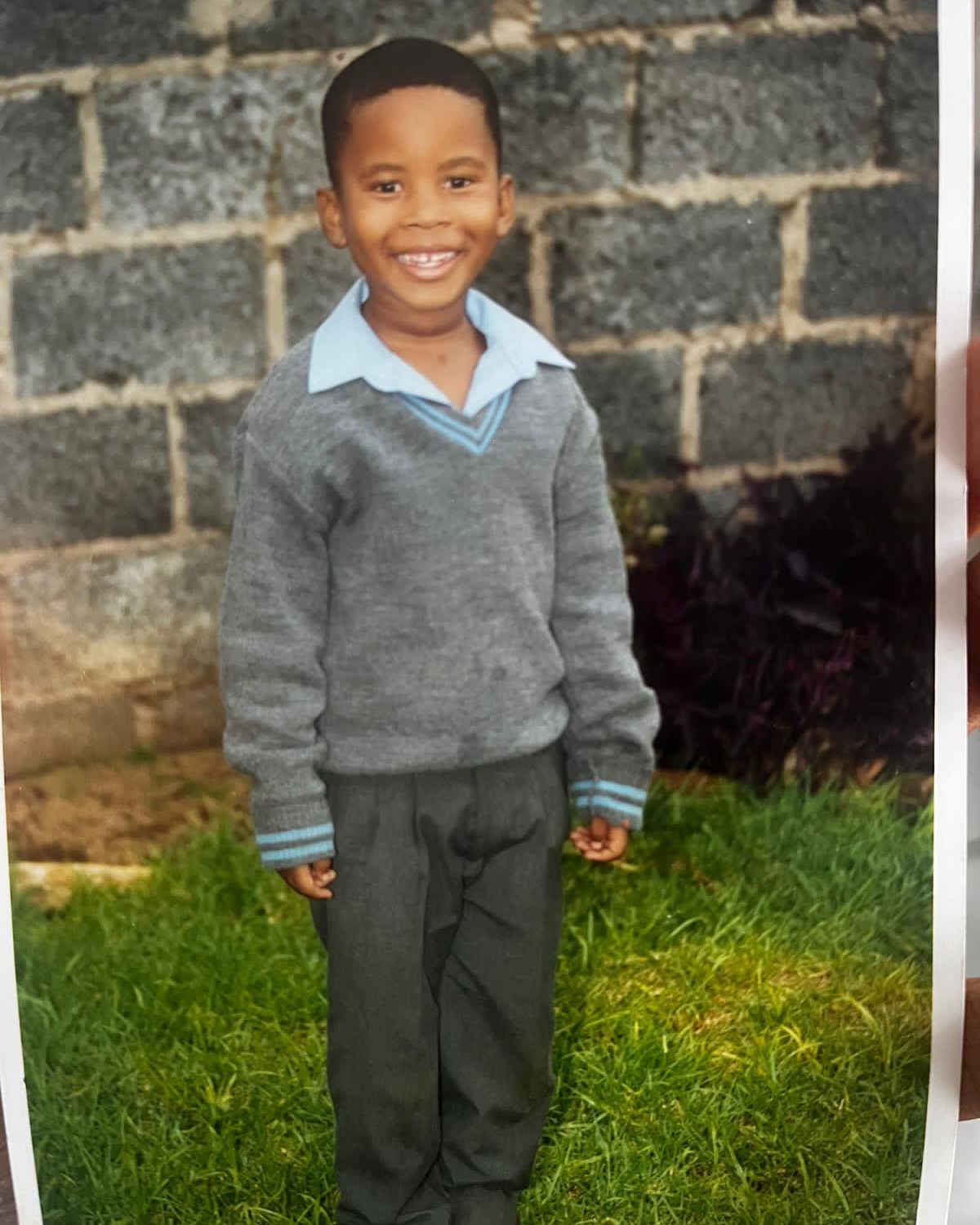
I grew up between Soweto and Johannesburg, and one of the things that shaped my creativity was that, as kids, we didn’t always have many toys. We found ways to entertain ourselves by making up adventures and games. We would imagine we were on The Amazing Race, walking to different parts of the neighbourhood, or making boats and racing them in the water when it rained. We created our own ways to play.
Animation was another major influence on my visual creativity. Dragon Ball Z was a big part of growing up for many of us. I used to fill pages with drawings of the characters, then take them to school and trade them with my friends, my Goku for someone else’s Shenron, for example. I also had a friend who drew cars, so I would trade my characters for his drawings. I didn’t take art at school, but I was always drawing: I’d draw on the back of exam papers, and my books were full of sketches. It was something I carried with me throughout my life.
How did growing up between Soweto and Johannesburg shape the way you see people, culture, and the stories you tell through your work?
Growing up in those different spaces gave me the ability to notice nuance in people. As a Black person moving through different environments, I could see how people interacted with those spaces, sometimes without even realising I was paying attention. I noticed that someone from Soweto might behave differently from someone who had grown up in Johannesburg. That made me curious about why people behave the way they do.
I’ve always been an observer not tied to just one place. I pay attention to how people move through the world and build relationships with one another, with themselves, and with their families. Being between different spaces exposed me to different dynamics and made me curious about parts of the world I didn’t necessarily get to experience myself.
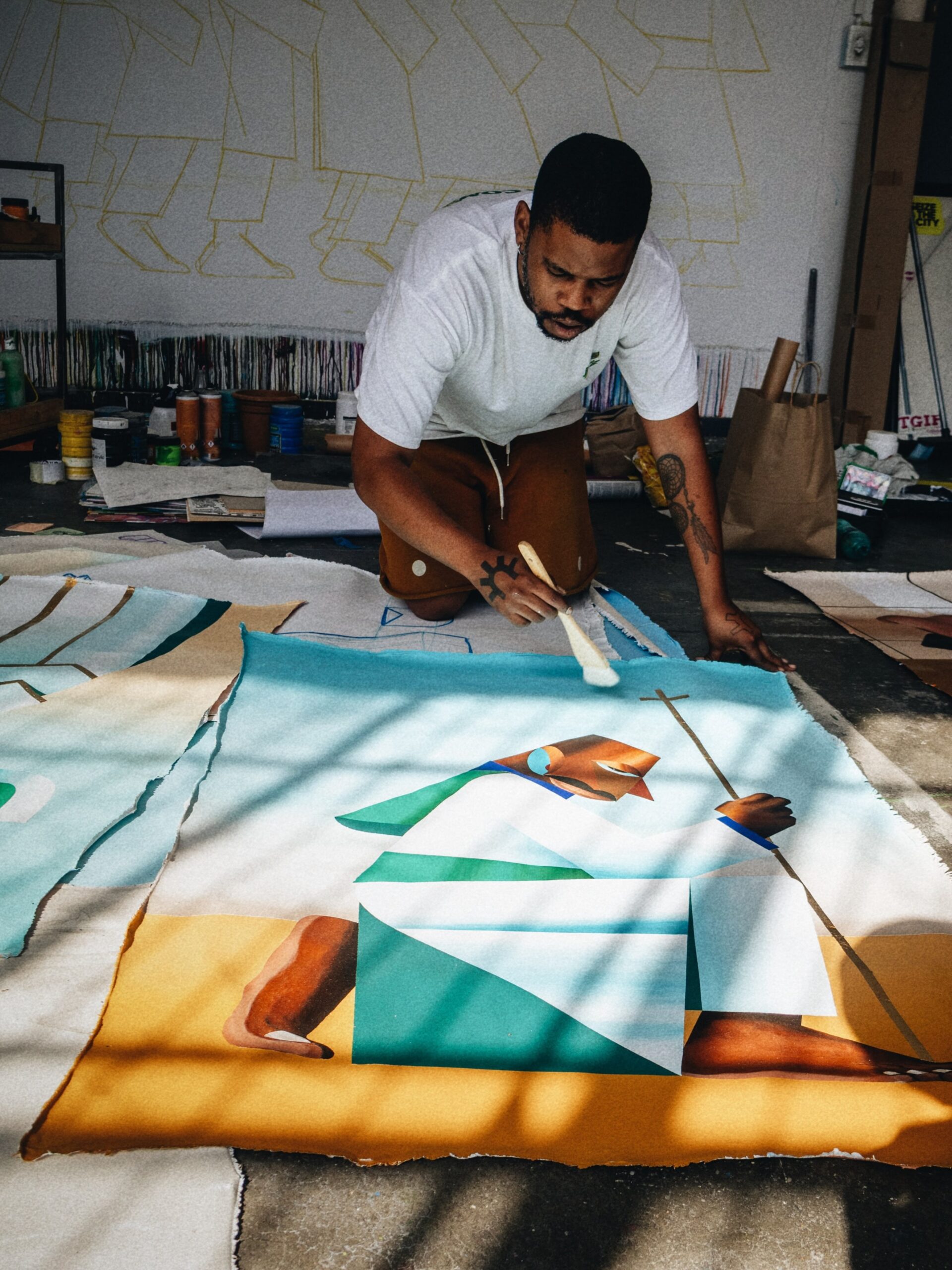
How did you arrive at your visual language of fragmented figures, shapes, and bold blocks of colour? What does it allow you to communicate?
My background in illustration was a big influence. When I went to school, I became obsessed with drawing people as they were and getting a likeness so accurate that it felt like a photograph. But I also had to think about how, when we make an image of someone, we can end up transferring our own beliefs onto that person.
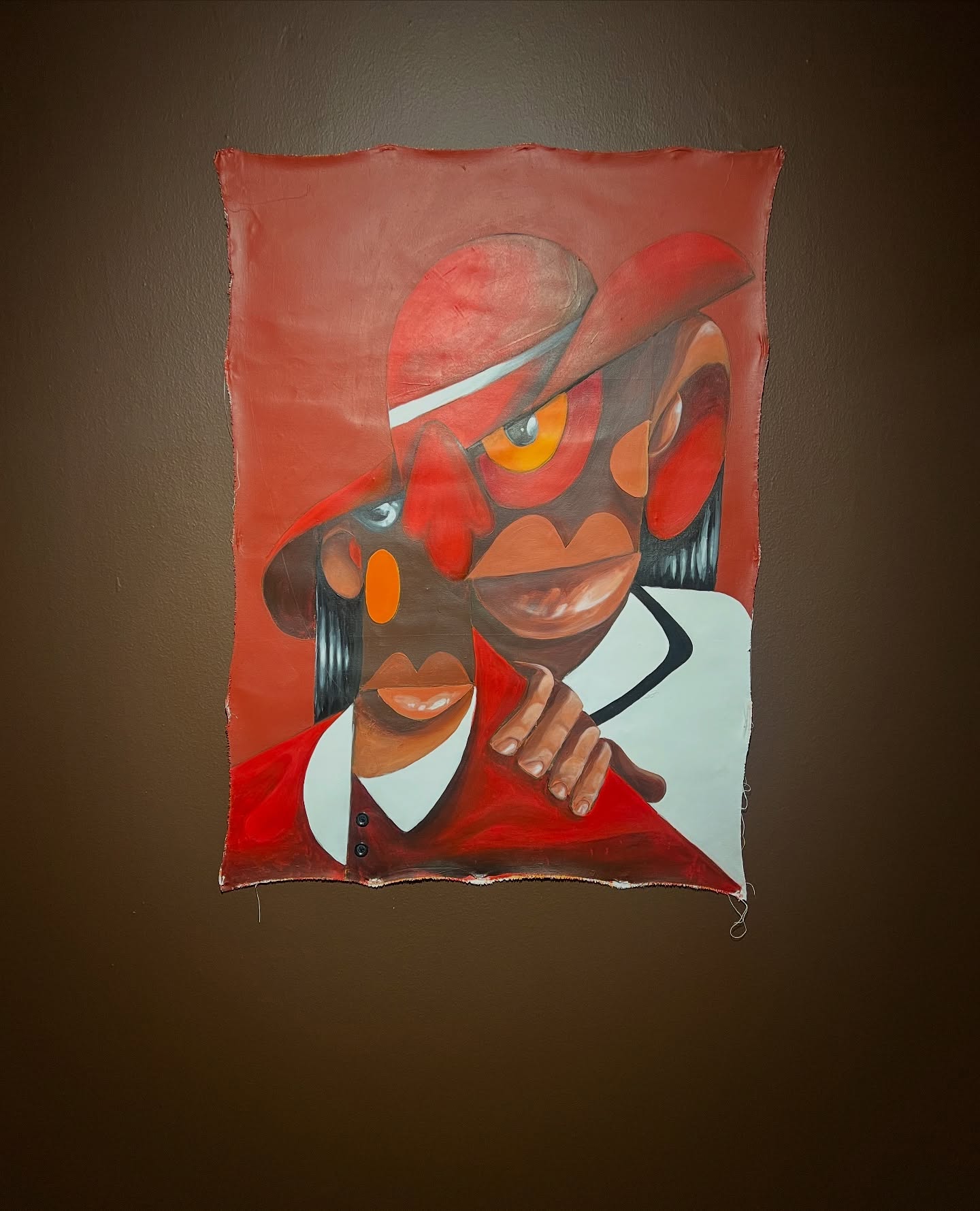
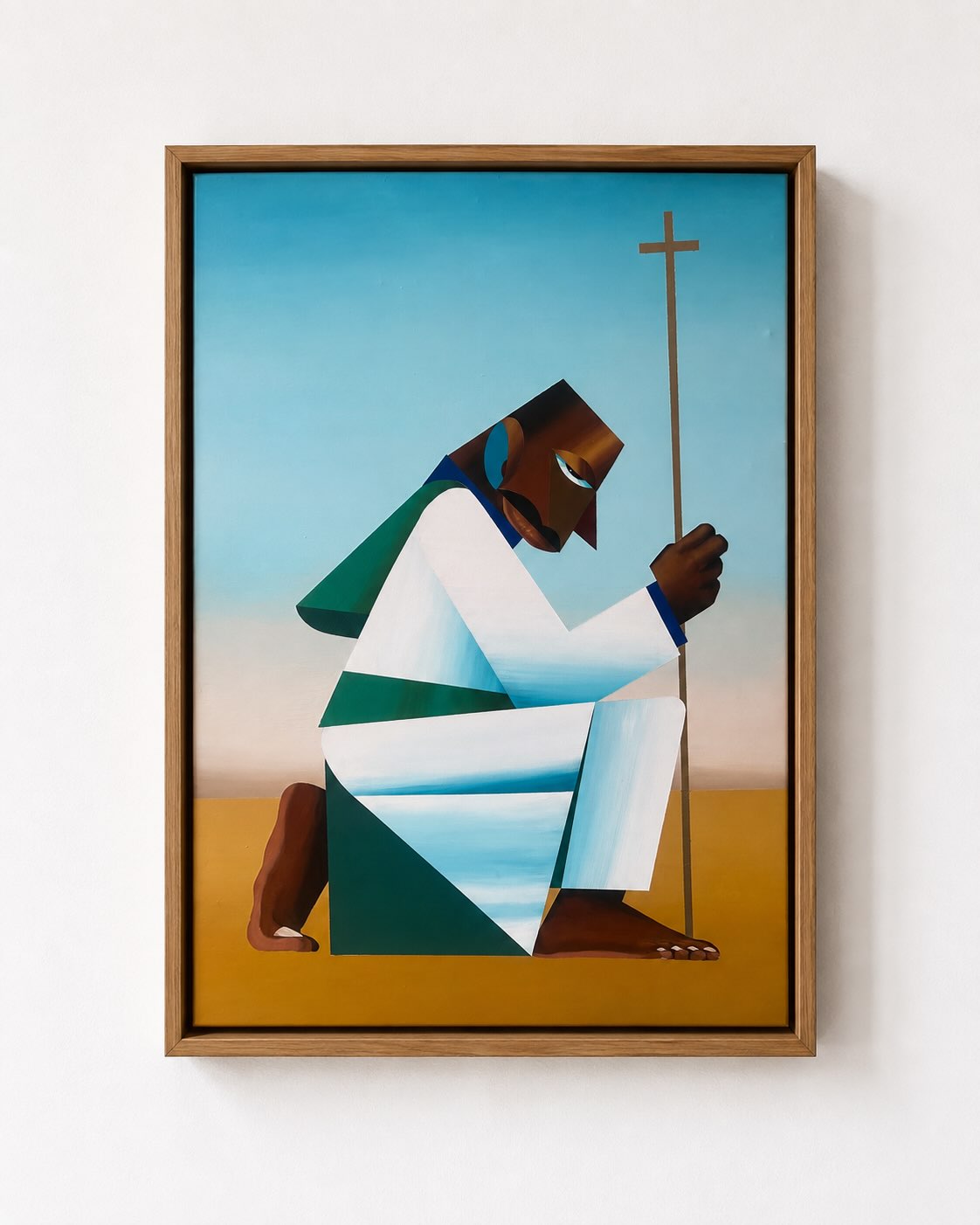
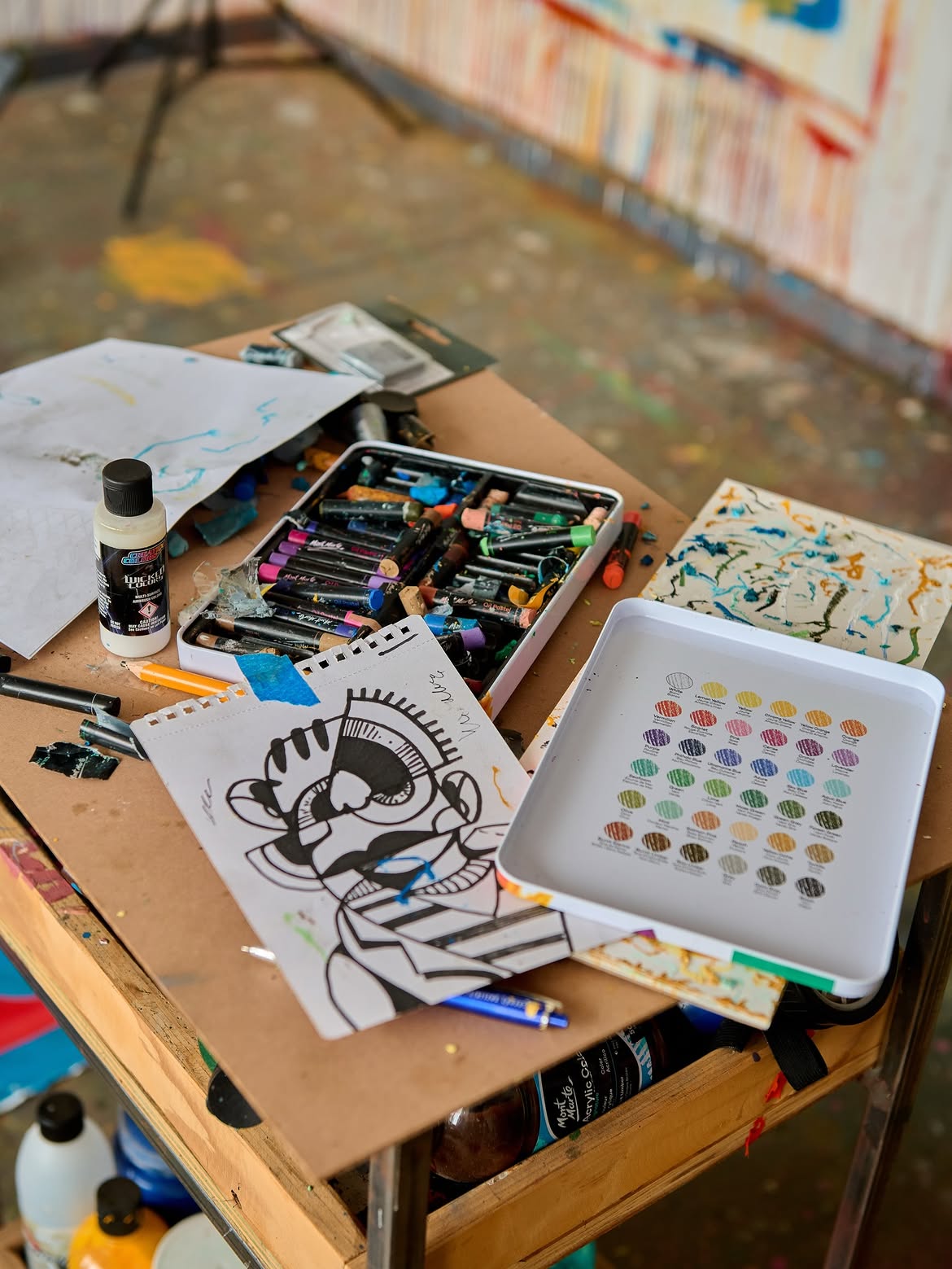
In school, we were encouraged to break forms down, reduce them, or exaggerate them. I fell in love with the idea that the things we carry within us are like building blocks that make up a person. I took that idea quite literally and began using shapes to build people: combining colour and form to create something familiar. My practice has continued to move toward simplifying and reducing things. I’ve been building a library of ways to represent parts of the body, an eye, a shoulder, a form and now I’m exploring how to bring those shapes together with the essence of a person and with material culture to create something recognisable.
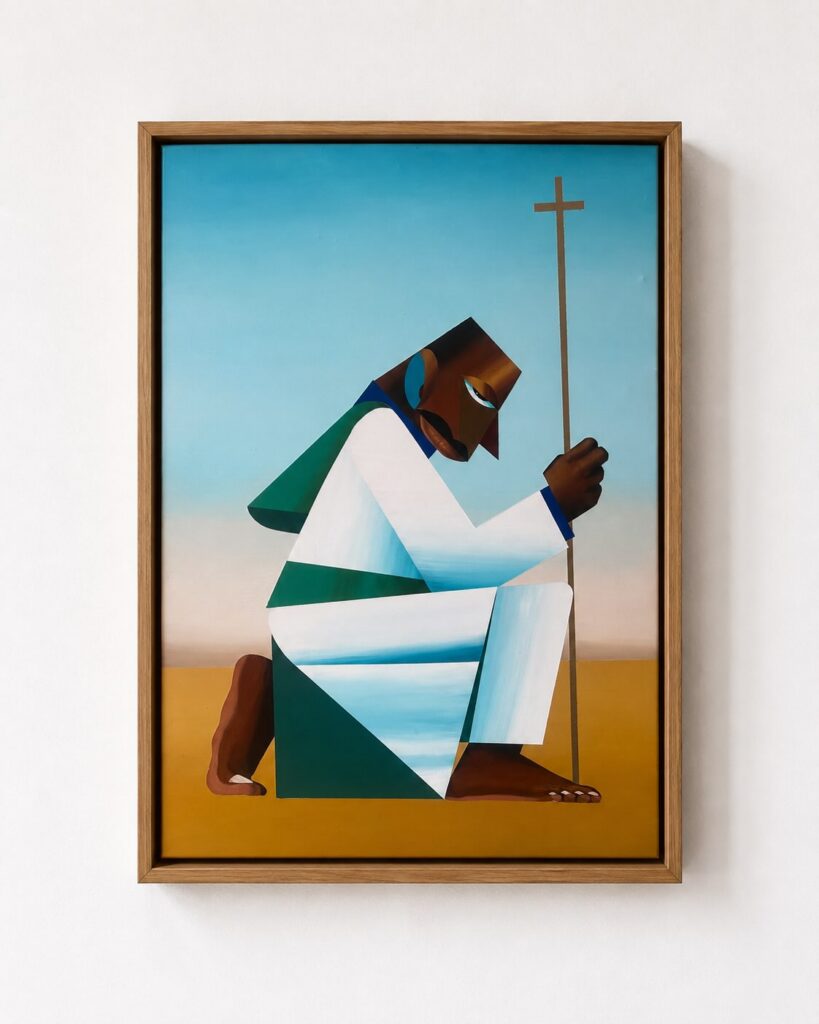
Your work is abstract, but it also communicates human gestures and emotions. What are you trying to preserve when you distort or reconstruct a person’s form?
People are very complex, and it’s difficult to represent a person in only one way. When we make an artwork, we crystallise a particular moment in time, and that becomes the thing someone else encounters. But a person is made up of many moments.
That’s one reason I create characters instead of depicting specific individuals. It gives me a freer, safer space to tell a story without putting my own assumptions onto a particular person. The characters can exist within the framework of an idea and still have a sense of humanity. They may have unfamiliar shapes or eyes, but they wear clothes and interact with objects people recognise. I want to tell stories through the spaces they occupy, the objects they hold, and the fabrics they wear, while leaving room for viewers to connect with them. The characters allow the narrative to feel familiar rather than foreign, without being tied to one person.
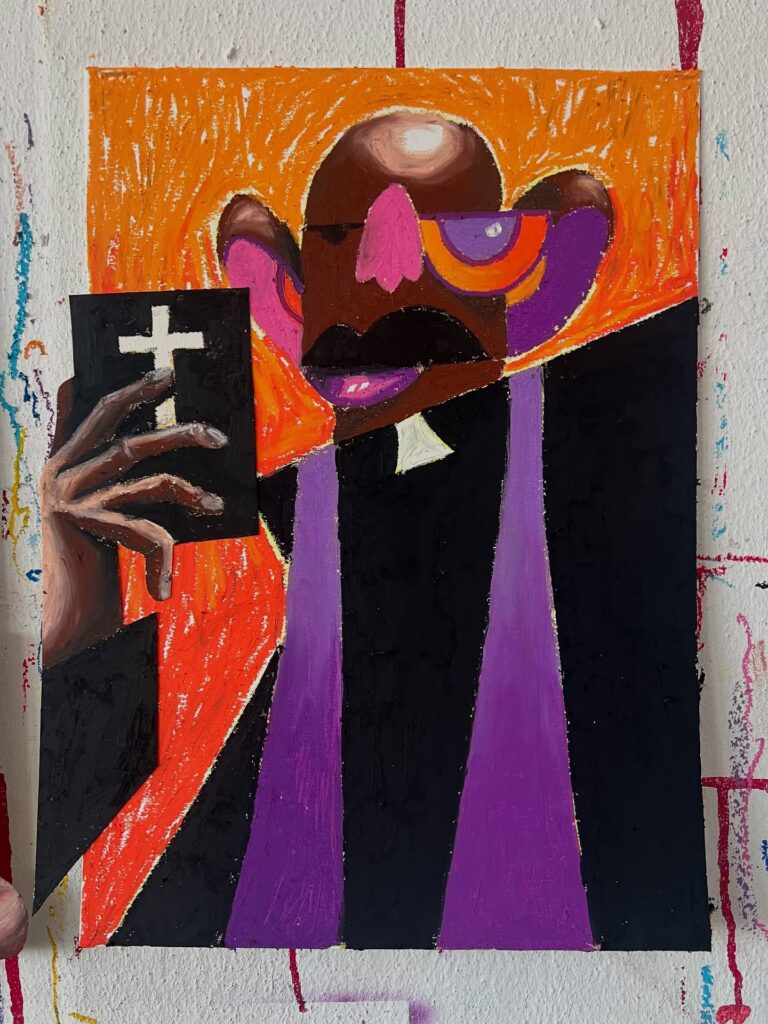
Some figures have one prominent eye. What does that eye communicate?
The characters do have two eyes, but both are abstract, and the second eye is often even more abstract. I’ve been building a library of different ways an eye can work in my visual language. The prominent eye is partly a stylistic decision, but it also creates a particular interaction: it looks back at the person looking at the work.
I want viewers to have to negotiate their relationship with the character. The work can feel familiar enough for someone to project themselves into it, but the eye also makes them aware of their position in front of the image. There’s a sense of interaction because something in the work is looking back at them.
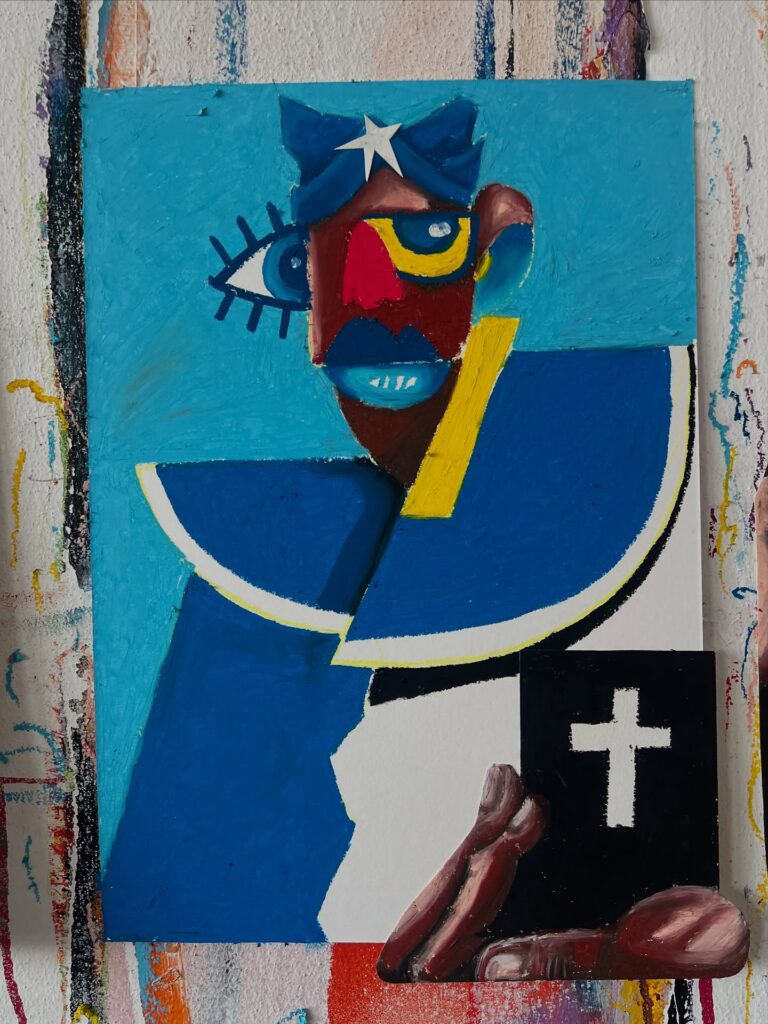
What Black futures are you trying to create through your work? Who are you painting, and what are you trying to move away from?
I’m painting Black people, but I don’t believe there is only one way to represent Blackness. I studied in Stellenbosch, a place shaped by a particular perspective, and I became aware of how people can have a very specific idea of what African art is supposed to look like. Certain images tend to appear again and again, but they weren’t necessarily part of my own experience.
I’m Black, and I exist here, but my experience doesn’t have to fit one set of images. I want to lean into imagination. My characters come from an imaginative space, and I want the work to show that Blackness isn’t only about trauma and pain. There is joy, and there is the ability to take things and transform them into your own way of being. Growing up in Soweto, I’ve seen people reimagine things , music, for example and turn them into something that represents their place and their experience.
I want my work to represent a hopeful future. Imagination exists in relation to reality and gives us a way to see and create possibilities that aren’t there yet. I want the people I paint to feel that their stories and personhood matter. I’m inspired by the way people make sense of a world that tries to exclude them from certain experiences, while still holding onto their beliefs and deciding how they want to show up in those spaces.
You often depict Black men with softness, vulnerability, contemplation, or solitude. Is that a conscious response to traditional representations of Black masculinity?
Yes, there is a conversation in my work about how Black masculinity appears in the world and how people talk about it. I’m interested in how young Black men exist and move through the spaces around them. A lot of conversations about masculinity lean toward a toxic presentation, and there can be an absence of humanity in the way masculinity is discussed. As a Black man, that is difficult for me to reckon with. Those ideas didn’t come from nowhere, and there are real scars associated with them, but there is also room for much more.
Human beings contain multitudes. Black men can surrender, nurture something and pass it on, lead, follow, and be part of a community. They can be soft in different ways. In my paintings, I think about what the figures are holding and how they hold it, how they exist together, how they sit alone, and what they lean on. Those choices let me explore a broader idea of what masculinity can be.
I don’t think one painting is going to make people stop fighting, but the work can make room for a wider conversation. There is more to masculinity than strength defined by fighting or by particular measures of status. I’m a soft person myself, and I cried last week. We’re human beings with emotions and things we have to deal with. We can’t simply put those feelings away and expect that to help us; they need space to exist.
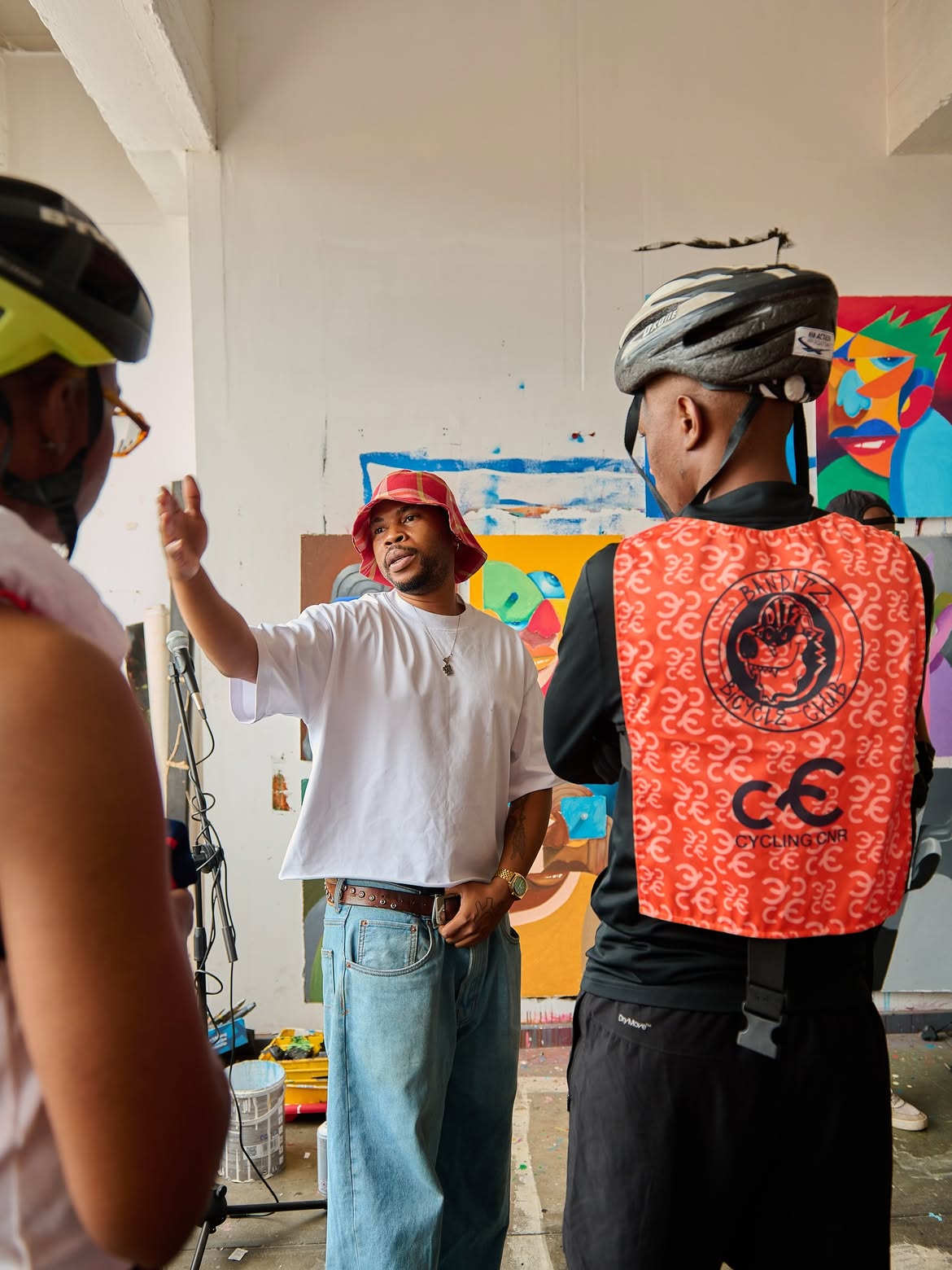
Your work has moved across galleries, public spaces, and brand collaborations. How have you learned which opportunities serve your practice?
Working on murals made me think about the people who have to live with the work after I go home. I learned to listen to what people around the space are saying and what they need, so I can leave them with something they can be proud of. My subject matter is delicate and requires care, diligence, and a softness in how it is approached. It involves people’s lives and stories, and how we exist alongside one another.
I’ve learned that I need to negotiate which spaces are right for my work. Sometimes I have to slow down and give the work enough room to exist on its own terms, and to teach me what it wants to be about. Not every space needs me to leave work there. Some spaces are better served by stories people are already telling; others may not care about the things my work is trying to address and may treat it as a means to an end. That has meant stepping away from some environments, even though those spaces helped me make a name for myself. I’ve had to recognise that the work deserves a space where it can be cared for and fully exist on its own terms.
What do you think the South African art industry still gets wrong about nurturing, supporting, and sustaining artists?
South Africa celebrates excellence, but not necessarily the journey toward it. People often want artists who have already figured everything out—or who appear to have done so—and forget that getting there takes time and support. It took me years to reach where I am, and I’m nowhere near the end of my learning. There is still so much for me to engage with and give.
The industry could make more room for artists as they are, rather than waiting until they reach a point where they are ready to be engaged with. Excellence comes from a collection of efforts and from people working together; it doesn’t happen in a vacuum. At art fairs, for example, we often see the same names repeatedly. Those artists are there for a reason, but there are also other people telling stories that deserve the opportunity to be heard, even if they haven’t figured everything out yet.
Institutions, brands, galleries, connectors, and everyone who engages with art should make room for the process. We often want to benefit from an artist’s success without investing in how they got there. There is also a scarcity mindset that makes it seem as if only one person can be worthy of telling their story, when there is space for many artists and many stories.
When someone encounters your work 20 years from now, what do you hope it tells them about being young, Black, and creating in South Africa today?
I hope they see that we didn’t have all the answers, but we were actively trying to figure things out. We were engaging with one another, staying curious, and redefining what it meant to exist not just within ourselves, but in relation to the people and spaces around us. There wasn’t only one way to exist, and we kept trying to reinvent those ways and find new ways to take up space.
I’ve always loved working on murals and large-scale paintings because you have to negotiate space with them. They’re so large that they can feel almost consuming. They make people think about space, about how we belong in it, and about wanting to participate in it. I hope someone looking at my work years from now sees that we were pursuing an understanding of the human condition and were excited about the possibilities of reshaping things we had grown up thinking were absolute.
Curiosity matters to me because it reminds you that you don’t have every answer. It lets you be a student and gives you the space to listen to the people, the space, or the object and learn from it. I hope the work reflects that openness and that willingness to keep learning.


Leave a Reply