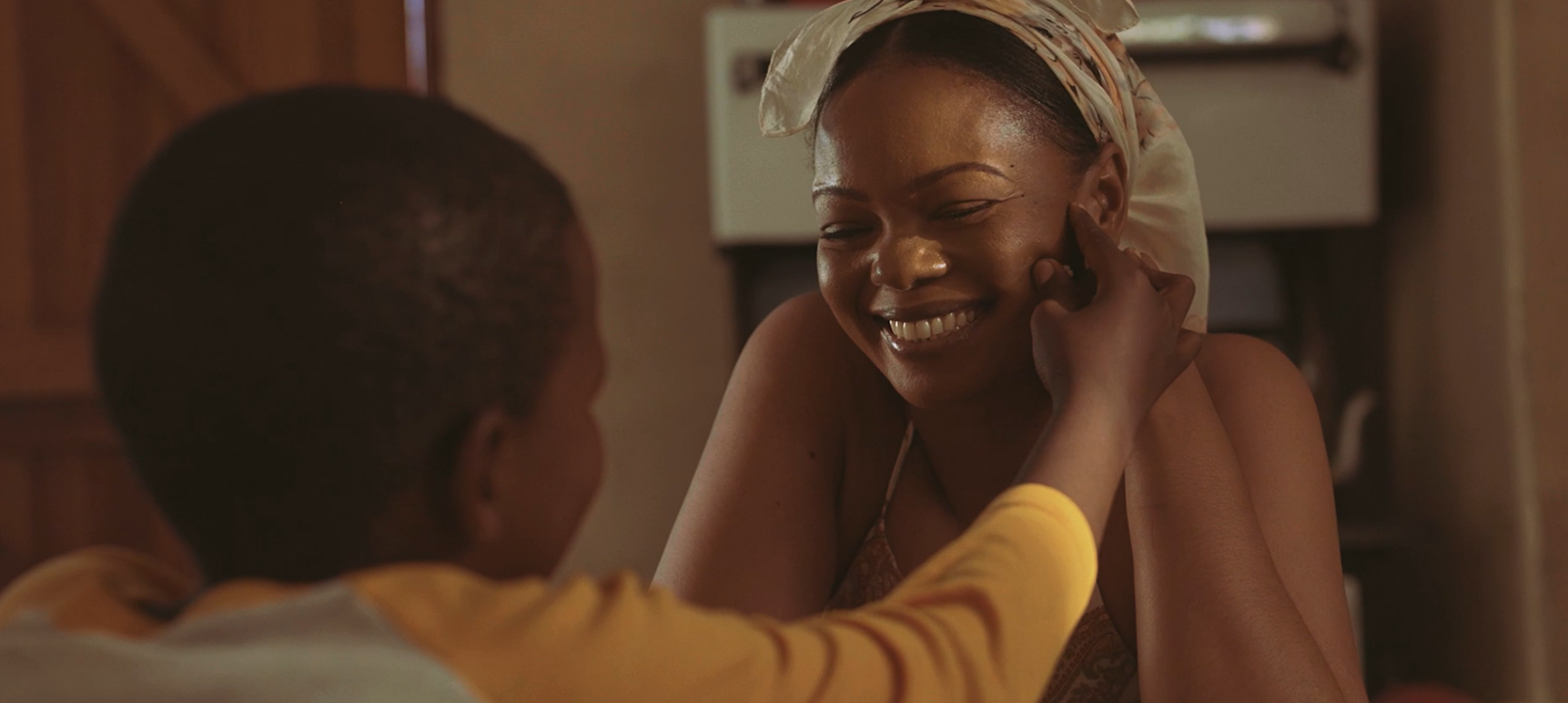
In curating the film section, I’ve had the chance to speak with many incredibly talented filmmakers each with their own creative passions and personal perspectives. But what struck me immediately about Ntokozo Mlaba from the moment I met him was how deeply rooted his work is in community impact. He’s not just telling stories; he’s using cinema as a tool for social engagement and collective healing. There’s an urgency and purpose to his filmmaking that goes beyond the screen. With a grounding in township realism and a flair for rich cultural symbolism. His work speaks directly and powerfully to the communities it comes from. Through his initiative, Umphakathi Artist, he’s working to close the gaps between film and audiences that have been deliberately excluded from mainstream cinema. In our conversation, we unpack the weight of representation, the responsibility of storytelling, and why his next chapter might just take the shape of something tender: a soft, black love story.

Why is it important to use film as a form of social activism, and how do you balance creative storytelling with advocacy?
So, the advocacy side of things, it’s not always the starting point. Sometimes the story chooses you, or a subject finds you. Many of the stories I’ve explored lately have leaned into social impact naturally. But I’m aware that this is a phase. I’m also interested in exploring other genres in future, maybe more commercial or mainstream work. But right now, I’m in this moment, and I’m grateful that I can speak to the issues that matter. That does set me apart from a lot of peers. I can’t ignore what I see outside my door those immediate social realities shape my creative lens. There’s also a huge responsibility when it comes to representation. Media shapes public consciousness. Think about how a legal drama can expose people to an entirely new world. We don’t have enough of that here content that speaks to our communities in a meaningful way. Public broadcasters need to be more intentional about this. Artists have a responsibility to reflect our society, to narrate what’s happening in a way that is engaging but honest.
How has growing up in South Africa influences your narrative themes?
For me, my creative process is long-term. I’ve got a broader vision beyond the trilogy I’m currently working on. I’m trying to explore what our stories say about our cultural context, not just heritage or tradition, but township culture, urban culture. These are rich, nuanced stories that deserve attention.When South African stories are done right, they become cultural exports. Look at The Last Ranger now sitting on international platforms. That’s powerful. I want my films to carry the South African flag, both literally and figuratively. We never see our flag in our own films! That needs to change. We need to nurture patriotism beyond tribal lines, something that unifies us through shared cultural identity.

I love that. It’s rare to hear someone from our generation talk about patriotism in that way.
Yeah, and I think we have a huge responsibility. Millions of people could potentially see our work. That’s not something to take lightly. I’m starting to see the structural barriers too, especially in production and distribution. I empathize with creators, but I also think we shouldn’t stop being dissatisfied with the way things are.
Will the next generation look back at current shows the way we look at Zone 14 or Yizo Yizo? I’m not sure. Nostalgia is weird that way, what’s significant is often tied to the time you’re in. But there’s definitely been a dilution of impact. We’ve stopped speaking to the core issues.
What broader impact do you hope audiences take from Passage?
I want the Passage to be part of culture, not just a film, but a catalyst for real-life conversations. Especially in urban areas, we’re starting to see that happen. But we want to expand into school tours and community screenings. The goal is for people to say, “This is the life I want” or “This is the life I want to avoid.” Real-life impact. And especially, we want to spark honest conversations in places where they don’t usually happen like my hometown in Durban. I know people who’ve been abusive, and we need to find ways to speak openly in those environments. The Foundation for Human Rights is screening the film this week, and we’re exploring collaborations that bring the film into community forums, especially those addressing gender-based violence. We’re prioritizing impact over awards. Festivals are cool, but what’s the point if your community never sees the work?

So, what inspired the focus on gender-based violence and toxic masculinity in the Passage?
It’s what we see every day. Every time you open Twitter, there’s another woman missing. It’s constant. And it’s easy to scroll past, but I don’t want to do that. We can’t just respond after the harm has been done. Our film focuses on the root cause of patriarchy and toxic masculinity, not just the aftermath. It also made me reflect on my own complicity as a man in this system. I had to be okay with critique and accept that I’m not trying to be a savior just to spark a conversation. Especially among men. You can’t be neutral on these issues. Silence is complicity.
Let’s talk about accessibility. How do you see your work contributing to accessibility and representation in South African film?
We’re intentional with symbolism things like the minibus taxis, which are culturally specific. They speak to a community status without needing to spell it out. Even without the flag, those elements make it a proudly South African film. But also, access to the work itself is a huge problem. Distribution is broken. Short films have no clear pipeline to audiences. Even features that do well abroad often don’t get shown here. That’s why Umphakhathi Artists exist to remove barriers between artists and audiences. There’s incredible work out there that never reaches the people it’s meant for.
What’s next? Will you always focus on socio political themes, or do you plan to explore more mundane or experimental work?
I’m actually looking forward to romance! Something beautiful and soft. But also, I’ve been thinking about how black creatives are pressured to always create their magnum opus. That pressure can stifle growth. I want to be free to make something, release it, and move on.I also want to experiment more. Explore indigenous storytelling formats. Break the rules of what local film “should” be. There’s this sense that we must always appeal to international audiences, but I think we need to prioritize resonating locally first. Not just meeting broadcaster standards, but redefining them. Something like Sarafina! a story that lasts, speaks to the local, and still hits globally. That’s what I want to create.