

With chance encounters with strangers and those familiar, every interaction became a filter for how the rest of the weekend revealed itself. For us, Anastatia, Hlengiwe, and Renaé, after every art fair, we sit down and debrief, interrogatively, honestly, and with no filter.
We wrestle with the awkward, celebrate the electric, until we arrive at a place of genuine appreciation. Appreciation for what was conceived with intention, brought into being, and now lives in conversation with its future. The privilege of spotlighting what was done well is something we don’t take lightly, it’s our propaganda of choice. But it’s never one-sided. We pride ourselves on being democratic in our taste, provoking you to continue the dialogue, to push it further, and to decide for yourself what deserves to be remembered.
And truth be told, artists , curators and galleries all across Africa showed up and reminded us to enter the fair wide open: curious, unguarded, and ready to be surprised. There is still room for euphoria when stepping into the fairs. It’s not only as a pulse check for the market but a place of cultural collision, cross-pollination, ideas exchanged, collaborations born, and movements sparked.
What was your most meaningful / awkward interaction at the VIP opening night that impacted how you navigated the fair for the weekend?
Hlengiwe: What’s interesting about my encounter is that it took place on Sunday, the final day of the fair, and that for sure shaped how I navigated our last walk. About fifteen minutes after we arrived, Renaé and I ran into an acquaintance we’re quite fond of. He spoke about the recent passing of his dear friend who we knew and cared for and how, just the day before, they had been at her family home. He shared how her mother reflected on her life, and in that conversation, iQHAWE came up. Now, Ana, Renaé, and myself already knew this but he affirmed how the friend really rode for us, so much so that even her mom knew about how it was important for her to introduce us to the company she worked for before her passing, for us to establish a working partnership.
Leaving that moment, I carried a mix of feelings: sincere empathy for the acquaintance, a sense of powerlessness that comes with loss , but also and I think most importantly, a deepened sense of solidarity with people who are genuinely doing the work. So, when I looked at the artworks for the final time, I wasn’t standing there waiting for an immediate pull and if not, move on to the next. Instead, I had a much deeper curiosity, recognising the effort and intention behind each artist’s creation; in that way, riding with them, the same way the dear friend rode for us.
Renaé: Mine was a very silly one that left me quite embarrassed. On opening night, I was wearing a Mexican skirt, and just as I was about to grab some cheese, Maria McCloy asked me if it was Mexican my response was, “No, it’s thrifted” needless to say, I thought about that interaction all night, it felt straight out of a scene from Insecure. And I must say, this impacted my navigation of the space because I listened more before I answered all weekend. [Laughs]
Ana: We found ourselves at the tables tucked at the back of the fair, and soon enough a couple dressed very brightly settled beside us. Their energy was infectious, the kind that makes you feel lighter just by being near.
When the plates began to arrive, they leaned in with curiosity, open to every new flavour, unafraid to taste what they did not yet know. Their delight in discovery became my reminder: to enter the room of art the same way. To let go of certainty, to soften into openness and receive each encounter as something meant to be tasted with wonder.
Which artwork did you feel most connected to?
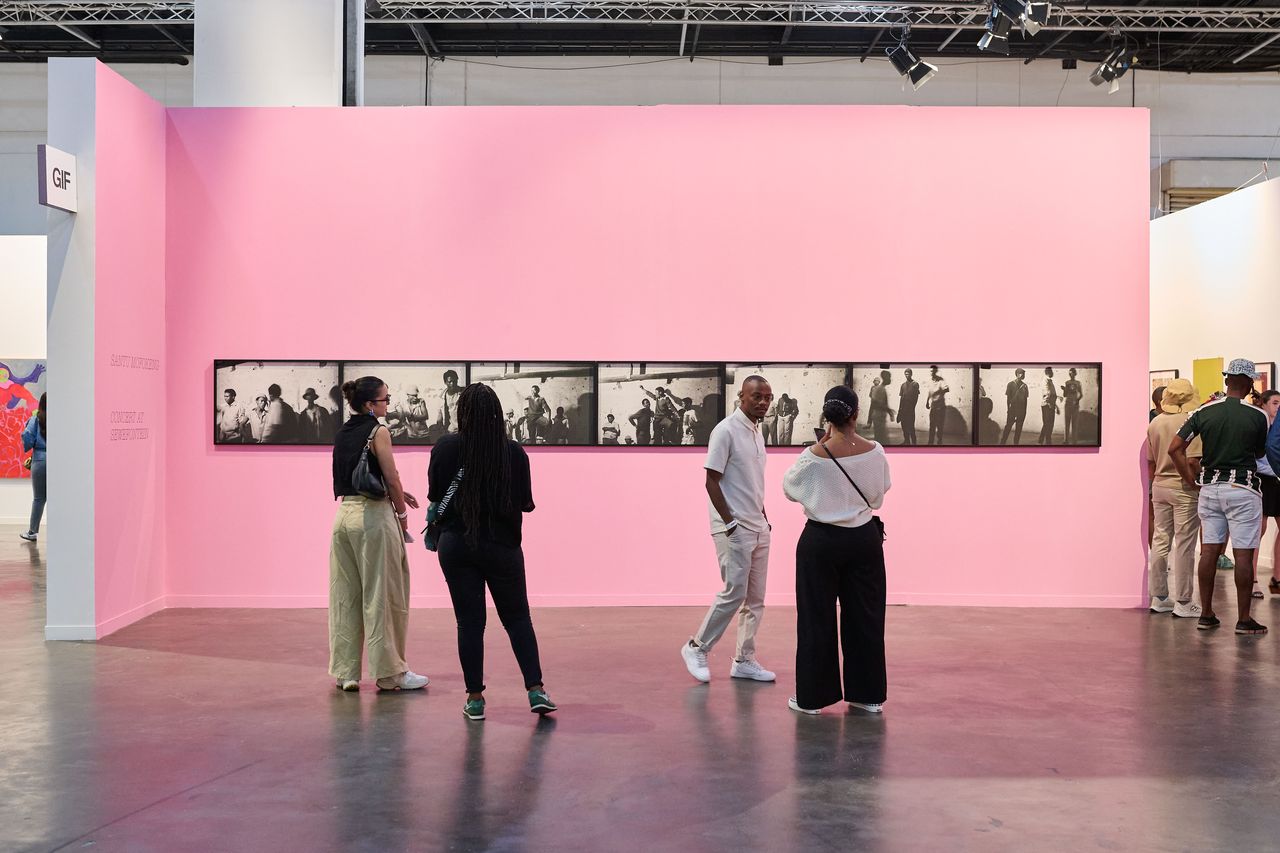
Ana: Santu Mofokeng – Concert at Sewefontein
Studying Mofokeng’s photography during my varsity years, when I was doing image creation, remains one of the most memorable parts of my academic journey. His lens carried an honesty that explored many themes, most profoundly the rhythms of everyday life in South Africa.
Sewefontein itself is a gathering place that draws in anyone worth their salt. Here, people are invited to sing, perform, or do both; to live beyond the watchful gaze of employers and minders. In this space, they are free to frolic, to love, to drink, to surrender to joy as they wish. It is on weekends such as these that the shebeens flourish, becoming the heartbeat of communal release.
I believe we need more spaces for communal release.
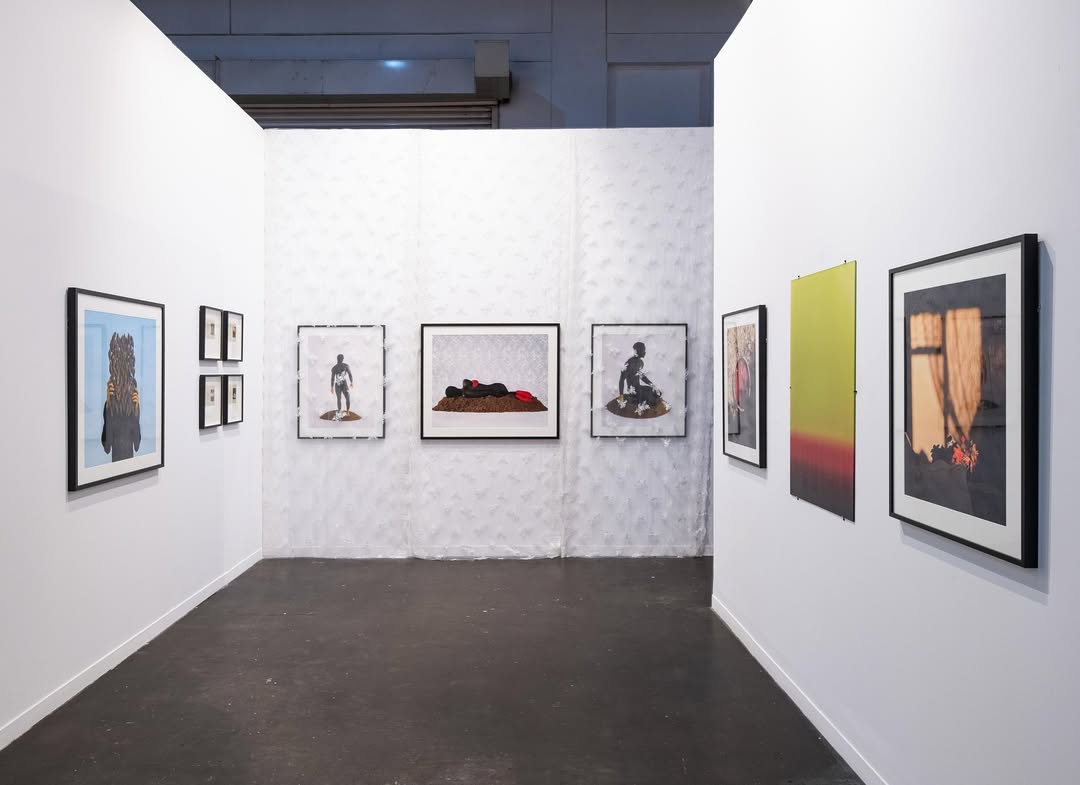
Hlengiwe: I am almost always ‘feelings’ first then intellectual resonance secondary. And so on feelings and what I was attracted to were two artworks. The first being Tatenda Chidora’s Take Care of Me, 2025 which was a smooth gradient panel that transitions from warm, amber-like hues at the top through a yellow-green zone, then into deep reds and dark tones at the bottom. On the opening night, I wish I hadn’t been so socially awkward and spoke to him about it, especially because it stood out so distinctly from the rest of his photographs in his booth. It reads like how I want to feel on the morning of a very good day.
The second is Boemo Diale’s A Dream Container. I’ve got quite a girl crush on her and simply enjoy her play on ceramic work. But girl crush aside, I love little things, and so the idea of having a dream container for trinket dreams sounds deliciously fantastical to me.
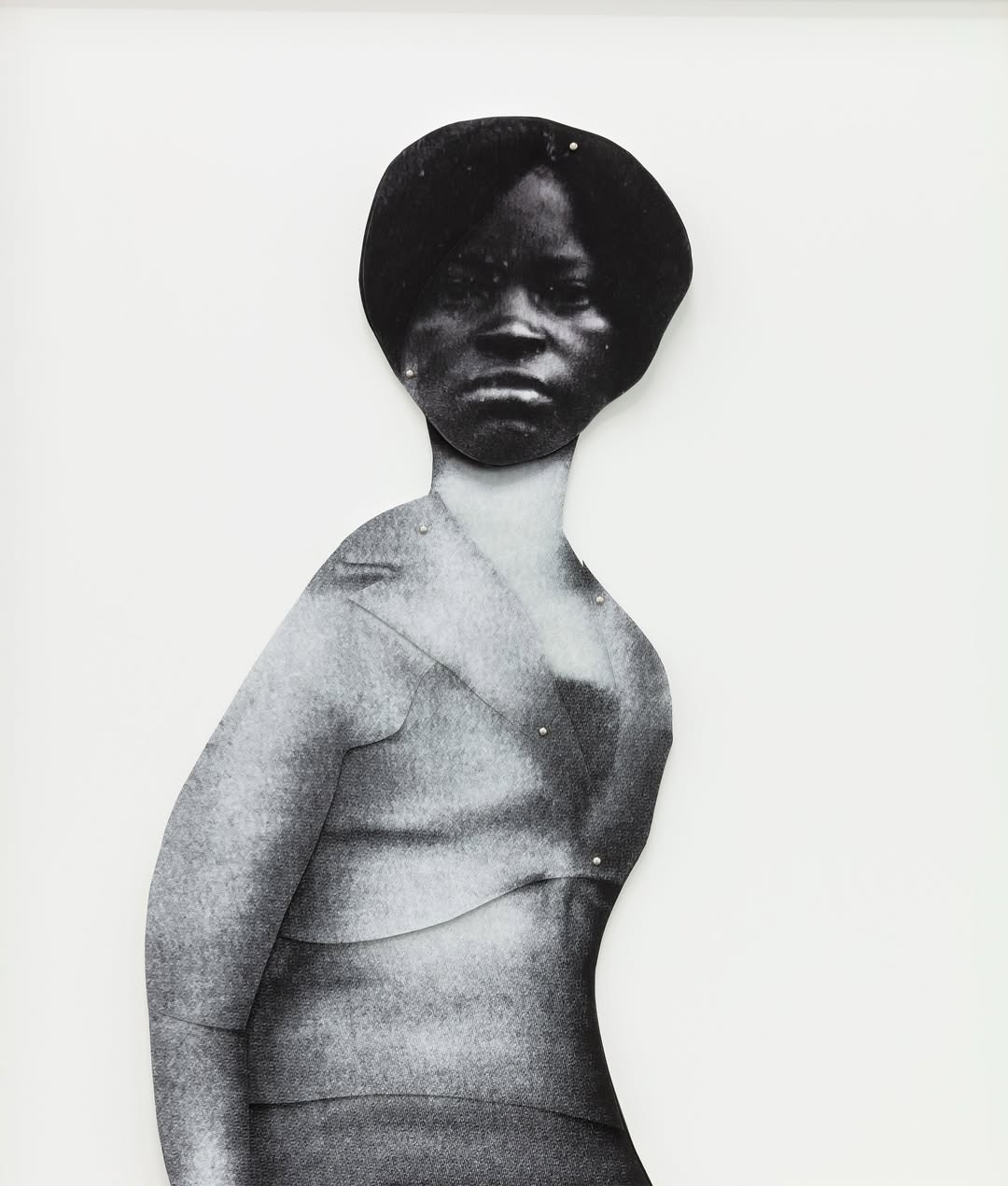
Renaè: Frida Orupabo ‘s Pulse, 2022, Collage with Paper presented by Stevenson
Frida Orupabo’s work combines digital and physical collages in various forms, exploring themes of race, family relations, gender, sexuality, violence, and identity. What drew me to her body of work titled Pulse, presented at the fair, was both its scale and its ability to hold simplicity and complexity at once. You’re confronted with the image of a woman, her gaze reinforced by the layered presence of another Black woman, cut out and placed to stare directly back at you. My response to the work was tied to my love for collage, but more than that, it was about pausing to take in the intricate balance between its stark simplicity and layered complexity. According to her bio, Orupabo’s work is both a form of sampling and a repatriation. Her images pay homage to the subjects’ ability to resist the colonial gaze at the time, and now, in the contemporary moment emphasizes their agency and subjecthood. The power of these images lies in the skill with which Orupabo has employed them in the present’, writes Annabelle Wienandon Hours After.
If one gallery had to represent mankind to aliens, which would be your fighter?
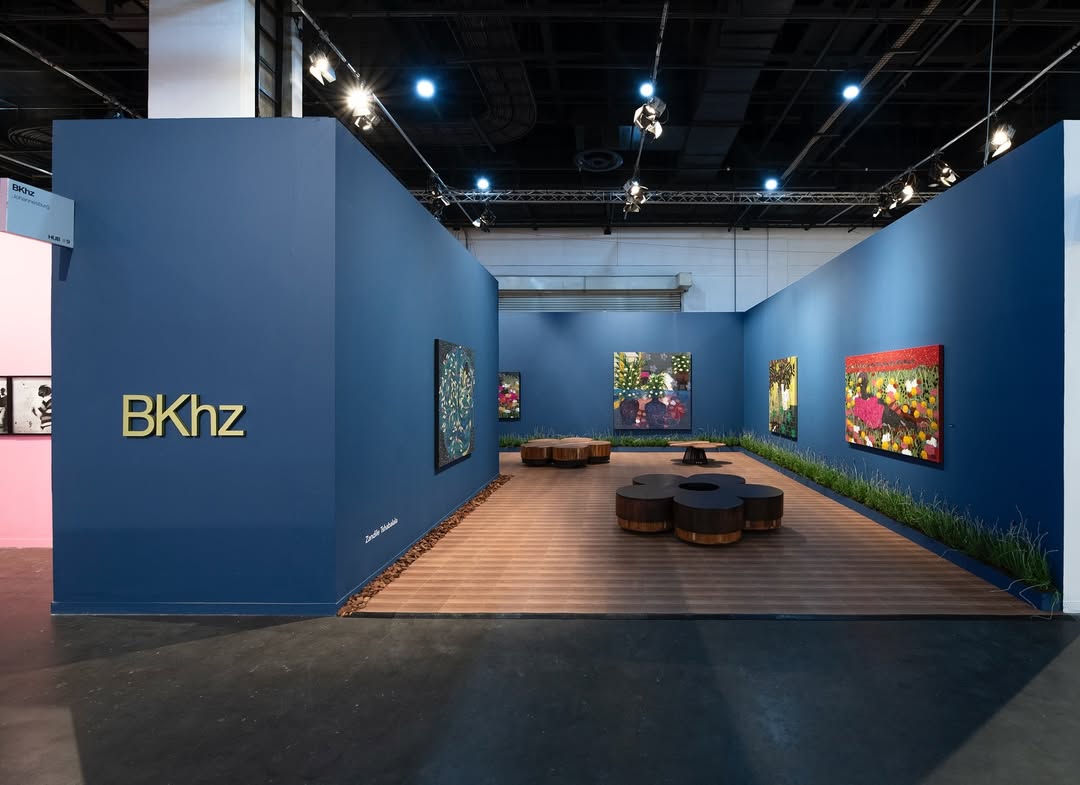
Unanimously: BKhz Gallery would be the best to represent mankind, they had two solo exhibitions at the fair this year for artists Zandile Tshabalala ‘Mother’s Bloom’n in the HUB section & Tatenda Chidora ‘A lot has been happening’ in the GIF section.
BKhz is essential to the art world , making note that there is no need for a grand space, you just have to be deliberate about what you do with it. The intentional elevation the gallery creates for artists every fair is the reason he is our fighter.

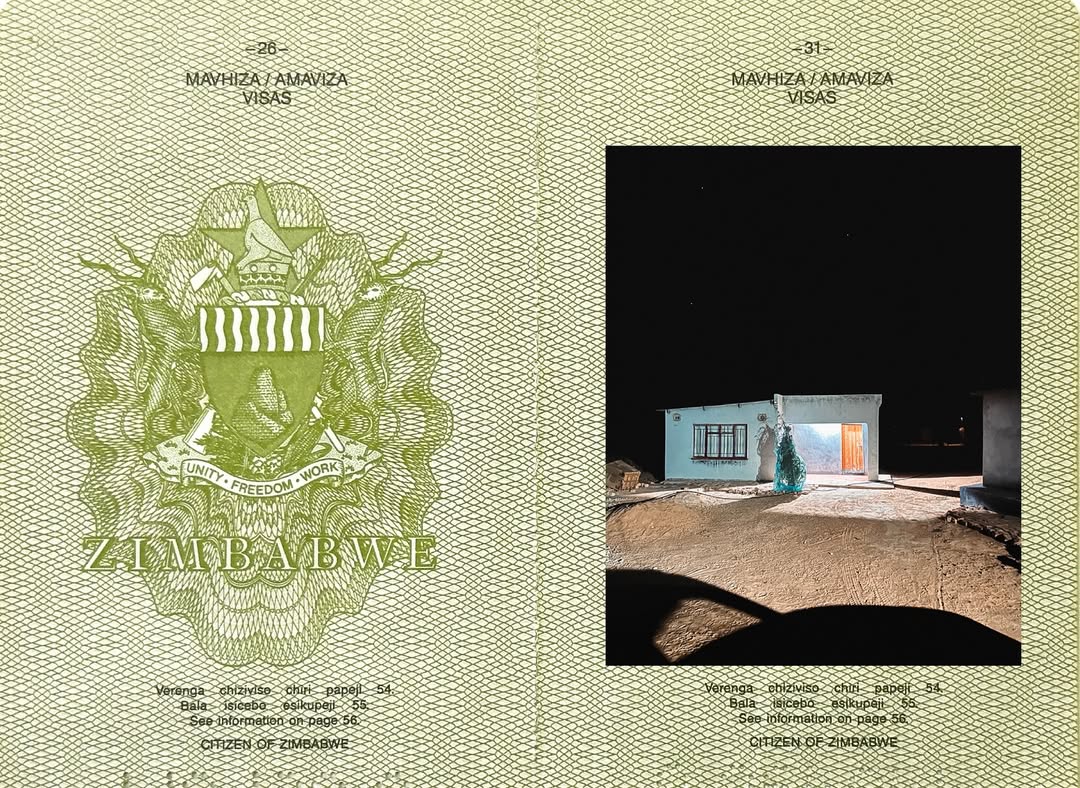
Which afterparty was your favourite, and why?
Renaé: Friends & Familia presented by Circles & Squares + Purpose is Discourse, and obviously, I was extremely impressed by Disco No Discourse’s debut set, the girlies really did the most.
Images by Anastatia Nkhuna

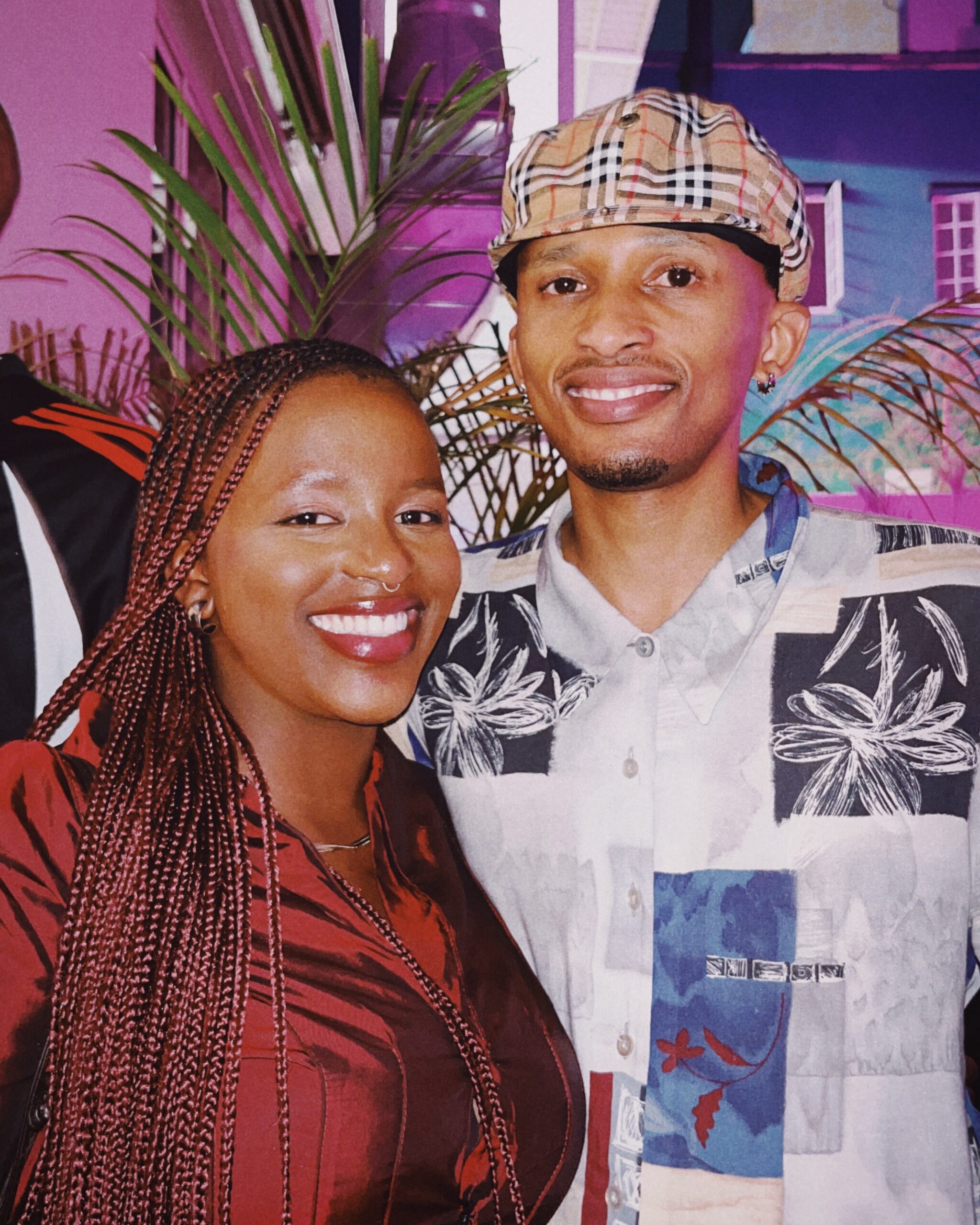

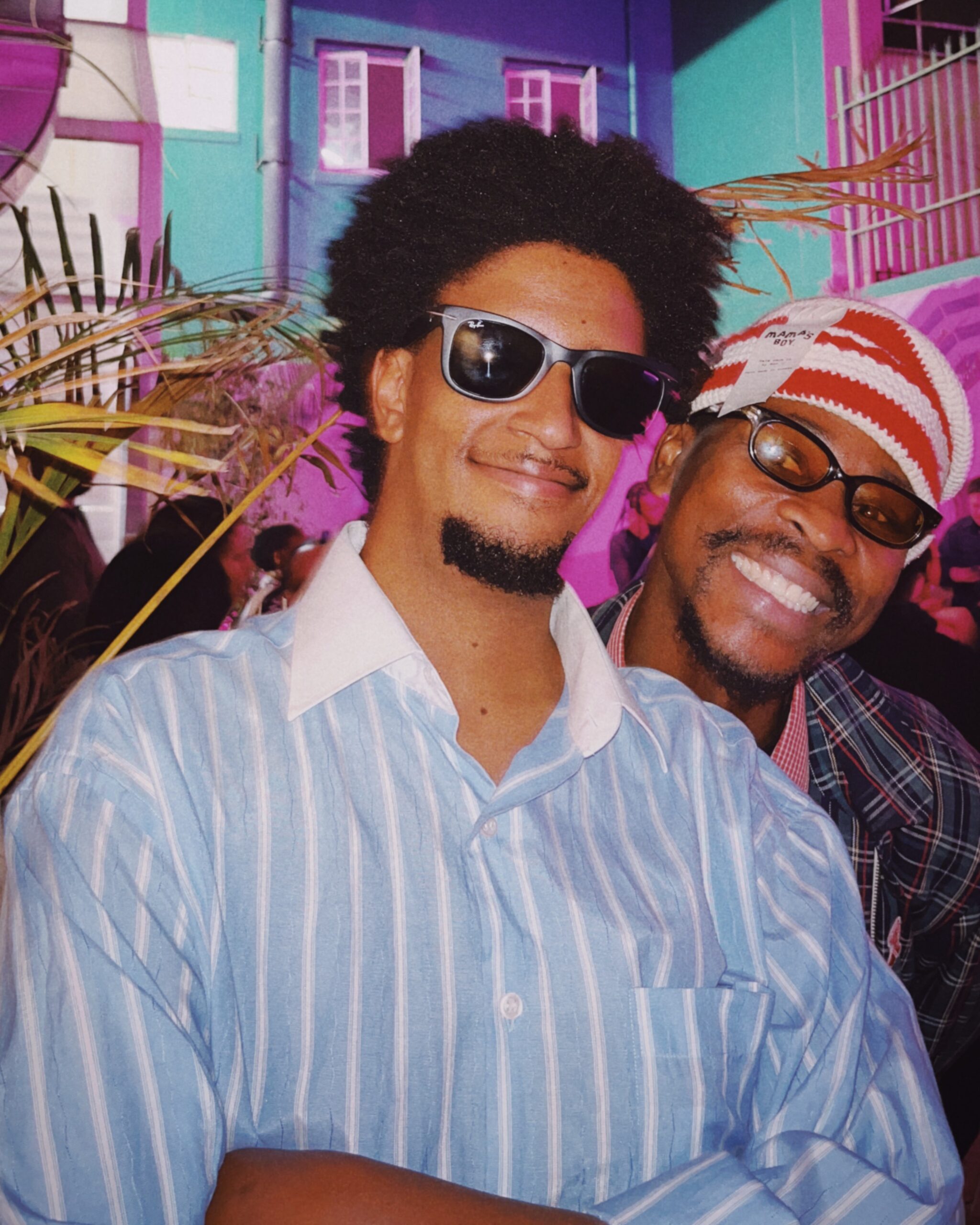
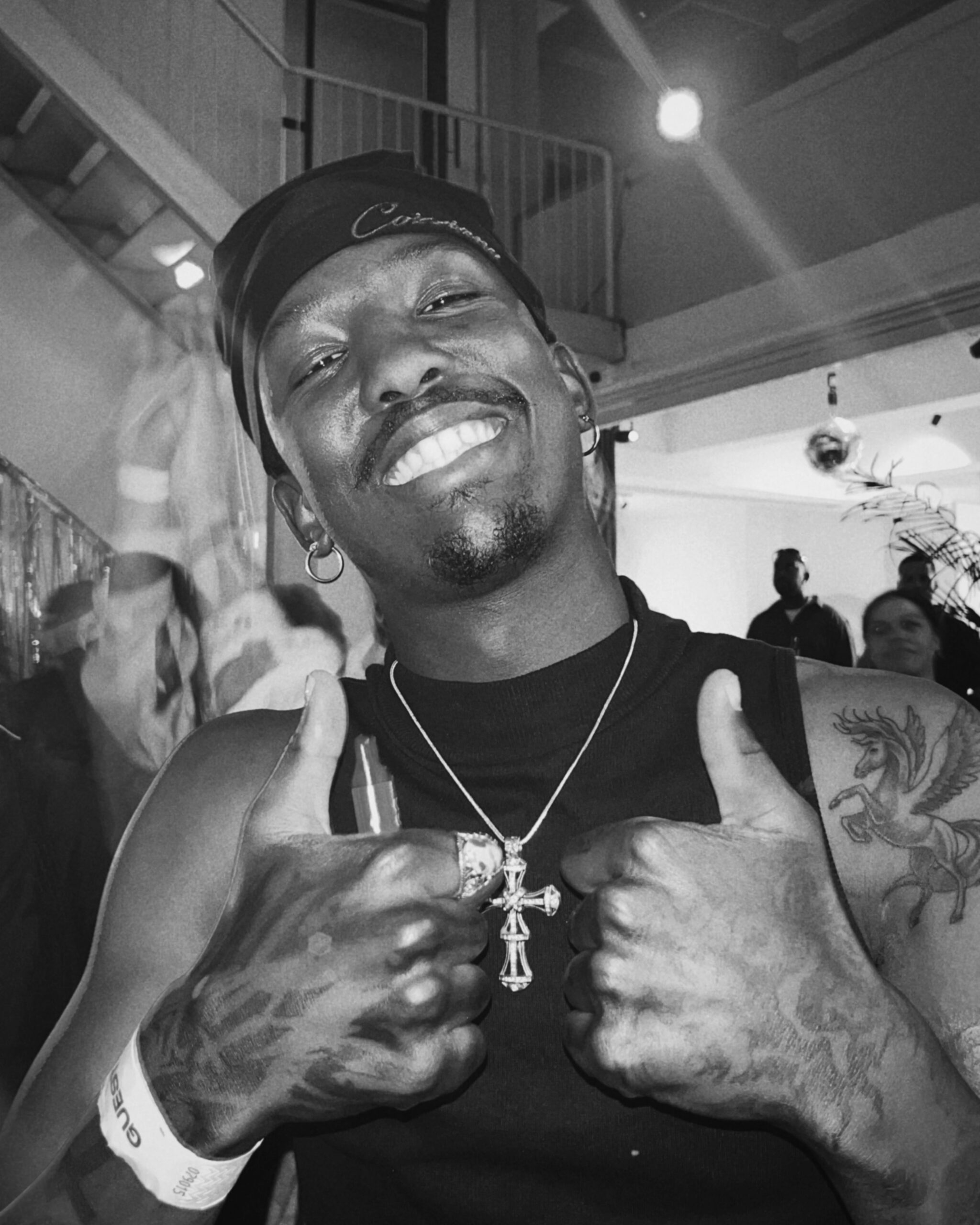
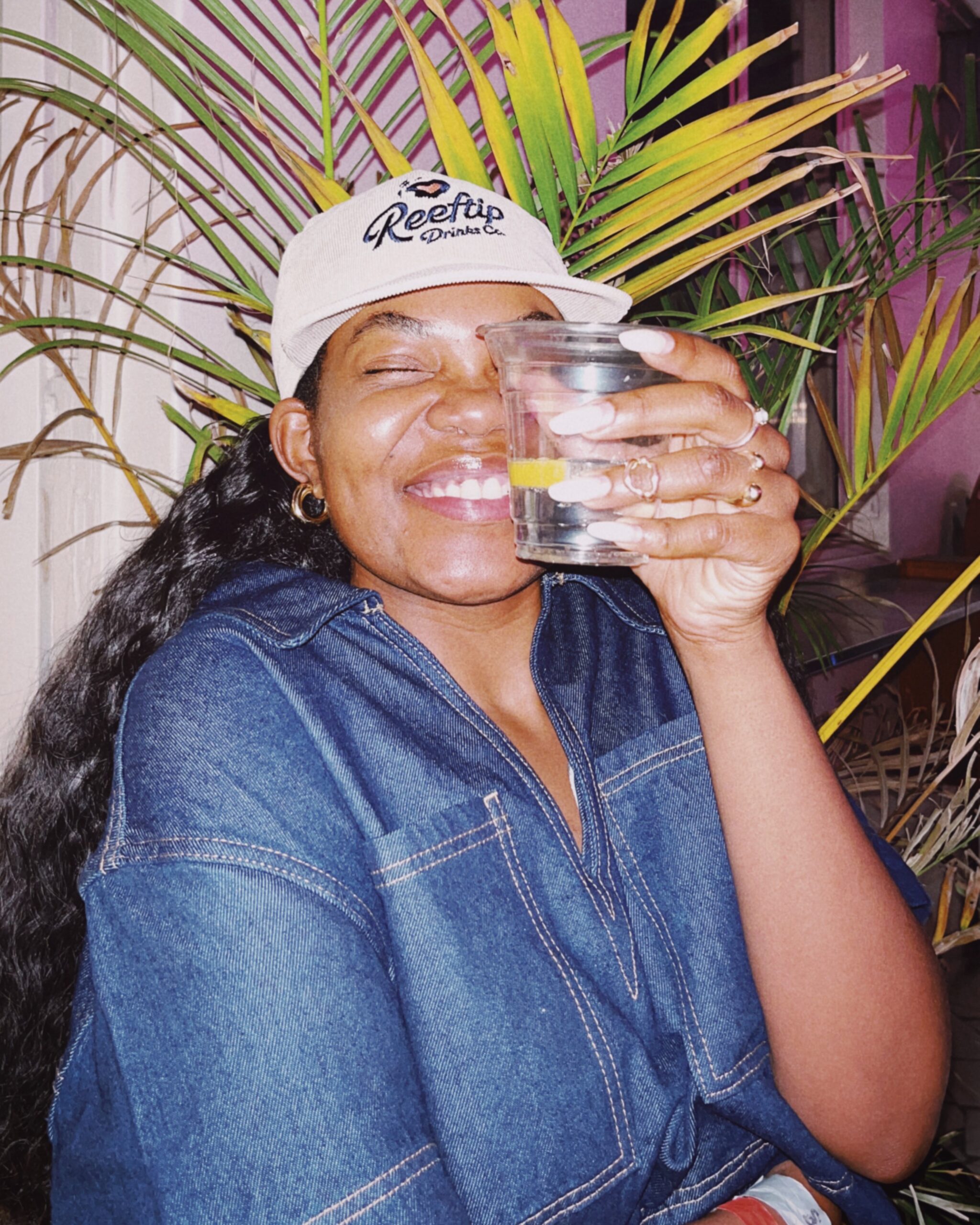
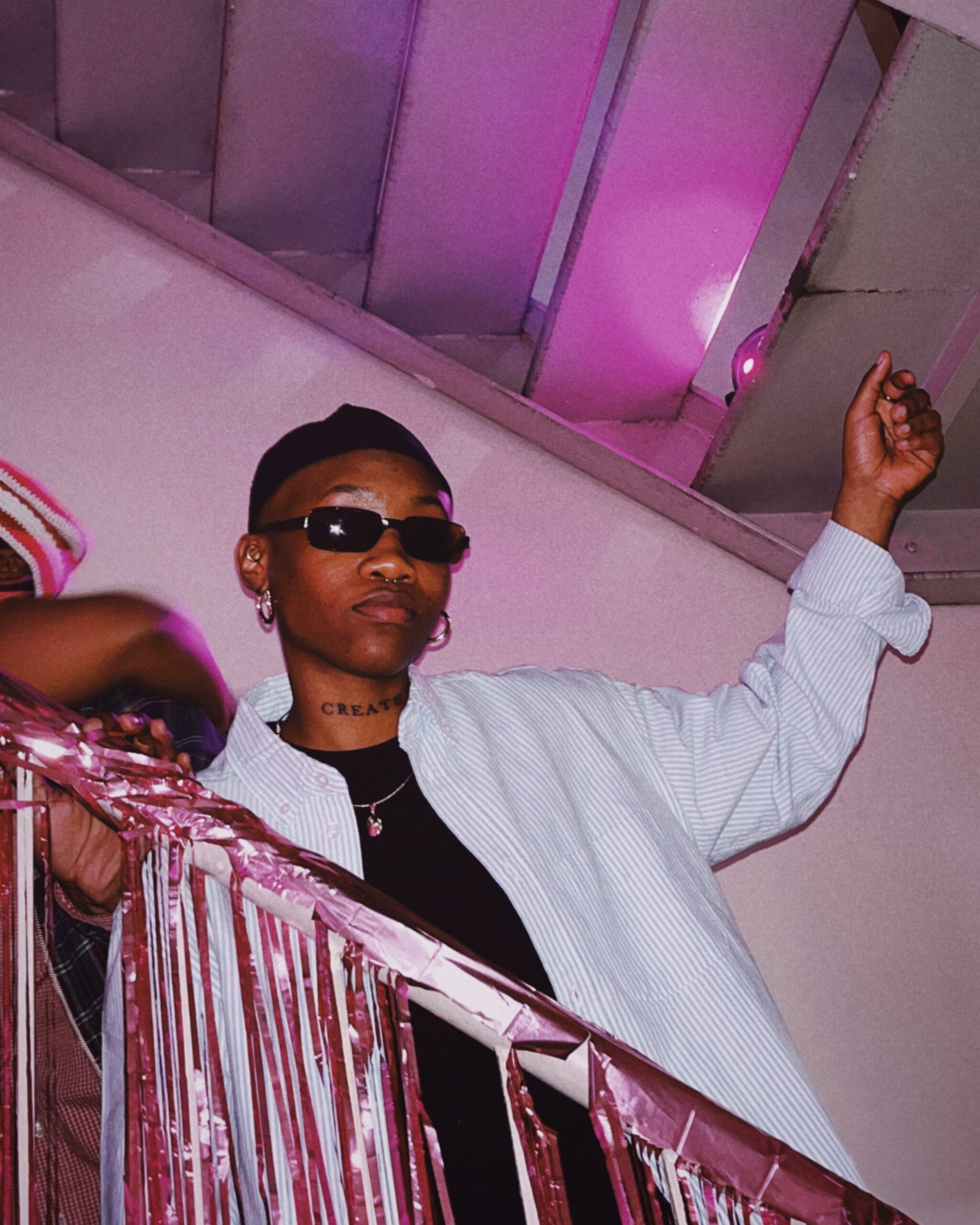
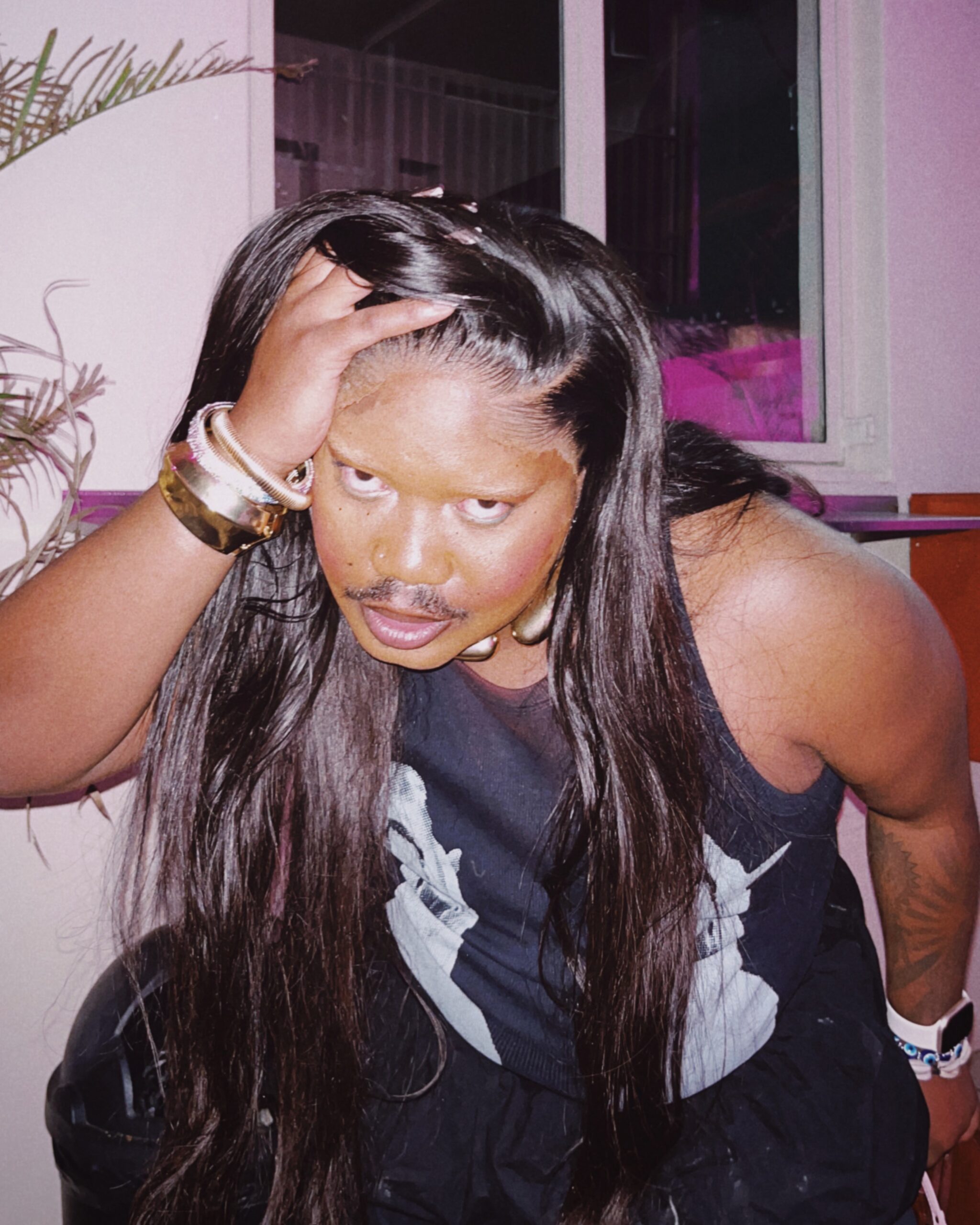
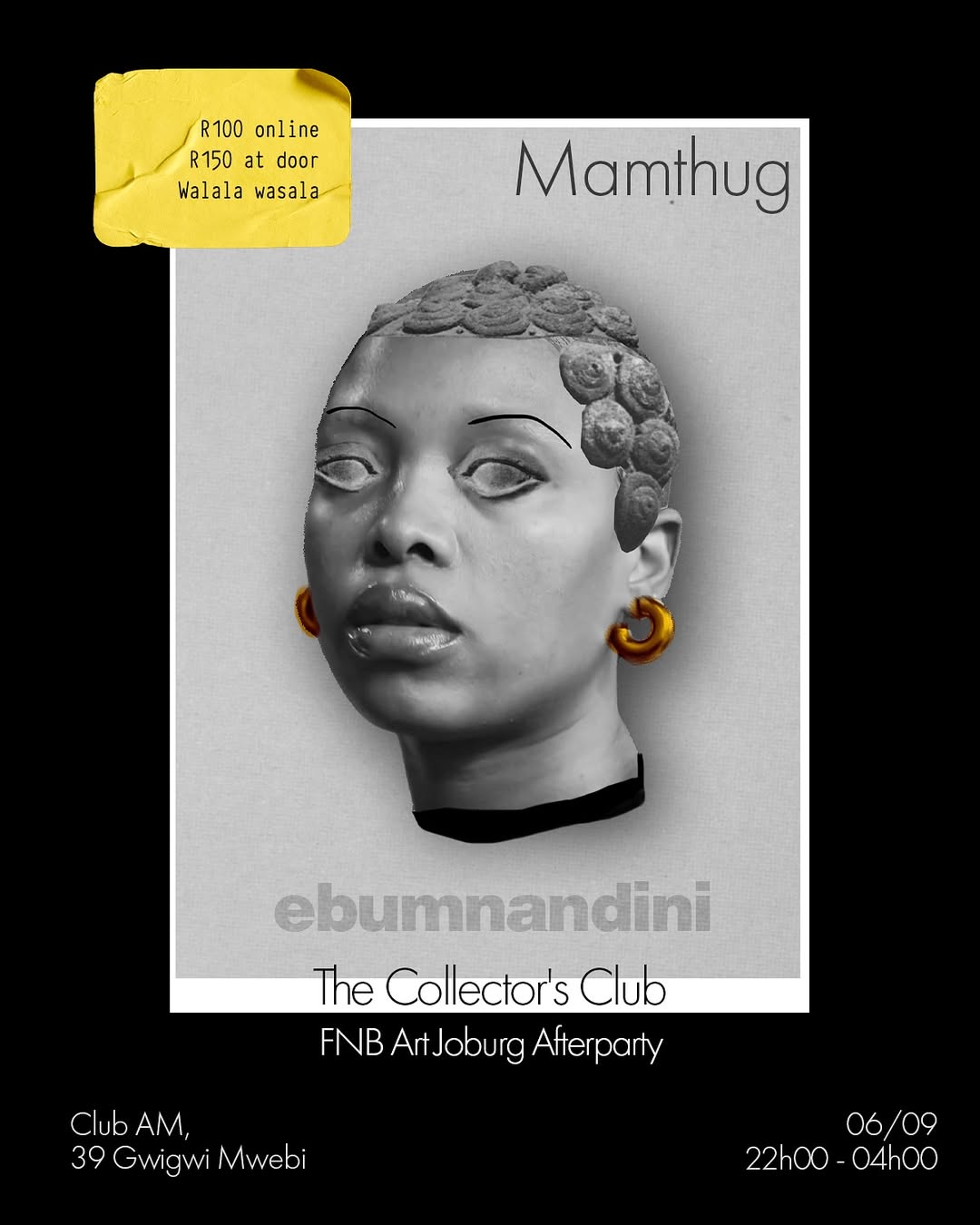
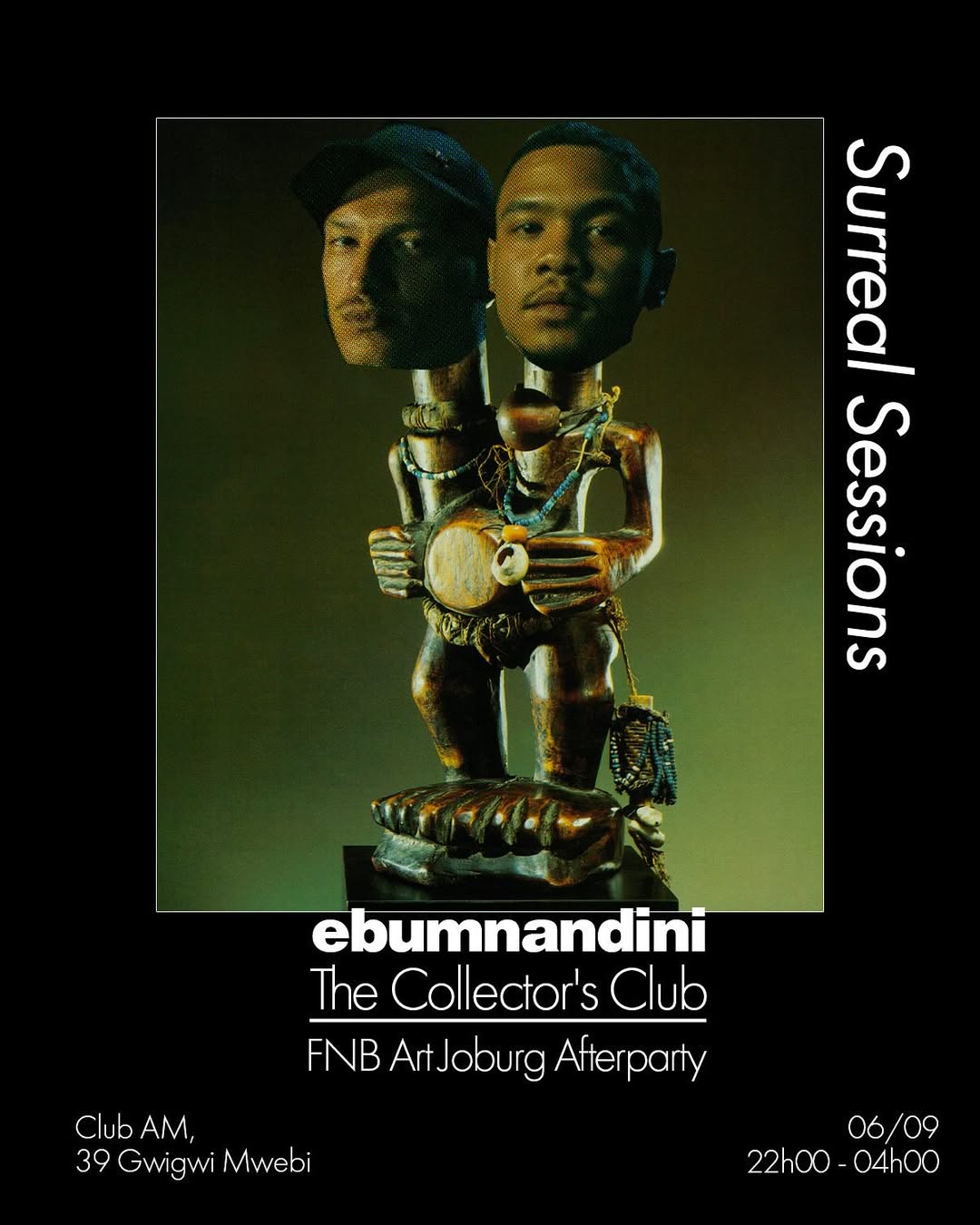
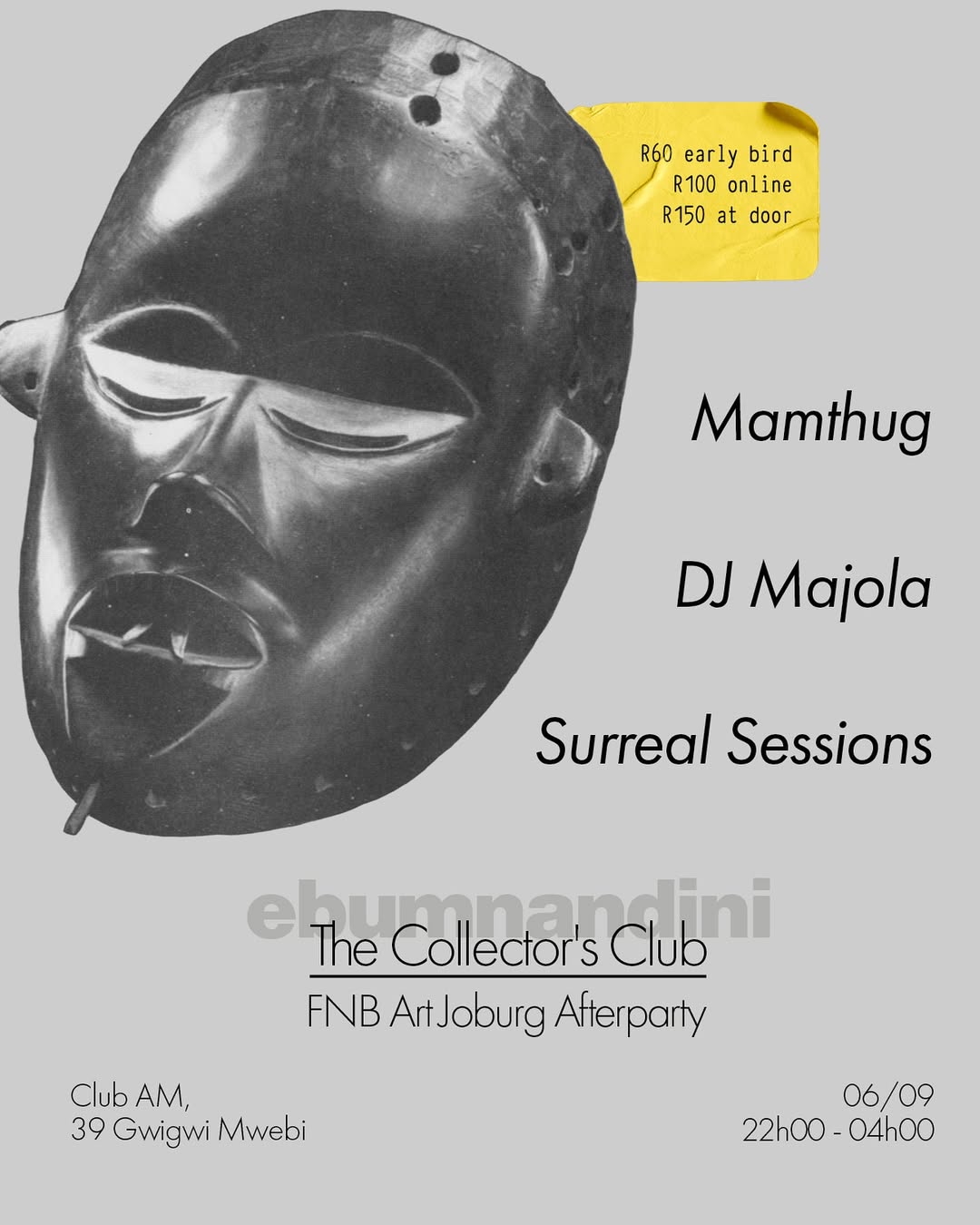
Ana: Ebumnandini — Yilapho uzongithola khona
I’m a sucker for the way they roll out their events; it’s dripping with detail. Franadilla proves he’s getting his full ROI out of that Adobe subscription.
The afterparty was titled The Collector’s Club, a name drawn from archives of artefacts and art collections, reimagined as a celebration where the love for art and the pulse of sonics meet in one space. A communion of image and sound, collection and connection.

Which artist made you feel something or even had you thinking?
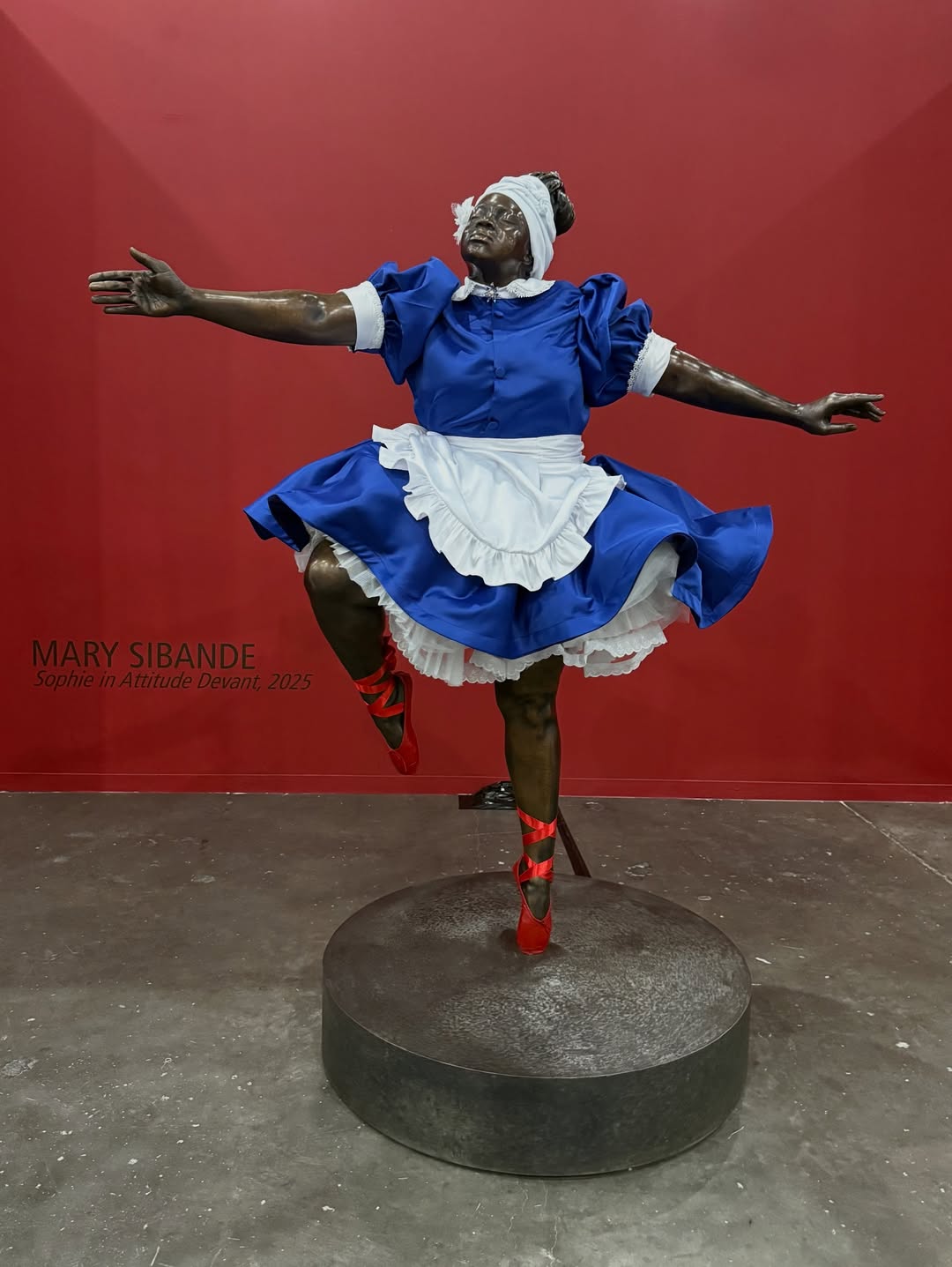
Ana: Mary Sibande , what a queen! Sophie is an iconic figure in the South African art scene especially looking at the themes of identity, femininity, blackness , labour and post-coloniality that the character embodies. She is still challenging historical narratives, resisting and empowering as she evolves. Her standing in en pointe, a position that takes time and hard work to ace, was just inspiring to see and look at. It made me feel like nothing is impossible.
Renaé: I loved Tatenda Chidora’s A Lot Has Been Happening, especially the works he mentioned were inspired by and captured the night before my grandmother’s burial and on the final day. They made me reflect on my own grandmother how, after she passed, conversations quickly turned to the ownership of her home and what her absence meant for our family. I won’t attempt to unpack the possible underlying themes of displacement or the concept of home, because my engagement with the work was purely experiential and personal at that moment.
What are you purchasing, and where in your home will you place it? Money aside
Renaé: I’m buying the Mary Sibande Sophie piece, I need her in my house, placed right at the entrance so she’s the very first thing you see when you walk in.
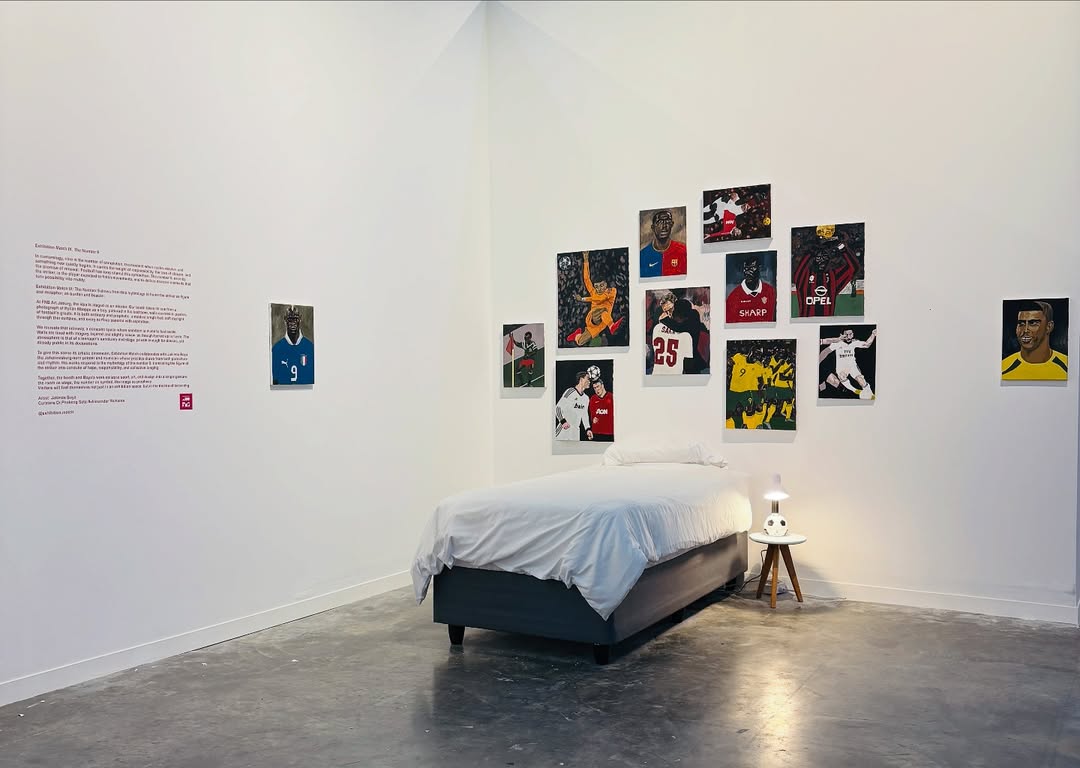
Ana: For my future child should they love football, I’d design their bedroom just like the EXHIBITION MATCH BOOTH. I especially loved Khumo Morojele & Klein Muis’ bedroom installation: reconstructed football jerseys, a quilted jacket, pleated skirt, cleated sandals, and a sublimated editorial film image that reinterprets football aesthetics. And of course, the paintings by Jakinda and the photography by Jack Markovitz.
The curators Alex Richard and Phokeng Tshepo Setai landed this exhibition at the back of the net! Now I need to understand how Betaway works! (Gamble responsibly folks.)
Hlengiwe: It would be Unathi Mkonto’s Groundfloor, Mass Vocabulary, 2025 and the reason for this selection would be because I have an interest in sculptural work that I’d like to develop.
I found it exciting, almost playful. It looks like some sort of text, but it isn’t really, perhaps a city but not quite. I’d need to understand more about his intentions, but I quite appreciate the minimalistic approach in how he creates these worlds that one can’t quite explain what they are when viewing, well at least for me, that is.
And since all three of us have film degrees, if you had to document one artist exhibiting at the fair and make a film about them, who would it be and why?
Hlengiwe: Levi Pooe had a solo presentation with the title Se Segolo ke Bophelo, which translates to “The Greatest Thing is Life”; I would most definitely give the doccie film the same title. While we were at Wits, I ran in the same circle as him for a bit, and shared some interactions. Those few interactions being a glimpse into his life before his solo show now, leads me to a personal interest in diving deeper into his journey, how he arrived at this point, and the themes he explores in his work. The title of his show speaks brilliantly to the work he creates. The phrase reflects a philosophy that, despite hardships or challenges, life itself is the ultimate win, guiding choices and offering perspective in moments of difficulty or reflection.
Lastly, there’s an honesty in how he portrays each character that I think is a direct reflection of him and how he views and has navigated bophelo himself.
Ana: This is such a good question. I absolutely love 16/16 from Lagos, and the work of Osione Itegboje, especially because it asks us to see Lagos as inherently ‘queer’ a life that resists definition, unlike what is known elsewhere.I can already imagine it as a powerful expository documentary, peeling back the layers of this existence in Nigeria, a country where same-sex marriage and public displays of affection are criminalised. To have curator Fabia Alabraba guiding the narrative arc of that story would be incredible and it’s definitely a project I’d love to document with other filmmakers I trust to pour passion into the project.
Renaé: I’m interested in Ayanda Mabulu, his career trajectory, his practice, and why he paints Black women in the way he does, and how significant that is for imprinting our history and its archive. Of course, I would also include the controversy, after all, what’s a film without an interesting plot?[Laughs]
We also asked our favourite gallerinas about their experience and here’s what they shared.

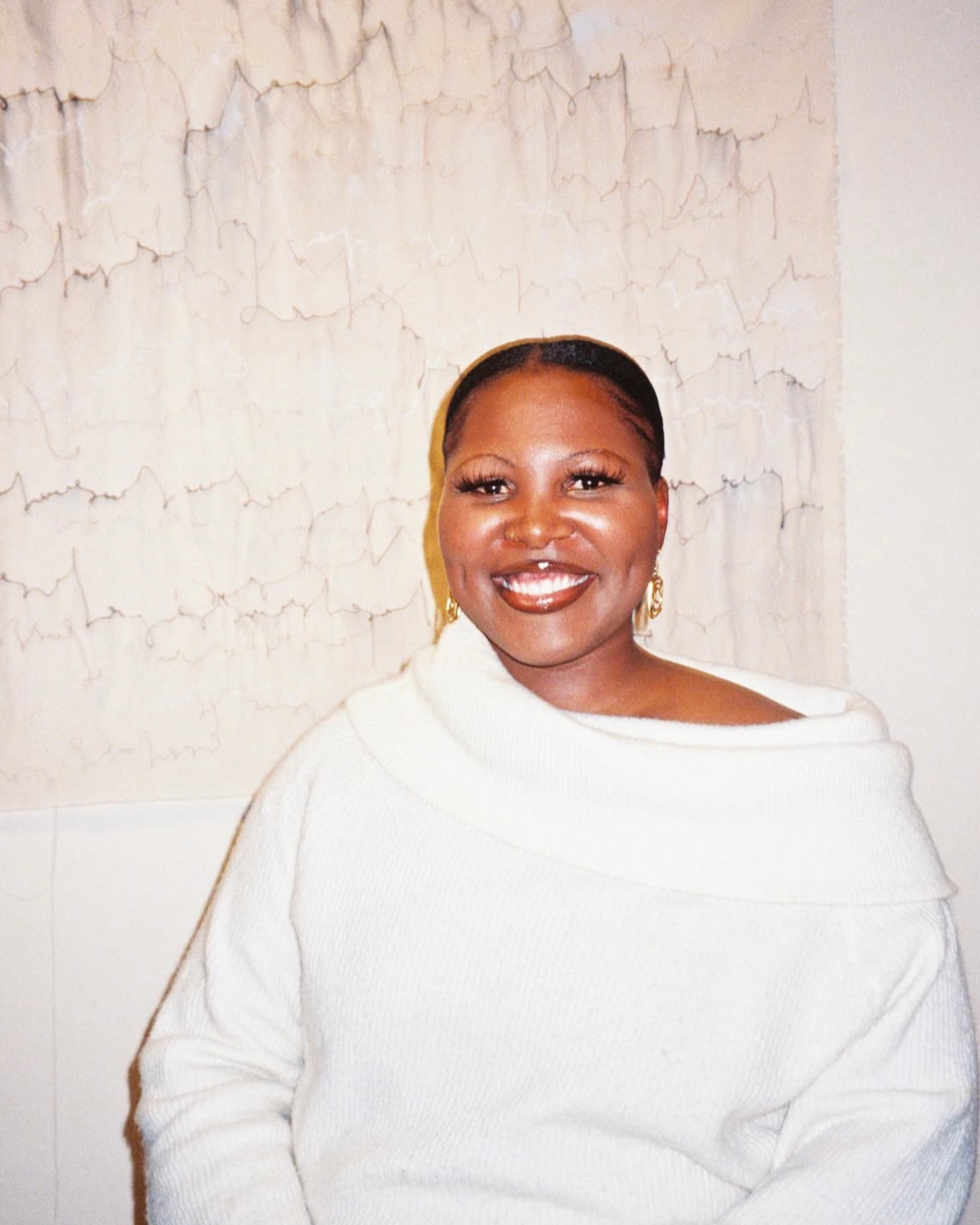
“What I found most refreshing about the 18th edition of FNB Art Joburg was how each artist was able to describe what freedom within themselves and their practice looks like. From the quiet reflections of Botswana artist Katlego CL Twala’s Ade to Zandile Tshabalala boldly standing on the glitter filled beauty that is her redefined practice seen through the lense of both her young daughter and motherhood.
‘Black contemporary art’ this time around had very little to do with labour but rather looked at expressions of love, rest and the leaning into the black imagination and future where artists are given the space to imagine figures and practice in mediums that do not ask for permission nor understanding.” Zoleka Motlhasedi
“Beyond that, the fair once again demonstrated how well it platforms African art and galleries. It was refreshing to have conversations with gallerists from across the continent and, through our panel, to hear about the ecosystems they are building—what resonates with ours, what differs, and how we might all broaden our scope. There’s a real need to think more continentally, to be more fluid and connected, because South Africa and the global South more broadly can often feel isolated from what happens further north.
That’s why inclusions like the Botswana pavilion felt so significant. Similarly, seeing spaces like Ora Loapi represented is a reminder of the importance of bringing diverse institutions into the fold.” – Aza Mbovane


Leave a Reply