FNB Art Joburg 2026: What We Saw, Felt & Couldn’t Stop Talking About
Interview by Anastatia Nkhuna
FNB Art Joburg returned to Sandton Convention Centre for its 19th edition, bringing thousands of visitors, countless conversations and a few works we’re still thinking about.
Across HUB, LAB, MAX, GIF, ORG and INK, artists and galleries from South Africa and across the continent reminded us that the fair is as much about looking as it is about questioning, feeling, collecting and supporting the ecosystem. This year also introduced Gallery ARK, while the fair’s talks, lectures and audio essays continued to make space for thinking alongside the art.
Despite the shifting realities of the art world, artists continue to show up boldly, generously and with something to say offering us plenty to interrogate through colour, form, material and story.
As always, we regrouped and asked: what actually stayed with us? What follows is our candid and completely subjective account of the works and moments that moved, confused and delighted us.
It isn’t a definitive ranking of the “best” of FNB Art Joburg, nor are we pretending to be the final authority on anything. It is simply our very candid, very subjective account of the works, moments and conversations that moved us, confused us, delighted us and followed us home.
Consider this the iQHAWE Art Joburg group chat, just slightly better edited.Enjoy the read.
What felt different about FNB Art Joburg this year? From the energy in the room to the galleries, programming and people attending , where did you feel the fair had shifted or evolved?
Anastatia: What felt different this year was a palpable sense of year-end fatigue, in conversations leading up to the fair, so many people were convinced they simply didn’t have it in them to attend.
And yet, despite the gloomy weather and the thought of navigating a busy convention centre, many of those same people surprisingly showed up. If anything, it reaffirmed just how vital FNB Art Joburg remains to Johannesburg’s cultural calendar: we may be tired, but apparently, not too tired for art.
Renaé: I really enjoyed the different forms of presentation and the playful nature that was present throughout the space. I felt like the galleries really allowed for play this year, there was more to wonder about, more to discover, and little moments of surprise that met you where you needed them. I hope to see more of that within the art space. Let us play my people.
Where did the fair feel most alive to you , was it on the main floor, in a particular booth, during a conversation, or somewhere beyond the fair itself? What made that moment capture the spirit of this year’s Art Joburg?
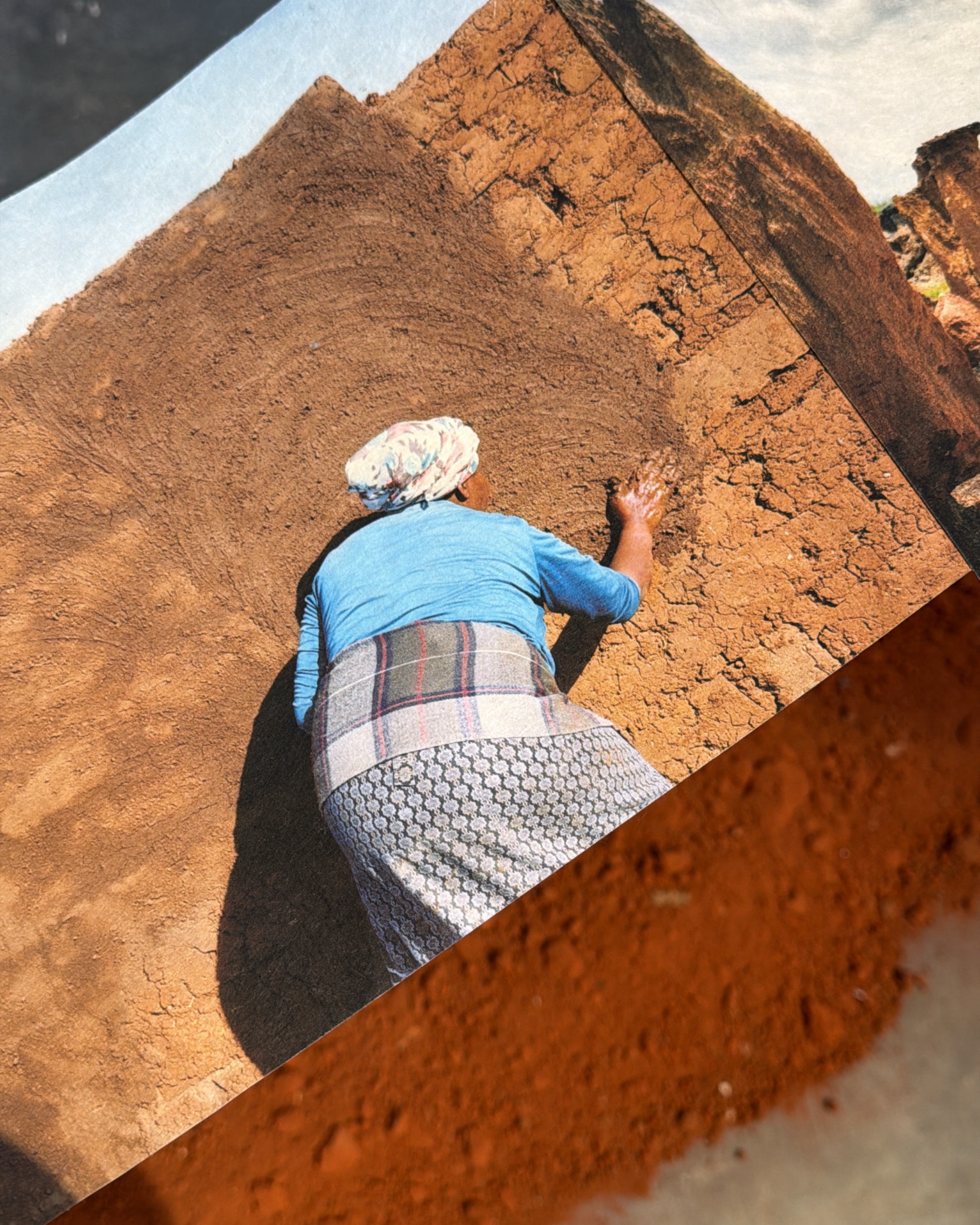
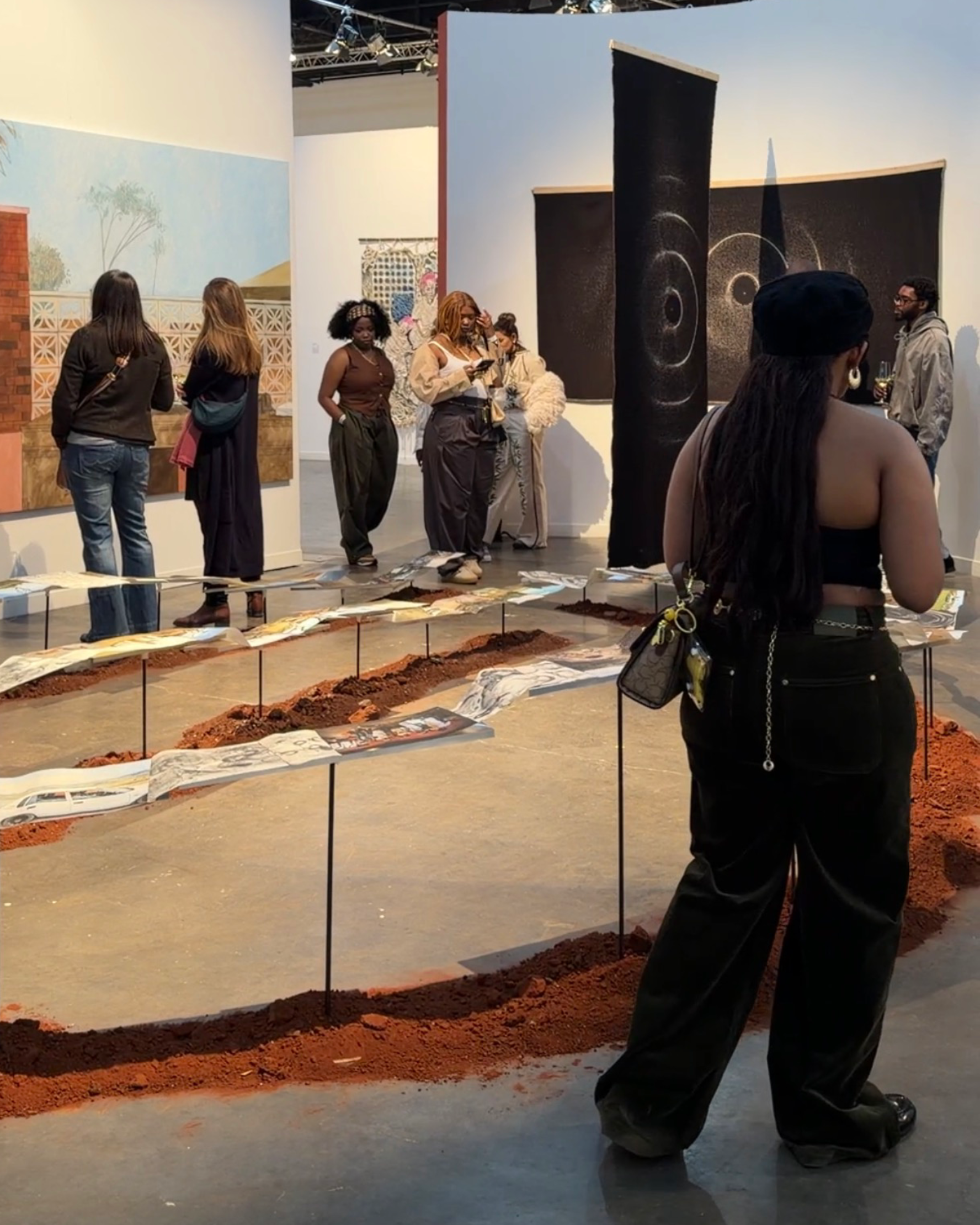
Anastatia: The fair felt most alive to me on my fourth walk around on Saturday, when, completely overstimulated, I decided to quieten my mind and really lock in, I read Lindokuhle Sobekwa’s statement for Ubuhlanti (The Enclosure)
“You do not stand in front of this work. To see it, you walk it.”
It forced me to move beyond simply seeing the work and instead consider its intention, meaning and representation. Once I slowed down, the works began to speak differently; some even moved me in ways I might have missed entirely had I continued walking through the fair without giving them the attention they deserved.
Renaé: On Sunday, I arrived earlier than Hlengiwe and she called to let me know she had arrived, and she suggested we meet by car. Someone else was walking with a friend next to us and suggested the same thing. We jokingly said, “We need to bring back monuments inside fairs.”
I felt like Paulo Nazareth’s Indlela, the vintage car, yams and candles, was such a wonderful welcome. Positioned right at the entrance, it was literally the perfect introduction. It invited you to wonder, to ponder, to be intrigued from the moment you stepped into the fair. There was something so beautifully intentional and artsy about the way it marked the beginning of the space and immediately set the tone. I really loved that.
What do you think this year’s fair was really saying about Johannesburg, beyond being a marketplace for art, what did the fair reveal about the city, its creative community and Johannesburg’s place within the wider African art world?
Anastatia: Funny enough, the word marketplace takes me back to a conversation with Banele Khoza, where we joked that I should host an auction at the fair, partly because the sheer volume of people, conversation and exchange can begin to feel like one. An auction is ultimately a theatre of value: people gather around objects, ideas and stories, deciding what deserves their attention, desire and, eventually, their money. In many ways, the fair operates similarly, we are spending our time, our minds and our money, while simultaneously negotiating what African art and culture are worth.
There is something phenomenal, but also worth interrogating, about that: Johannesburg becomes this concentrated marketplace for African creativity, where culture is celebrated, exchanged and inevitably commodified, reminding us that even when we are talking about meaning, memory and identity, somewhere in the room, something is also being sold.
Renaé: I’d be lying if I said I had an answer to this. I’m honestly not sure what the fair’s own stance or subjectivity was in relation to the space or the city.
What was the first work that made you stop? Not necessarily your favourite but the first piece that interrupted your walking, pulled you closer or made you want to understand what you were looking at. What was it about the work that caught you?
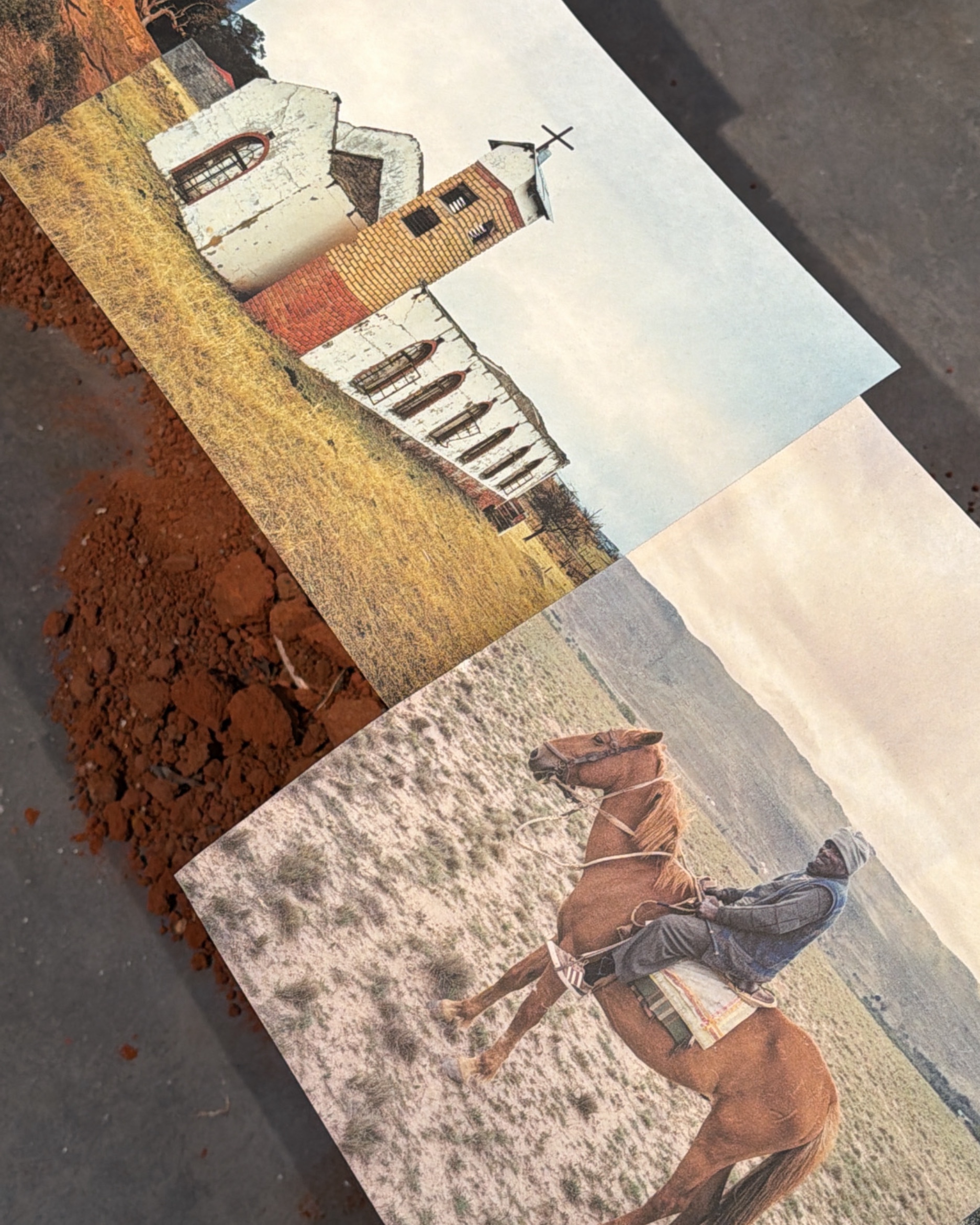
Anastatia: I keep returning to Lindokuhle Sobekwa Ubuhlanti (The Enclosure). The installation moved photography beyond the white cube, asking us to maze through the work, look down rather than up, and encounter these deeply personal images over soil, an experience that felt both grounding and intimate.
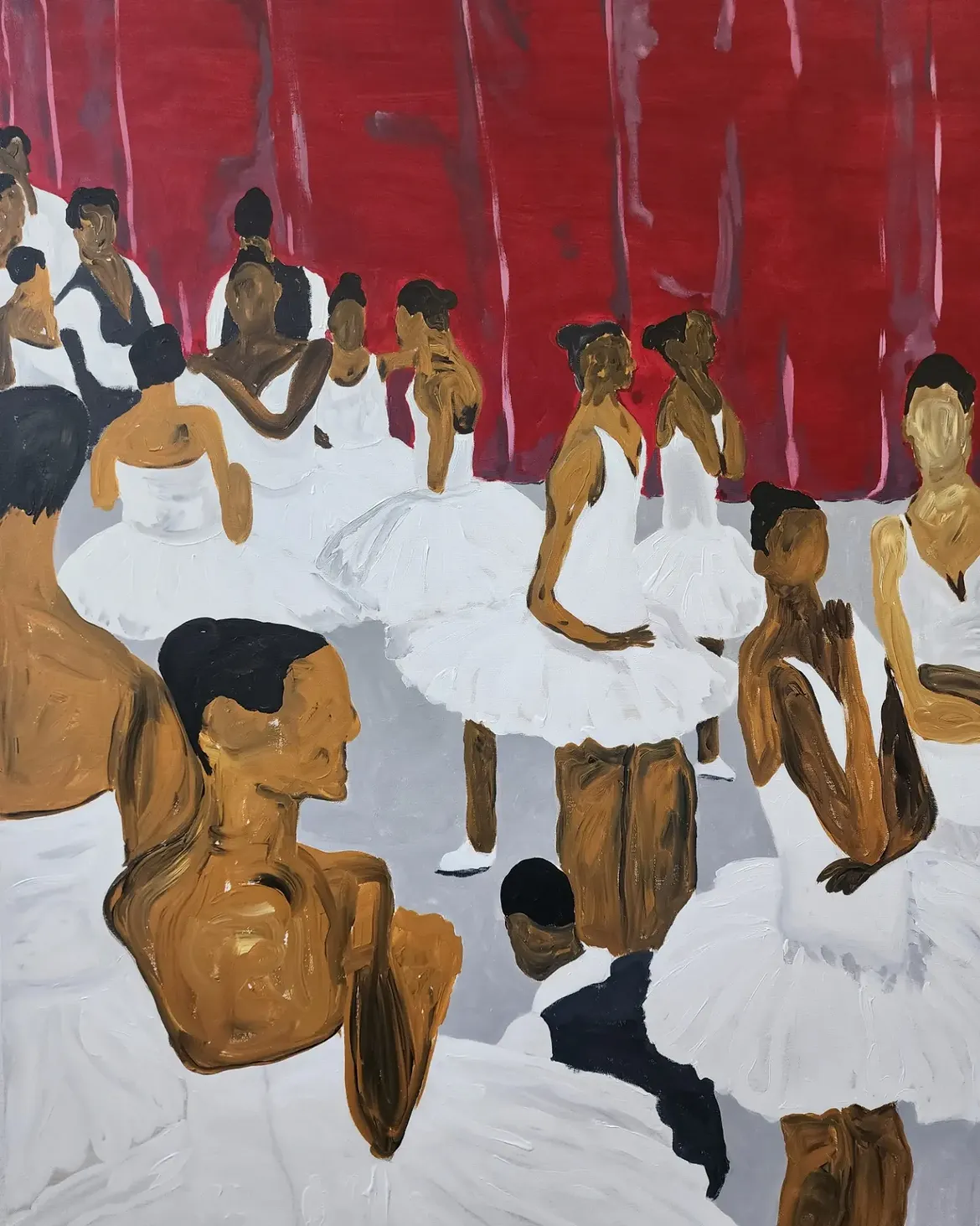
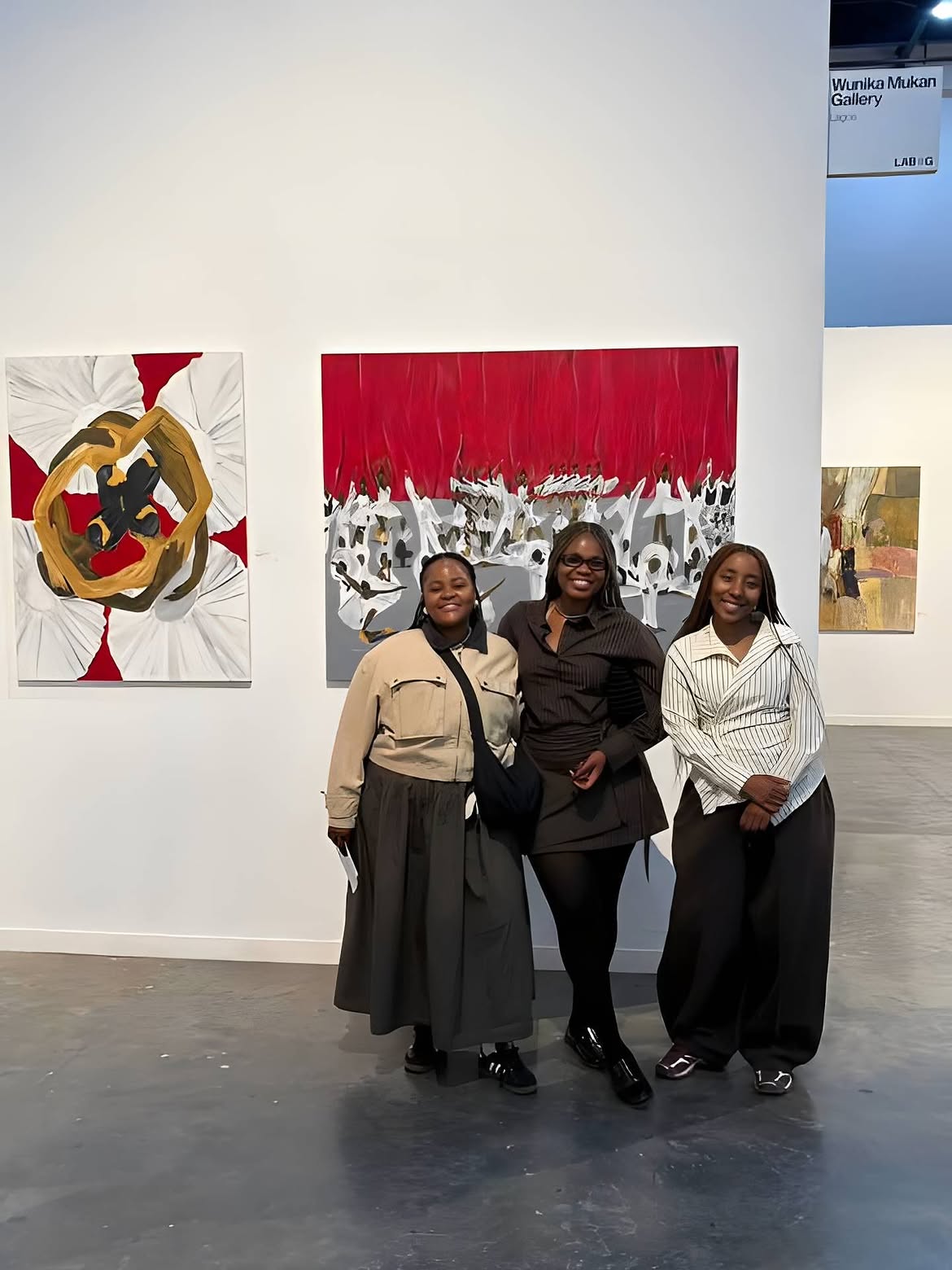
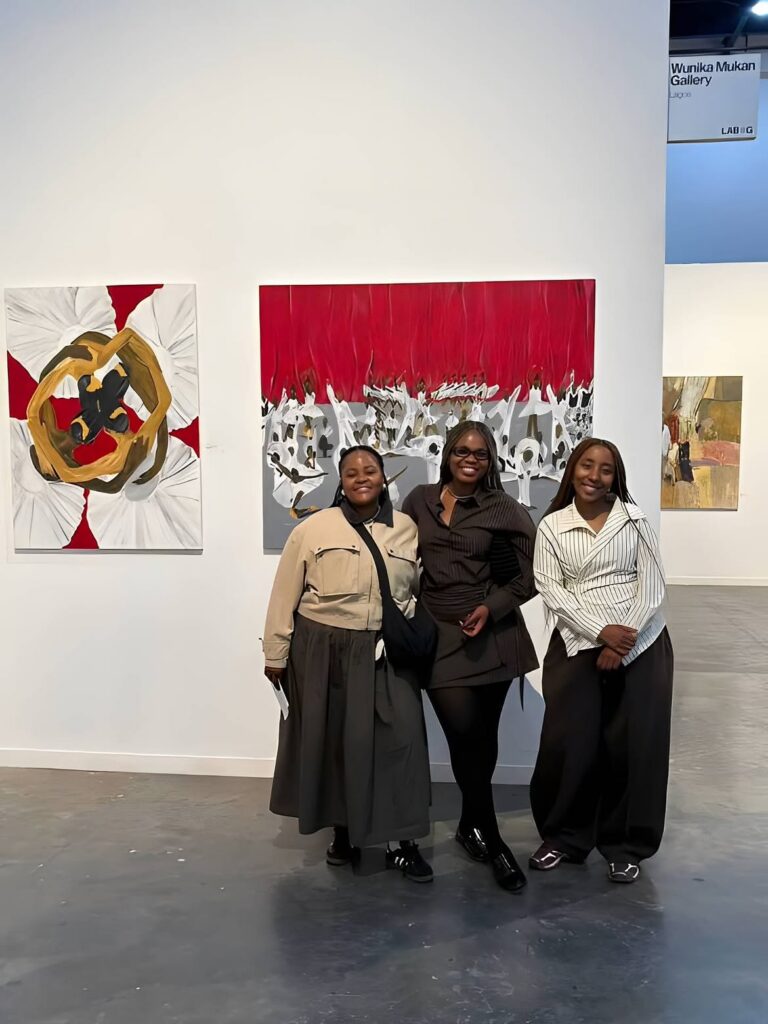
Renaè:I really loved Wunika Mukan Gallery’s presentation of Themba Sibeko’s work, especially We Did Say We’d Make It II. I’m not entirely sure why this particular work felt so dear to me, but it did. There was something tender and affirming about it. I loved the way Sibeko represents Black people with such intimacy and care, allowing the work to feel both deeply personal and universally familiar.
The scale of the piece also really stayed with me. It felt just right, large enough to hold your attention, but intimate enough to draw you in and encourage you to spend a little more time with it.
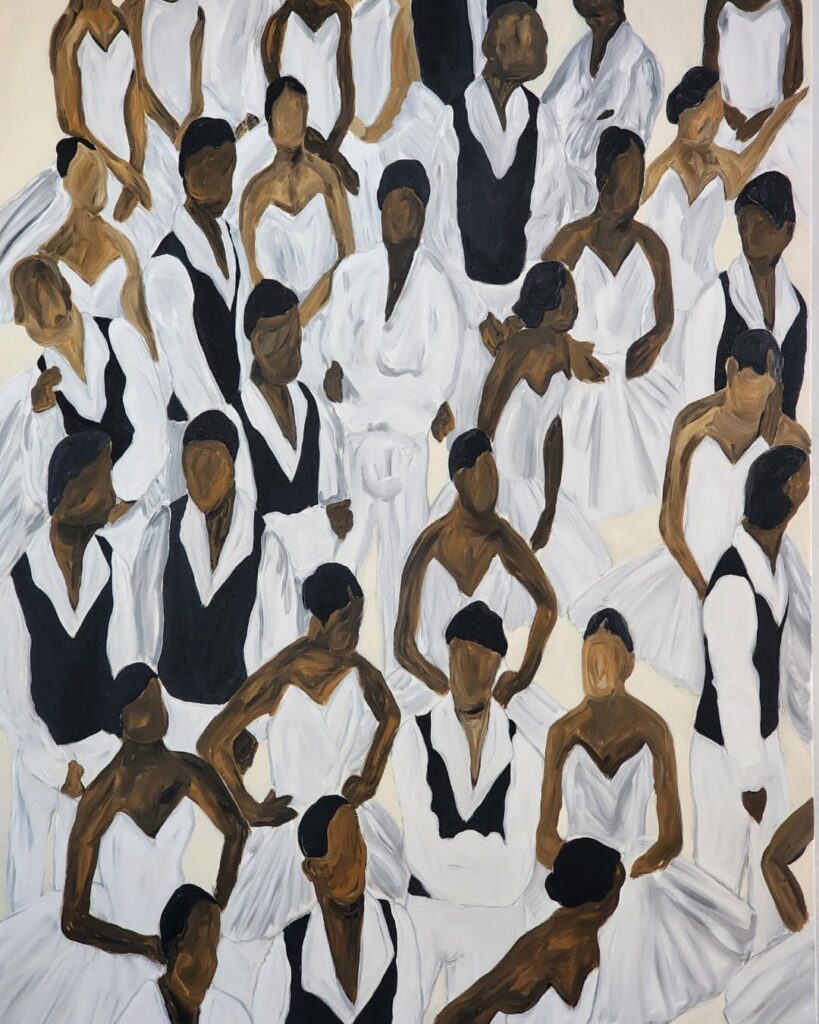
We Did Say We’d Make It III - Themba Sibeko’s Symphony of Dreams.
Which work followed you home, Was there a piece, artist or moment you kept thinking about after leaving the fair? What did it stir in you , emotionally, intellectually or even uncomfortably?
Anastatia: I promise im not copying Renaé’s previous answer…I kept thinking about Temba Sibeko’s Symphony of Dreams with Wunika Mukan Gallery, Lagos, partly because of the gallery founder, whose warmth and genuine passion for the artists she supports makes every encounter feel like no time has passed. But Temba’s work also met me right in the middle of my current obsession with Black women and ballerinas; I’m unofficially declaring this the year of the ballerina, and seeing these figures within his work simply made me giggle, smile and feel happy.
What made the collection even more significant was its representation of Black dancers. As a Black dreamer himself, Temba recognises something familiar in their journeys , the dancer becomes a mirror.
And what we see isn’t simply someone performing ballet, but someone pursuing significance: fighting to be seen, learning, falling and rising, and enduring that complicated space between where they are and where they believe they can be.
Ukuzila is a hour-long performance by Khanya Zibaya
Renaé: There was a presentation by Vela Projects on Saturday, featuring a performance by Khanya Zibaya. Presented in collaboration with FNB Art Joburg, Ukuzila was an hour-long performance exploring mourning as both ritual and psychological condition.
The work is a tribute and response to the passing of Zibaya’s mother in 2022. Titled after the Nguni word for mourning, Ukuzila speaks to a process traditionally characterised by abstinence and fasting. At its centre, Zibaya stands silent and still, wrapped in a shroud of black plastic bags.
I don’t have much to say about my personal connection to the work, but I found the encounter itself worth mentioning. There was something striking about coming across a performance like this within the context of an art fair, an unexpected pause in the movement and noise of the day, and a reminder of the different ways artists can ask us to sit with difficult, deeply human experiences.
Installation views from Symphony of Dreams at FNB Art Joburg 2026. Presented by Wunika Mukan Gallery, Themba Sibeko
If you had to tell the story of this year’s FNB Art Joburg through just one work, which would you choose and why? What does each one say about what you personally saw, felt or understood about the fair this year?
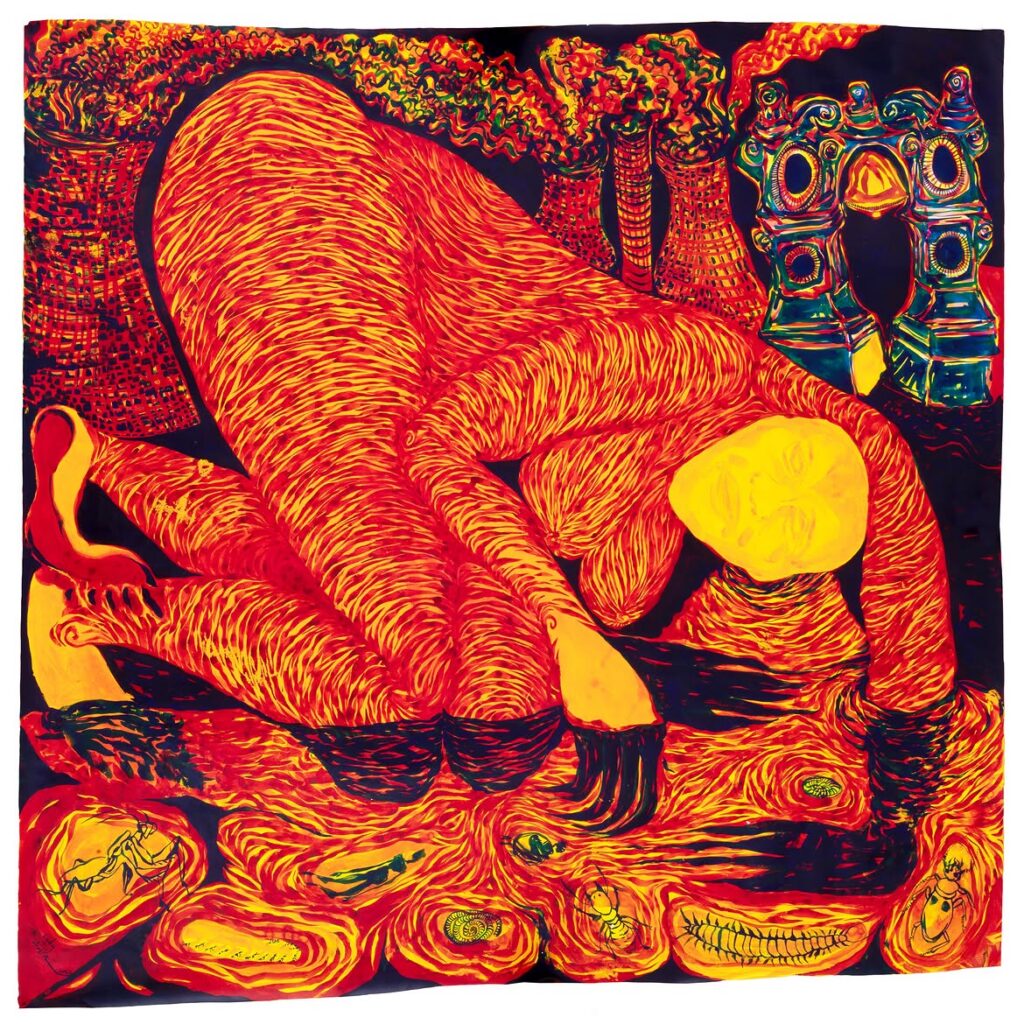
Anastatia: It is not an artwork but Lady Skollie’s statement for ON MY KNEES (IN A BAD WAY) strips away the romance we often attach to the life of an artist, revealing the exhaustion, obsession and uncertainty that can exist alongside the joy of making. What stayed with me was this idea of the artist being completely overwhelmed, almost brought to her knees, and yet still creating , a reminder that pleasure and pain, life and death, love and suffering can sit frighteningly close to one another. And perhaps the simplest way to understand it is through Lady Skollie’s own sentiment: even when everything else feels uncertain, the work continues.
Renaé: It would be Paulo Nazareth’s Indlela. I felt as though the work speaks to lineage, history and time, and the ways these threads connect us across generations. There is something very profound about how the work considers where we come from, what we carry with us literally and figuratively, and how those histories ultimately remind us of our interconnectedness. Sometimes amadumbe are really deeper than rap.
iQHAWE Magazine is centered on celebrating and representing emerging creative communities while also closing the divide between emerging creatives and their respective industries.