
Oftentimes there seems to be this idea that advocacy belongs only to those in UN offices fighting the good fight, or in rooms where policy is being debated and decided. That these are the spaces where revolution happens and where meaningful change is made.
But time and time again, history has shown us that culture is just as powerful. The stories an entire generation grows up seeing, hearing and believing can fundamentally shape how we understand ourselves and one another. Representation matters because perception matters. What we see reflected back to us has the power to affirm, challenge and, sometimes, completely reimagine what we believe is possible.
And then there is Sandulela Asanda.
Once upon a time, her path might have led her into the worlds of law and economics. Instead, she found her way to film, creating work that is as political as it is funny, tender and deeply observant. Her approach to storytelling confronts colonial legacies within schools, the anti-Blackness embedded in these structures, queerness, coming of age, and the many other nuances that exist between these experiences. She reminds us that advocacy does not always have to look like a protest or a policy document. Sometimes, it looks like a story that allows someone to finally see themselves.
Our conversation felt like a long-overdue chat between friends. We laughed, we discoursed, and I came away having learnt so much about her way of being and seeing the world. All that is left to say is that Sandulela is undoubtedly making a way where there once was none.

For someone encountering your work for the first time, could you give us a brief introduction to who you are, how you entered the industry, and how you arrived at filmmaking?
I’m originally from the Eastern Cape and moved to Cape Town for university. I have a background in economics and law, but I’ve always had a love for the arts. I’ve been doing drama since I was eight years old, and even at university, I was still doing plays and acting.
I eventually moved into film after my honours year because it had always been a medium that I loved and could really see myself in. I started as a writer and then moved into directing because I realised that, with the stories I wanted to tell, I was the only person who could tell them in the way I wanted them told. I went on to work at film festivals, screenwriting training programmes and as a producer before eventually deciding, you know what, let me become a director myself.
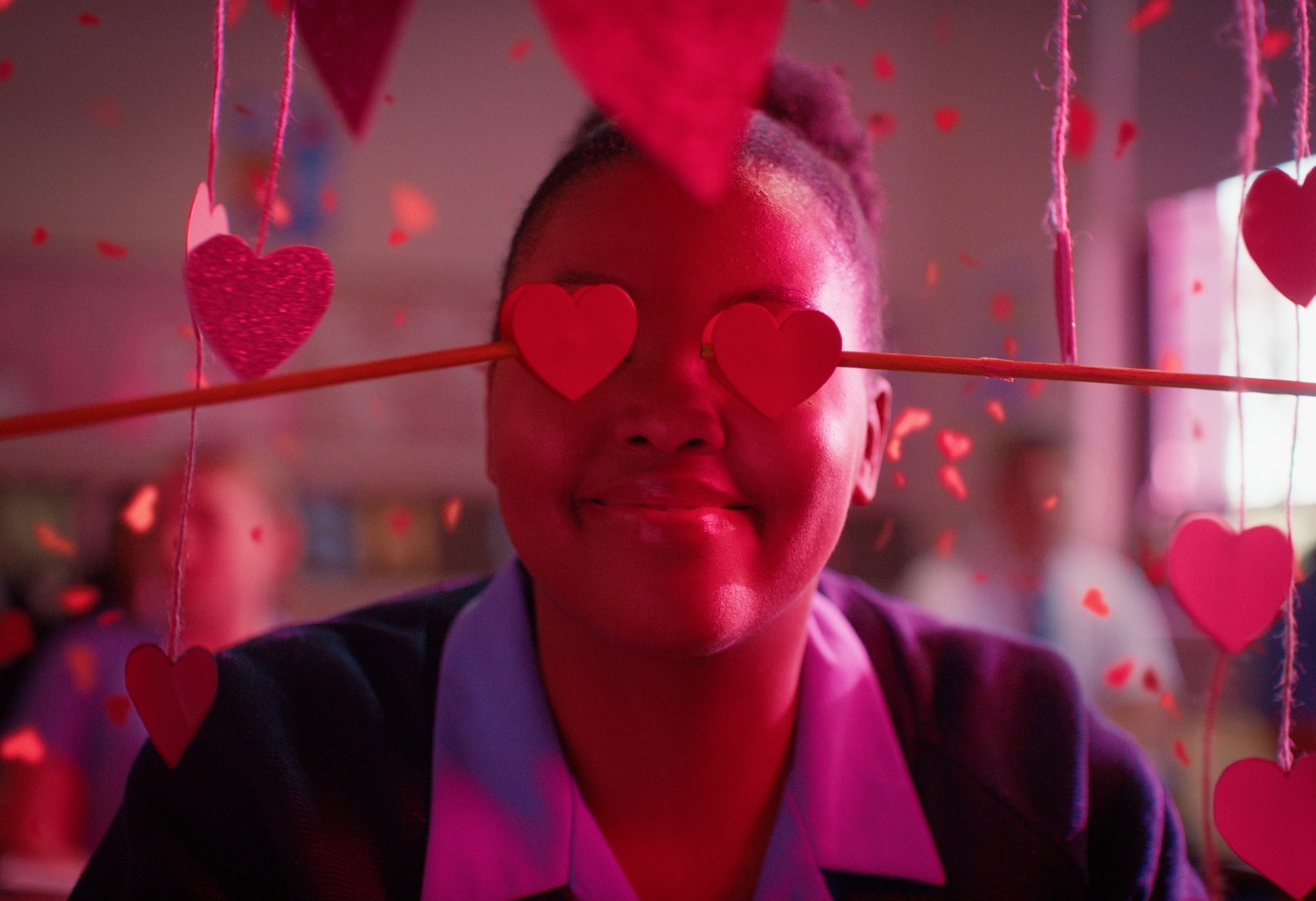
My first professionally produced short film, Mirror Mirror, premiered at the Toronto International Film Festival and then screened at the Berlin International Film Festival, among many other festivals that year. My first feature film, Black Burns Fast, came out this year and had its international premiere at the Berlin International Film Festival. It was nominated for a Crystal Bear Award as well as the Teddy Award, which is a major queer film award. We closed the BFI Flare LGBTQIA+ Film Festival in London and also screened at Frameline 50. Within about four months, the film had screened at around 30 festivals, which has been incredible.
I’m interested in the origins of the stories you feel drawn to. When you look across your body of work, what common thread do you see? How has your early life influenced the stories you want to tell?
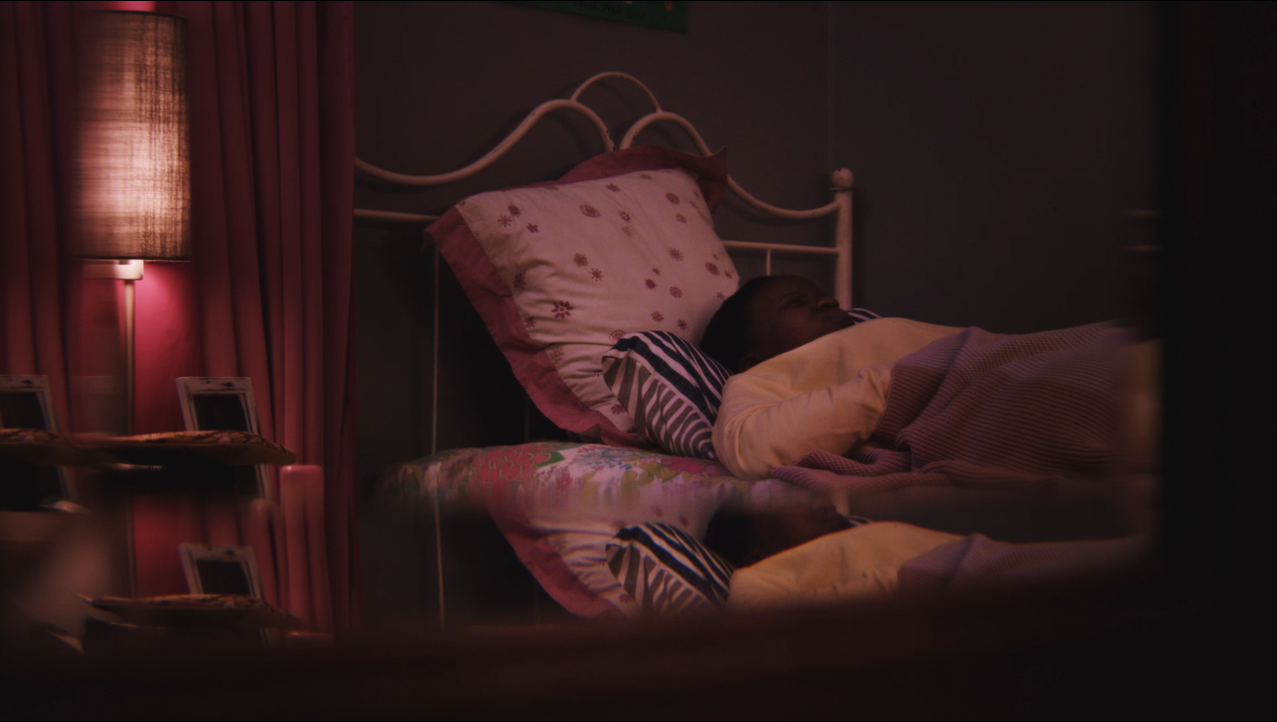
What I definitely see is a concern with representation, but specifically meaningful representation. I was among the first generation in my family to grow up middle class, and I grew up in a suburb where we were essentially the only Black people. I went to those kinds of schools too, so I definitely experienced a sense of othering. When I was younger, I tried hard to fit in, but I always knew that I didn’t.
I spent a lot of time by myself, but what I had was television and books. Books were one thing my parents never said no to. I think that really informed my point of view. On both sides of my family, I had grandparents who were teachers, so education was always incredibly important. I remember my grandmother telling me that education is one of the things people can’t take away from you. They can take your land and they can take your money, but they can’t take your education.
The combination of all of that has informed the work I’m drawn to. I centre Black women and queer Black people like myself, but I’m also interested in pushing what it means to see those people represented within mainstream narratives.
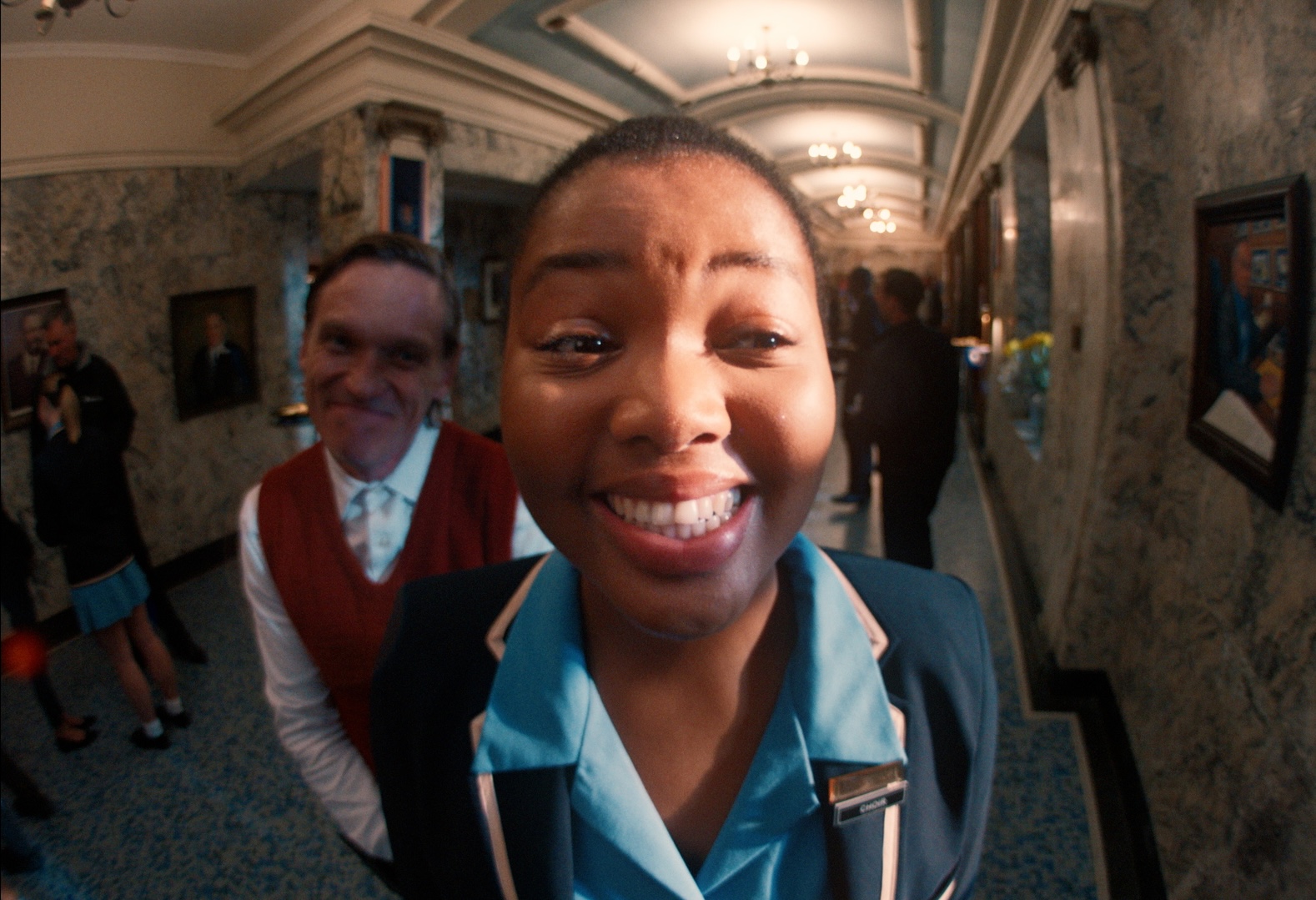
I approach my work through quite an intersectional and sociological lens. Even with Black Burns Fast, which can come across as quite light, I’m approaching it from a very intentional and political point of view. Even choosing to take a lighter approach comes from a particular point of view. That informs a lot of what I do and what attracts me creatively.
That’s interesting because Black Burns Fast has a satirical quality to it without the satire becoming overt. Particularly within the school environment, we’re witnessing something systemic. What happens to these Black girls is serious, but the comedy never takes away from the weight of what we’re seeing. How do you find that balance between humour and the seriousness of the subject matter? Was that intentional?
It’s intentional, but it’s also intuitive. I honestly think it’s a very South African thing. We joke a lot about things, even when the circumstances themselves are incredibly serious.
A lot of that sensibility comes from there. But you also have to be strategic, particularly once you decide who your audience is. You need to understand how you’re addressing them. Where can I joke about something? Where can’t I? Where do I need to pull back? A lot of it comes through writing, rewriting and continuously fine-tuning. I’ve also been really lucky to have great people around me who I can bounce ideas off. But ultimately, a lot of it is intuitive.
I want to go back to one of your earlier films, Nongqawuse. The film explores spirituality and folklore. What drew you to that story, and why did it feel significant for you to tell it?
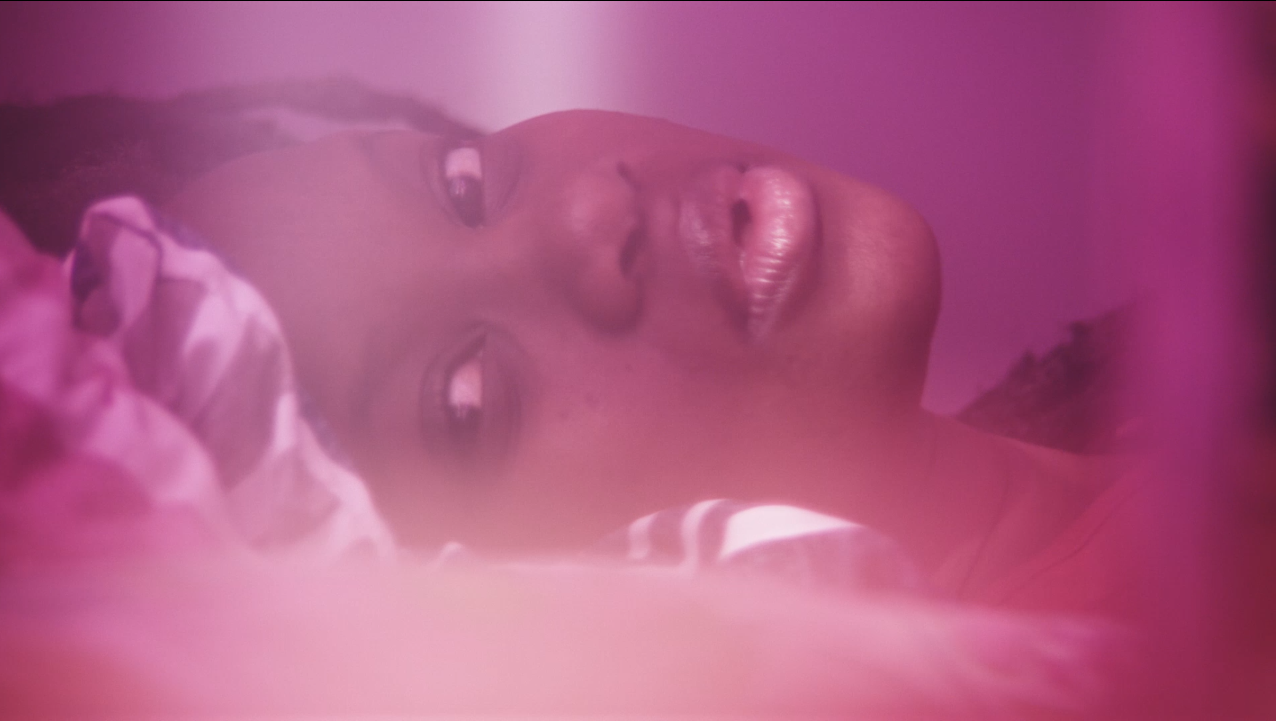
I had heard that story for as long as I could remember, and it never really sat right with me that this young girl was blamed for the downfall of amaXhosa. As any young Xhosa girl will know, we aren’t always listened to that much. So, as I started doing more research, I began questioning that narrative.
I’m from the Eastern Cape. I have family from the Makhanda area and Cradock, so it has always been a story that felt close to me. Around the same time, there was also the story of the Seven Angels religious group, and I started drawing parallels between the two. I was also reading about Nongqawuse’s uncle and guardian at the time and began questioning the ways her story had historically been framed.
For me, the film became an exploration of what happens if we approach the story from the perspective that she had been scapegoated. What happens if we place her in a position where she can see what is happening and speak against it? It became my way of reclaiming her story and reclaiming her position in society as a young Black girl with agency and power, because particularly in South Africa, we don’t often have those narratives.
Across the work I’ve encountered, you’re both the writer and director. Why is it important for you to occupy both roles? Is it simply that you want to write and direct the things you want to see exist in the world?
Directing is such an intimate experience. Working on a film is incredibly intimate because you’re with it for so long that it essentially becomes your child. If I’m going to give that much energy and intimacy to a piece of work, I would rather it be mine, or it needs to envelop me completely. No one has brought me a script yet that makes me feel the same way. If someone ever does, then absolutely, let’s go. But I also have a lot to say, and I feel strongly that I’m the only person who can say certain things in exactly the way I want to say them. So, for now, I’d rather continue doing my own thing.
During your masterclass, you referenced the idea that stories don’t simply float in the air; they’re grounded. How does that idea apply to your creative framework, both as a writer and as a director?
As a writer, I really champion lived experience. I use my own lived experiences a lot. Obviously, you don’t necessarily want everything to become autobiographical because that can sometimes prevent you from taking a story as far as it needs to go. Whether consciously or unconsciously, being too close to something can create a blockage because vulnerability isn’t always natural. Sometimes, to push a character or a story further, you can’t be too close to it.
But I do believe that, at the core of your story, you need some kind of personal relationship to the experience, or at least to the emotion that your character is experiencing or that you’re trying to convey. As a director, I use that philosophy when working with performances. One thing I do when sending out briefs, particularly for casting, is make a video explaining my personal connection to the project and why I chose to write it.
I think that works because if I begin from a place of vulnerability and openness, it gives performers permission to be vulnerable and open too. We meet each other at that place of openness and work from there. I also believe performers are their own kind of researchers and writers. They can take a character further and sometimes into places you never imagined. That can be incredibly interesting. I believe in allowing them to bring those discoveries into the process so we can develop and mold both the performance and, sometimes, the world itself.
With Black Burns Fast specifically, how did you navigate the heavier emotional scenes alongside the lighter, more animated moments? There’s the emotional work, but there are also all the technical considerations of making sure everything translates visually. Practically, how do you approach balancing those elements as a director?
A lot of planning goes into it. During pre-production and even before pre-production, my cinematographer and I laid out flashcards for every scene and shot and what was needed for each one. Alongside that, I create an emotional graph. It allows me to track the emotional progression of the film visually and understand where something like animation might work, where it might not, and where it could become too much.
It helps me enormously to have everything laid out visually on a wall. A script is page by page, whereas when everything is on the wall, you can see the entire film at once. You can move things around. It becomes tactile, which works really well for me. Most of the time, you aren’t shooting a film sequentially, and usually the AD determines the shooting schedule. But I can still say, “These are particularly emotional scenes, so I wouldn’t advise shooting certain scenes immediately before or afterwards.” With emotional scenes, I try not to schedule them first. I’ll usually begin with something more middle-ground so the actor has time to warm up. Then we can move into the heavier material, followed by a break or perhaps a scene that requires more technical setup, which gives the actor some time to themselves to reset and breathe.
I was also fortunate that my assistant developed a really great relationship with the main cast. That became incredibly helpful because performers want to do their best for the director. On set, they don’t necessarily want to appear unprofessional or as though they can’t handle something. But people are human. As much as I can tell someone, “It’s okay, I understand,” they may still be thinking, “Sandulela is sitting behind that monitor and she needs me to work.”
Having someone else there who they trusted created another layer of support. My assistant could come to me and say, “This person needs a little more time. Is there something else we can do?” Then I could adjust the schedule. That collaboration gave us a support mechanism that wasn’t directly tied to me but could still feed information back to me and influence how I ran the set.

Your academic background is in law and economics. How has that influenced the way you approach filmmaking? Particularly because your work consistently advocates for people and experiences that have historically been underrepresented.
Very much in that way. Even when I was studying law and economics, my focus was always more sociological. I like to think I view things through an intersectional lens, although it’s interesting because being a Black woman also informs that perspective. Those things inform one another.
People sometimes ask why I speak about racism and homophobia together. Why not simply speak about homophobia? But if you’re a Black girl occupying a particular space, you’re experiencing all of those things simultaneously. You can’t simply extract one from the other.
I also think being at university during the Rhodes Must Fall and Fees Must Fall movements had a significant impact on me. I attended the plenaries and did the readings. It happened at a time when I was fresh out of high school and had experienced certain things without necessarily having the language to explain what they were or what they meant. I could feel the discomfort and understand that I was sometimes being looked down on, but I couldn’t necessarily articulate why.
Those movements helped me put words to those experiences and understand the systems around them. I remember even bunking some of my own lectures to attend sociology lectures with older friends. I still remember those classes. Anaconda had just come out at one point, and we were discussing race, gender and class through something like a Nicki Minaj music video and unpacking all the histories and ideas that a piece of popular culture could represent.
Those experiences definitely informed how I view the world.
I’ve also always resisted the idea of being unrepresented. Even as a child, I was outspoken about myself because I was often the only Black girl in the room. There wasn’t much you could tell me I couldn’t do. If you told me I couldn’t do something, I was probably going to do it just because you said I couldn’t.
When you encounter an issue in the world, what do you believe the role of the filmmaker is? Are you trying to offer an answer through the work, or are you more interested in presenting your perspective and allowing audiences to decide what they take from it?
I see an issue and then I write about it through my understanding and from my point of view. But, at the end of the day, I personally don’t believe art has to provide answers. I think art should expand points of view. Art should ask questions. Art should start conversations. If it answers a question for you, that’s great. But I don’t think artists should necessarily position themselves as the people qualified to fix global issues. What we can do is speak about human connection and relationships, reflect those things back to audiences and create conversations around them.
Even within my own work, Mirror Mirror is about bodily autonomy, sexual autonomy and being able to define who you are as a woman for yourself. I use sexual autonomy as one avenue for exploring that, but what I’m ultimately asking is for people to expand their understanding of what autonomy can mean.
With Black Burns Fast, I wanted to present a happier, more joyful perspective on queer experiences and coming out, as well as a more joyful presentation of what it can mean to be a Black girl occupying these spaces.
For me, that film is about possibility. It’s about expanding what these experiences can mean for us as Black women and queer people, and what these spaces can become for us. I’m not saying, “This is how you deal with racism in schools,” or, “This is how you deal with homophobia in schools.” Instead, I’m saying: here is one character who experiences these things and is able to move through them with friends, allyship and joy. What would the world look like if that were our intention?
I want someone to leave the film asking themselves, What would my world have looked like if that had been my experience? How can I make my world look more like that now? And how can I help create that world for the next young queer Black girl who finds herself in a school like this? That’s the experience I want the work to create. I’m not trying to provide the answers. I’m trying to create the space for the questions.
To close, what is a sentence or quote that you live by, something that encapsulates you, both as a person and in your work?
“I will find a way, or I will make one.” That’s me. One way or another, it’s going to happen.


