


How Creativity Survives: Inside RMB Latitudes’ 2026 Oasis
The Debrief conversation between Hlengiwe Mkwayi , Renaè Mangena and Anastatia Nkhuna
This year, RMB Latitudes felt less like viewing art and more like stepping into meaning making.
Moving through the fair, we found ourselves wondering less about whether the theme had been translated perfectly, and more about the many ways hope can actually look: a gallery booth, a conversation with an old friend, a fashion show unfolding on a lawn, or standing in front of a work that makes time slow down for a moment.
Johannesburg feels like a city that knows how to bloom under pressure. Founded without access to a major body of water, it has somehow spent generations teaching people how to create beauty anyway. So perhaps Oasis felt less like an abstract curatorial statement and more like a mirror. Creativity here has always functioned as a form of survival. A way of making something from little. A way of finding softness in hard places.
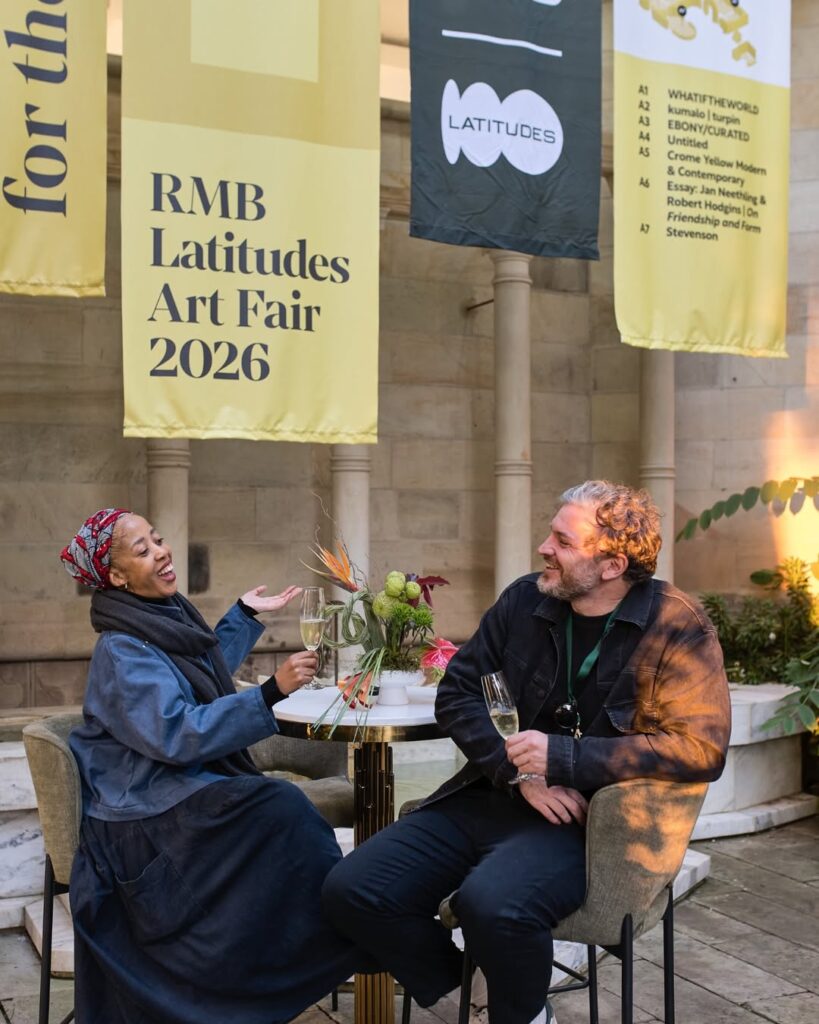
The 2026 theme, Oasis, reflects on the improbability of creative flourishing in unlikely places. Marking 140 years of Johannesburg, a city founded without access to a major body of water, the theme considers how creativity, like water, sustains and regenerates life in unexpected environments.” Do you feel that this theme was successfully translated? If so, how? If not, where do you think it fell short?
Anastatia: I am reading the theme in its literal sense and translating it to the fair itself. I have a lot of hope in curation, in artists, and in galleries. Johannesburg is a world-class city and a place that constantly proves that creativity finds ways to survive, even when ease doesn’t.
But I also kept thinking about what an oasis really means beyond aesthetics. People are increasingly seeing art not only as something to admire emotionally, but also as something with long-term value, financially, culturally, and socially. We’re seeing younger generations entering the market and collecting differently, which feels exciting because it opens up ideas around accessibility and ownership.
At its best, I think the fair translated Oasis by reminding us that creativity itself is a form of survival. But I also left asking: beyond creating moments of refuge, how do we continue creating systems that allow artists and the communities around them to flourish? That, for me, is where the conversation becomes even more interesting. So yes it was successfully translated.
Renaé:
Art fairs always leave me wondering what their true purpose is. Are they meant to guide you through a particular emotional journey as you move through the space and connect the dots? Or is that translation meant to come from the galleries and the work they present? Perhaps it’s a combination of both. Because of that, I often find it challenging to connect a curatorial theme to my own personal experience of walking through the fair. But what I will say is that I felt a sense of calmness throughout the space, and in many ways, that felt like an oasis in itself. Ana and I moved through the fair together, and maybe that contributed to the feeling, but I found that the curation, the placement of the different galleries, and the rhythm of the journey through the space all aligned with the theme in a way that felt thoughtful and intentional.
Hlengiwe: The theme translated most successfully in the emotional texture of the fair. Johannesburg itself already embodies the idea of an oasis: a city constantly producing overflowing culture, imagination, and softness despite existing within pressure, instability, and contradiction.
Walking through RMB Latitudes, I felt that tension continuously. There were moments of intimacy, moments of spectacle, moments of stillness, and moments of excess; and if you’ve lived or experienced the city long enough, you’ll know that those realities coexist within Jozi too.
What stood out for me was how the fair allowed different forms of creativity to sit beside one another fluidly. You could move from deeply political work into whimsical experimentation, from contemporary design into performance and fashion, from conversations about collecting into conversations about community.
At the same time, I think the theme also poses questions about access. Who gets to experience the oasis? Who gets protected by it? And who continues to create despite never fully arriving at rest.
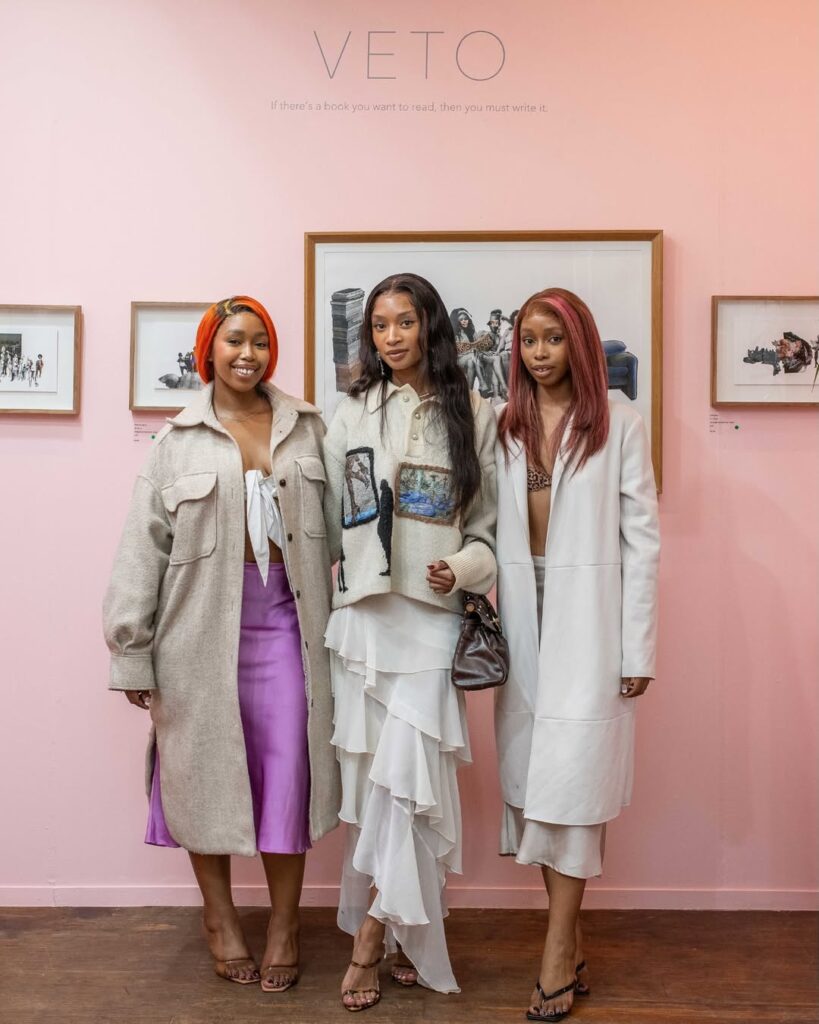
What are your thoughts on the intersection between fashion, art, and contemporary forms of theatrical expression seen at the fair?
Anastatia: I love intersectionality because it adds so much flavour to what art can become. It pushes art beyond the idea of simply hanging a canvas on a wall and opens it up to fashion, music, design, and different contemporary explorations through mediums and materials. The digital art side of things is especially exciting because technology is creativity too; it’s expanding the language of how stories can be told and experienced. Spaces like the SA Design Showcase during Design Week felt particularly interesting because you had 21 designers all intersecting at different points, each bringing their own perspective.

Fairs are always exciting, but they can sometimes have awkward moments too. Did you experience any memorable or unexpected interactions while moving through the space?
Anastatia: Every RMB Latitudes Art Fair, there’s a gallerina I always see and reconnect with. It’s somehow become our annual reunion, and we end up standing there talking for minutes that somehow feel like hours. It’s always so memorable to me because our conversations pick up as though we never stopped talking in the first place. Nomfundo, you’re amazing!
Hlengiwe: This particular experience is neither awkward nor extraordinary and instead, has been common in my art fair interactions. What is always foregrounded is the camaraderie amongst artists, curators, buyers, browsers. For me, this always drives a continued want to be a part of the ecosystem.
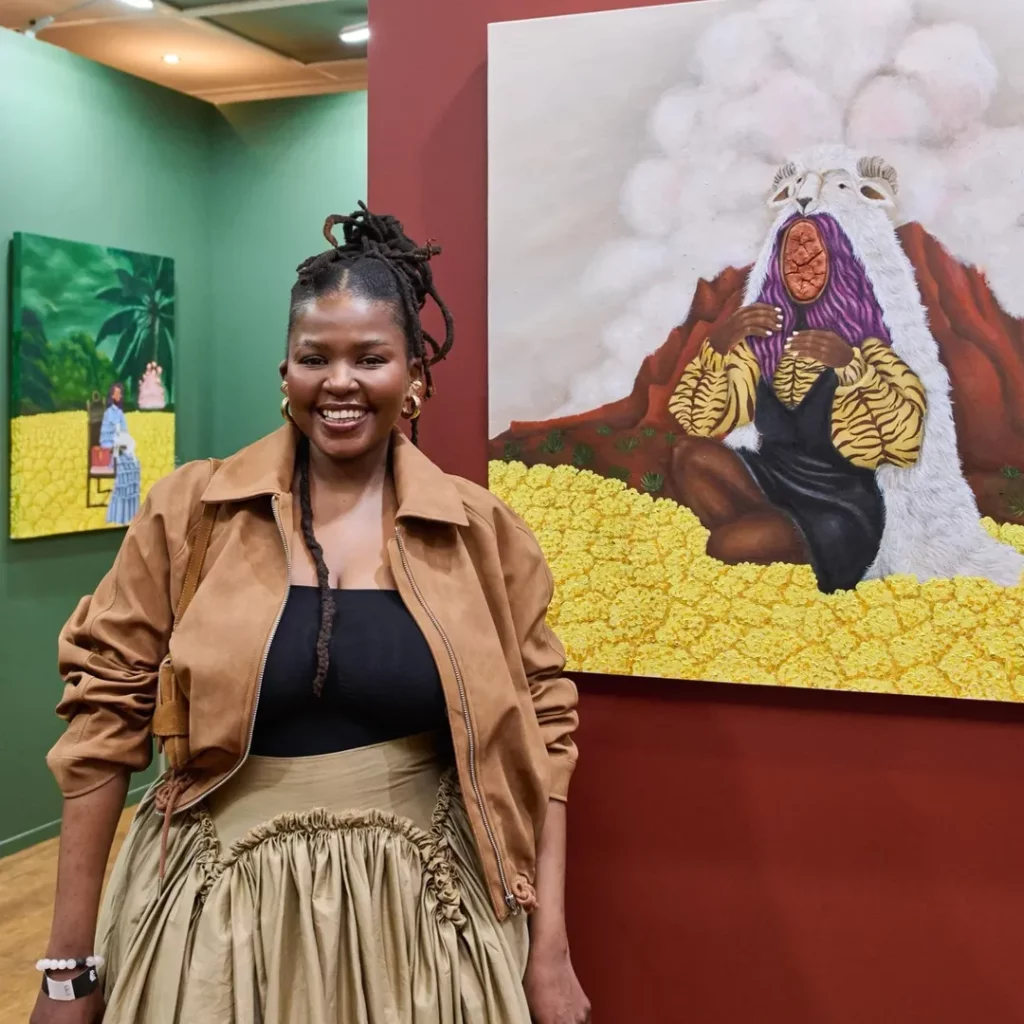
Ana, what do you think was the significance of having the Nike Air Max Residency within the space?
Anastatia: The Nike Airmax residency was deeply explored through the manifesto “See what others ignore. Listen for what’s next. Make air visible. Turn pressure into possibility. Do your own things and take air further.”
It felt significant for me because it moved beyond being just a booth and became a living ecosystem of mentorship, process, and collaboration. Seeing creatives develop work across the different pillars under the guidance of Bahati Simoens and Flood House in Art, DBN Gogo in Music, and Thebe Magugu in Fashion brought a real sense of exchange and growth into the space. For me, it became even more meaningful because I played a role in art directing the booth itself, thinking through how the physical world could hold all of these stories and create a space that felt immersive, alive, and reflective of the residency’s energy.
Hlengiwe: Go Ana!
Renaé: My leader, Ana articulated it so well, nothing from my side.
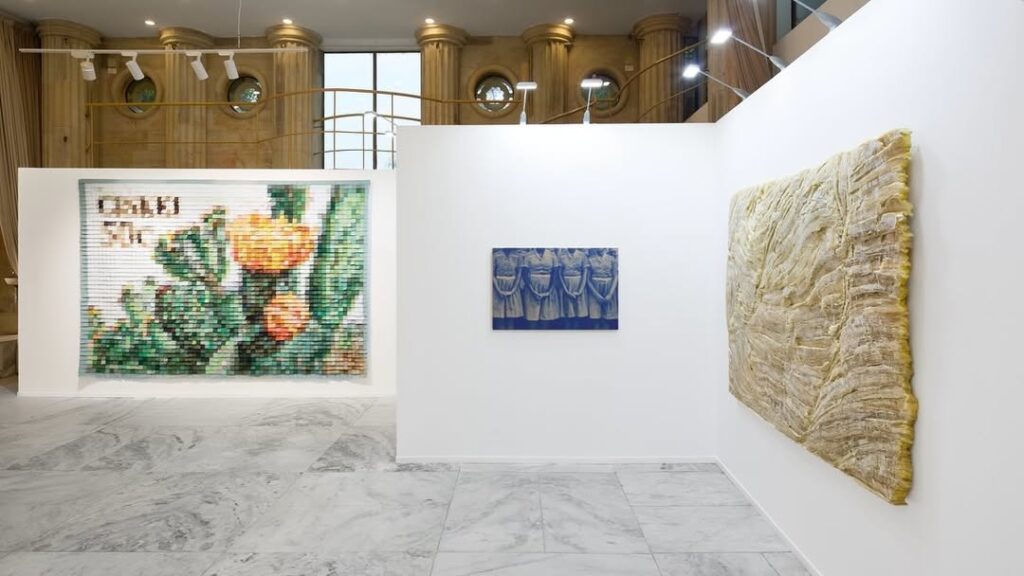
Renaé you seem to always be drawn to XHANTI ZWELENDABA’s art, what was special about the RMB Latitudes presentation?
Renaé: I was hoping that by now I would have a more well-thought-out answer to this question, because I’ve encountered this artwork so many times, and yet each encounter feels like I’m seeing it for the first time. What I can say is that, with work I feel drawn to, I’m always interested in exploration from an intersectional perspective. Here, there’s a meeting point between different practices, methods of creation, and an exploration of what it means to allow something to fully form and reveal itself. Often, when a painter begins a work, there’s already a sense of where the piece is going or what it is meant to become. But with this work, it feels different. It carries a fluidity that feels organic and instinctive, while at the same time being incredibly meticulous, intentional, and carefully considered. That tension between spontaneity and precision is what keeps pulling me back to it. Ngiyayithanda ndithini.

Hlengiwe you’ve often been drawn to whimsical art, any particular artist / booth that stood out for you.
The booth that stood out for me is Dada Khanyisa’s booth, which also won the Lexus Best Stand Audience Award.
The booth that stood out most for me was Dada Khanyisa’s presentation. There’s something about the world they create that continuously pulls me in. Their work carries humour, tenderness, chaos, intimacy, and social observation all at once, and I love that it feels playful without losing emotional depth.
Dada beautifully crafted a montage of everyday life that allowed for imagination and emotional play to exist side by side and feel immersive at sight.Need someone to gift me R100k real quick.
What role do galleries play today beyond simply exhibiting work? Did any exhibitors feel like they were creating worlds rather than selling objects?
Renaé: I don’t know if I’m knowledgeable enough to have a particularly strong opinion on this, but I will say that it’s always exciting to see experimentation with form and exhibition formats. I really appreciate when galleries move away from traditional norms and create experiences that feel more exploratory, immersive, or unexpected.
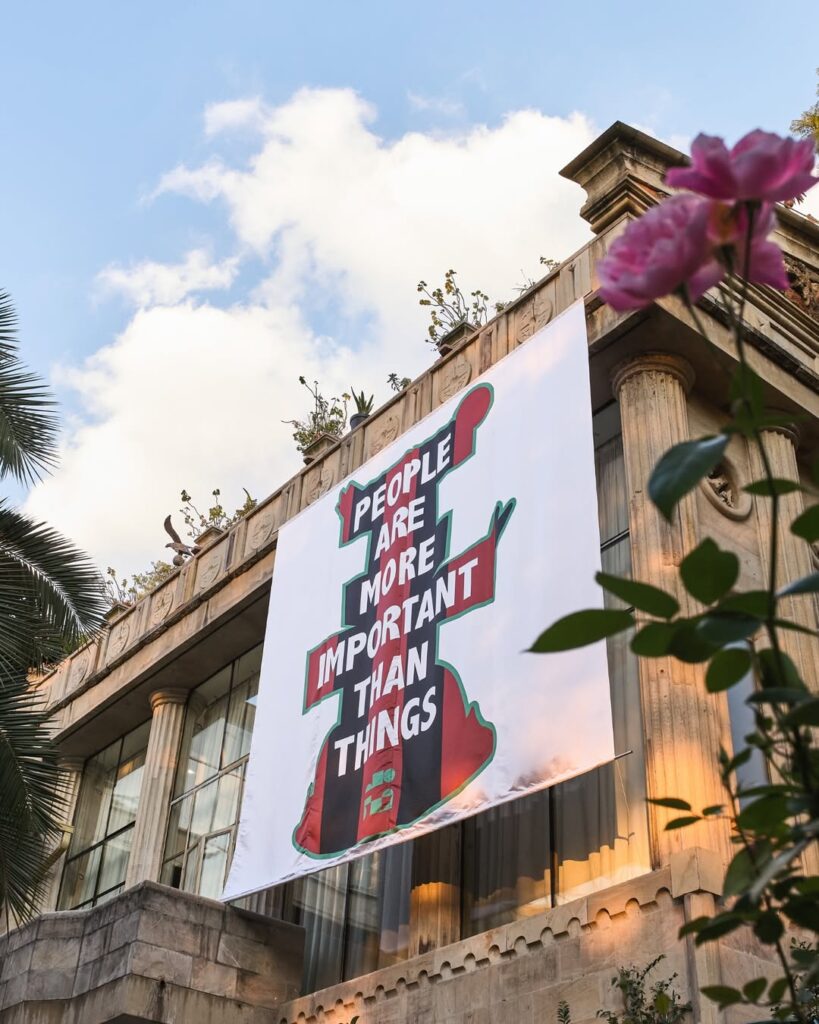
Anastatia: Interesting that you ask this question. Exhibition Match stood out to me in this regard. Their use of the tifo wasn’t simply an object to be viewed; it felt like a living monument carrying memory, spectatorship, philosophy and collective identity all at once. Taking the form of a makarapa, something deeply embedded within South African football culture, and inscribing it with ‘People Are More Important Than Things, a philosophy led by the Late Koyo Kouch’ transformed it beyond a visual gesture. It felt less like an artwork for sale and more like an environment of values and human connection.
Some exhibitors weren’t presenting objects at all, they were presenting worlds where artwork could sit beside philosophy, where collective care became material, and where you left thinking about people and stories long after you’d stopped looking at the artwork itself.


